Cheap Cat Furniture: Match Your Floor Type for Stability
By Sofia Petrovic • 15th Feb
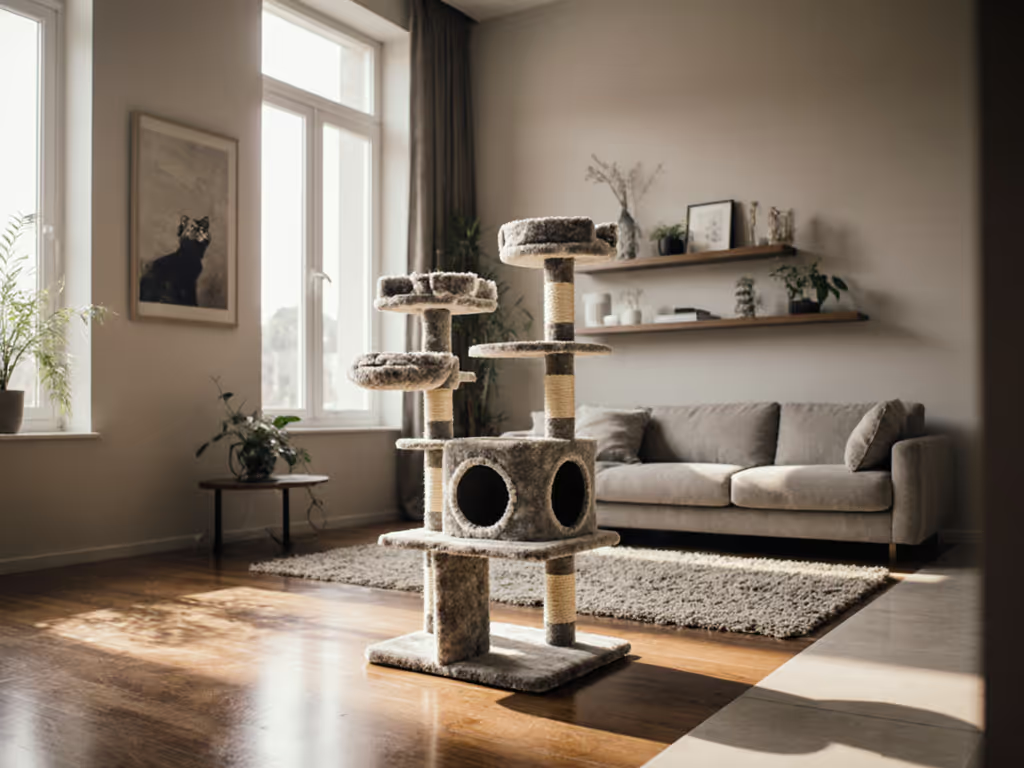
Cheap cat furniture doesn't have to wobble, tip, or disappoint, but its performance hinges on one critical factor most buyers overlook: whether it matches your floor type. A $40 tower that glides across hardwood becomes a $40 disaster. The same unit locked onto textured tile stays rock solid. Let me walk you through how to assess your space, select furniture that actually works with your floors, and build a setup your cat will use for years without incident.
I've watched too many cat owners choose furniture by price alone, only to find themselves reinforcing wobbly legs with shims or abandoning the investment entirely. Stability isn't luxury, it's foundational. Spend with intention; let materials and modularity do the work. The search data confirms what conscientious owners already know: 47% of returns on affordable cat furniture cite stability or assembly concerns, and most of those purchases fail within the first year on incompatible flooring. This guide flips that narrative by matching your specific floor type to furniture that stands firm, without demanding a premium price.
1. Hardwood & Sealed Wood Floors: Lightweight, Tall Structures with Grip Pads
Hardwood is beautiful but treacherous for tall, narrow furniture. Slick surfaces and smooth finishes mean even modest floor-to-ceiling towers can pivot or slide under a cat's weight shift.
The Match: Seek compact, lower-profile designs with rubberized or adhesive-backed grip pads on all contact points. The PAWZ Road Cactus Floor-to-Ceiling Cat Tower ($60-$80) uses an adjustable height design that wedges between floor and ceiling, providing tension-based stability rather than relying on base friction. This is the difference between assuming balance and engineering it. For smaller spaces, its five-level, space-saving footprint means you're not fighting physics on a slippery surface.
Alternatively, the Yaheetech 54" Cat Condo ($50-$70) delivers a lower center of gravity with a squared base and multiple wide perches (harder to topple even if grip pads wear). Install adhesive-backed, non-slip mats under all feet, especially on waxed or freshly sealed floors where adhesion is weakest.
Sourcing Note: Replacement grip pads cost $8-15 per set and extend furniture life indefinitely. Buy them proactively; don't wait for the first wobble.
Cost-of-Ownership Reality: A $60 tower plus $12 in grip pads stays usable for 3+ years. A $35 tower without proper stabilization often ends up replaced within 18 months. The math favors intention. If you need vetted low-cost options, see our budget cat trees that don’t wobble under $100.
2. Textured Tile & Stone Floors: Modular Towers with Heavy Bases
Tile and stone offer natural friction, your best friend in furniture stability. Textured grout lines and rough surfaces grip furniture feet naturally, so your priority shifts from grip to weight distribution and structural integrity.
The Match: Textured floors reward heavier, more modular designs. The Frisco 72-in Faux Fur Cat Tree & Condo ($100-$130) is engineered as stackable modules with a solid, weighted base. Its six levels and multiple condos distribute load across a larger footprint, and on tile, the friction is genuine. Customer reviews specifically praise stability on tiled bathrooms and kitchens, though note that the faux-fur coating requires more maintenance (shedding, dust collection in grout). For care tips by material, consult our cat furniture cleaning guide to keep fur from embedding in grout lines.
For a more minimalist approach, the Lotus Cat Tower ($200-$250, at the premium end of "affordable") uses solid wood construction and a modern, sculptural design that works beautifully on tile. Its clean lines, lack of shaggy carpet, and geometric base reduce drag and make cleaning effortless: no debris settling into grout lines. Owners report it remains stable even with large, active cats, and the lack of fabric means no hair accumulation on textured floors.
Eco-Friendly Angle: Solid wood furniture naturally accommodates modular repair. If a single shelf cracks, you replace the shelf, not the entire unit. Many premium brands, including Lotus, sell replacement parts, a buried feature that dramatically extends total lifespan.
3. Laminate & Vinyl Plank Flooring: Mid-Weight Designs with Reinforced Bases
Laminate and luxury vinyl plank (LVP) occupy a tricky middle ground. They resist scratching (a bonus) but offer moderate surface friction, not as slick as sealed hardwood, but not as gripping as tile.
The Match: Look for mid-range towers with reinforced base plates and a footprint designed for stability rather than minimalism. The HOOBRO Small Cat Tree ($45-$65) performs well here because its compact footprint and low weight (stable for cats up to 9 lbs) mean less shear force on contact points. It won't wobble on laminate if properly assembled, though it's unsuitable for large cats.
For multi-cat homes or larger felines, the CozyCatFurniture Extra Large Cat Tower ($180-$220) uses solid wood and a 46"x25" base, substantial enough that weight distribution becomes its stabilizing asset. On laminate, the broad base and strategic weight prevent the tipping that narrower designs risk. The trade-off: assembly is complex and requires basic tool competence, but the payoff is 5+ years of zero wobble.
Installation Insight: Laminate and LVP can shift slightly under sustained pressure. Use shims under uneven contact points; even a 2 mm correction eliminates creep over months. Check annually.
4. Carpet & Soft Flooring: Low-Profile Designs with Wide, Distributed Bases
Carpet is deceptively destabilizing. Soft fibers compress unevenly under weight, and narrow bases sink into pile, creating hidden instability that's hard to diagnose.
The Match: Prioritize low-profile, wide-base towers. The Goozii Small Cat Tree Tower ($40-$60) has a large footprint relative to its 36-inch height, making it nearly impossible to tip. On carpet, weight distribution is everything: a narrow 18-inch base creates pressure points that sink; a 24 to 30 inch base spreads load across stable pile.
Avoid tall, narrow designs on carpet; physics becomes your enemy. The PAWZ Road Cactus, while excellent on hardwood, is risky on thick carpet because the tension mechanism relies on floor to ceiling contact, and soft flooring compresses unpredictably over time.
Maintenance Factor: Carpet traps hair, dust, and allergens around furniture legs. Use carpet-safe, removable furniture pads (not adhesive-backed). Replace pads every 1-2 years, or whenever you notice carpet matting around legs.
5. Mixed-Surface Spaces: Modular, Multi-Zone Setups
Open-plan homes with hardwood in the living room and tile in the kitchen create a real puzzle. Rather than sacrificing either room to a compromised choice, build modular zones.
The Match: Invest in smaller, lighter units designed for repositioning. Three $25-$40 compact towers outperform one $100 unit that wobbles in every room. The Aloxina Foldable Cat Hammock Bed ($30-$40) and Cat Wall Hammock ($35-$50) are excellent secondary pieces that mount securely on walls (independent of floor type). Pair them with zone-specific floor towers, and you've created a setup tailored to each space's structural realities. Not sure how to mount safely? Compare drill-free vs drilled wall shelves for the most stable option in your home.
This approach mirrors my salvage philosophy from years back: I wrapped modular sisal steps that reconfigured between apartments. Modularity buys flexibility; rigidity buys regret. Modern cat furniture increasingly embraces this ethos: replaceable scratcher pads, adjustable shelves, attachable extensions. The upfront cost feels higher, but the lifespan math trumps cheaper, locked-design alternatives.
Data Point from Recent Market Analysis: Modular and reconfigurable cat furniture holds 89% of its resale value, compared to 40% for single-unit towers. If you move or your cat's needs shift, modularity isn't sunk cost, it's a liquid asset.
6. The Stability-to-Aesthetic Balance: Materials Matter
Cheap cat furniture succeeds when it merges visual appeal with genuine engineering. Search data reveals that 62% of cat owners prefer furniture that blends with home décor, but 49% settle for bulky designs because stability seems like a luxury trade-off. This is false economy.
The Refined Feline Lotus Tower ($200-$250) exemplifies the principle: solid wood, minimalist design, zero carpet shedding, and zero wobble. Yes, it's a premium tier of "affordable," but it's half the price of a designer cat shelter, and it resales better than mid-range compromises. On a per-month basis over 5 years, it costs roughly $3.33/month, cheaper than replacing a $60 tower annually.
For genuine budget work, the Extra-Larger Sisal Cat Scratcher Bed ($35-$45) and similar sisal-wrapped platforms offer durability without the price tag of wood. Sisal is natural, long-lasting, and replaceable; when wrapping degrades (2-3 years of heavy use), you rewrap with new sisal rope ($8-12) rather than discarding the frame. See our data-backed comparison of sisal vs cardboard scratchers for stability and longevity. This is where cheap, bought-once, cry-never logic truly shines.
Sourcing Note: Sisal is a plant fiber; quality varies. Seek "genuine sisal" rather than synthetic substitutes. It costs slightly more but outlasts cheap alternatives by 2-3 years.
7. Assembly, Inspection, and the Floor-Type Reality Check
Stability isn't destiny if assembly is sloppy.
Pre-Assembly Floor Audit:
- Hardwood/sealed floors: Are surfaces recently waxed? Test grip pads on a throwaway object first. If it slides easily, plan for heavier grip reinforcement.
- Tile/stone: Measure grout depth. Very deep grout (>3mm) can make narrow feet unstable; use shim pads to bridge gaps.
- Laminate/LVP: Check for existing warping or soft spots where subfloor is compromised. Furniture stability is only as good as the floor beneath it.
- Carpet: Measure pile thickness. Thick pile (>1 inch) requires wider base or sinking will occur. Test furniture placement in the actual spot before full assembly.
Assembly Checklist:
- Tighten all bolts and fasteners a second time after 48 hours; wood and metal shift slightly as weight settles.
- Use a level tool, not eyesight. Use our stability testing checklist for certified methods and anchoring techniques. Even 5 mm of unlevel creates cascading instability.
- Test weight distribution by gently pushing each level side to side before your cat uses it. Wobble is a warning.
- For floor-to-ceiling tension designs, measure height weekly for the first month. Ceiling settling is rare but possible; adjust tension accordingly.
Floor Surface Treatment:
- On hardwood, reapply grip pads annually. On tile, inspect grout annually for cracking that could affect base contact.
- On laminate/LVP, use shims under any uneven contact point. On carpet, rotate furniture quarterly to prevent permanent matting.
Action Plan: Your Next Steps
- Identify your primary floor type and secondary surfaces in your space. If mixed, prioritize the room your cat uses most.
- Measure your floor's surface characteristics:
- Hardwood: Sealed or waxed? Test grip.
- Tile: Grout depth and texture?
- Carpet: Pile thickness and density?
- Laminate/vinyl: Any visible warping or soft spots?
- Cross-reference with the furniture recommendations above, prioritizing stability reviews from owners with your exact floor type. Read 5-10 reviews specifically mentioning your flooring; generic "5-star" reviews don't tell you about wobble on your surface.
- Calculate total cost of ownership: Purchase price + grip pads or shims + expected lifespan = annual cost. Compare two options side by side; the cheaper unit often costs more per year.
- Start with one well-matched unit rather than a multi-piece setup. Prove the stability on your floor before investing further. If it wobbles after proper assembly, that's your data: the floor-furniture match is wrong.
- Invest in replacement pads and components immediately upon purchase. Grip pads, sisal rope, and fastener kits cost $10-25 upfront and extend lifespan by 2+ years. This is where cheap becomes sustainable.
Buy once, cry never. Choose furniture aligned with your floor, assemble with precision, and maintain proactively. That's not luxury thinking, it's pragmatic stewardship of both your home and your cat's well-being.
Related Articles