Hind Leg Injury Cat Furniture: OrthoCat Mobility Review
By Tariq Al-Khalil • 17th May
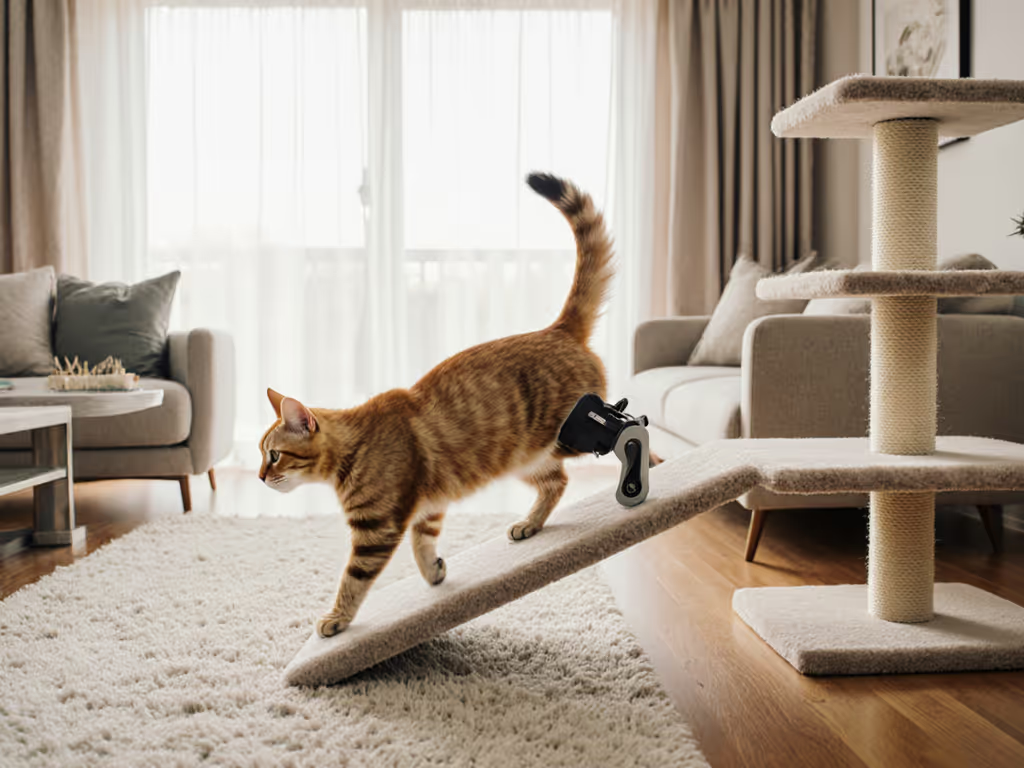
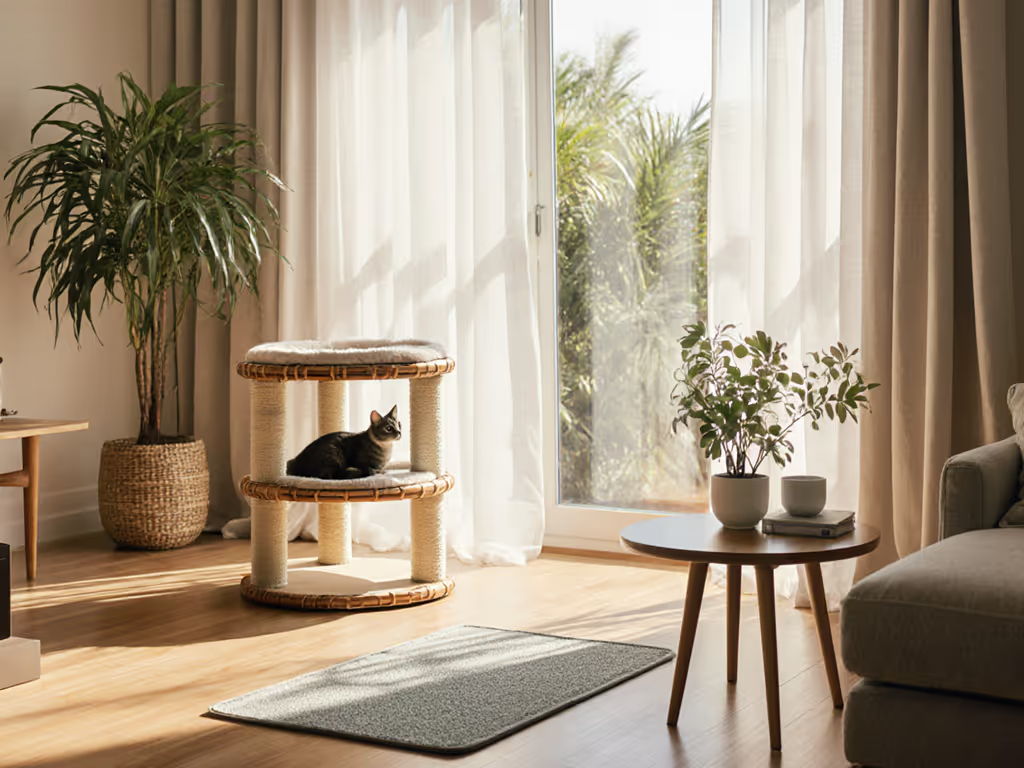
When a cat loses reliable use of their back legs, most "normal" cat trees turn into walls. Hind leg injury cat furniture isn't a luxury; it's the difference between a life lived stuck on the floor and one filled with safe, dignified movement. Thoughtful paralysis recovery cat spaces can restore choice, confidence, and calm for both you and your cat.
In this review, I'll walk through what an OrthoCat-style mobility setup should offer, how to evaluate products with a critical, data-driven eye, and where a high-quality joint-support tool like the Ortocanis Dog Knee Brace fits alongside a mobility-friendly home (for households with both dogs and cats).
Meet the need, not the symptom.
Problem: Your Cat's Body Changed, But Your Home Didn't
A cat with a hind-leg injury, spinal issue, or partial paralysis still has the same core drives:
- Climb to see more.
- Perch where they feel secure.
- Scratch to mark territory.
- Hide when overwhelmed.
In many homes, those needs were quietly met by tall cat trees, window perches, the back of the sofa, the bed, and kitchen counters. Then something happened:
- A fall.
- A road accident.
- A spinal injury.
- A slow decline in strength and coordination.
Your cat can't jump like before. Maybe they drag a paw, fatigue quickly, or use a cart. And suddenly:
- The favorite window sill is unreachable.
- The communal cat tree is a hazard.
- Litter box edges are too tall to manage comfortably.
- Bedtime now means being left on the floor while you sleep above.
Standard cat furniture doesn't just "not help", it actively blocks access. Tall, narrow posts with fabric surfaces demand explosive jumping and powerful hind-limb push-off. For a mobility-limited cat, that's a recipe for frustration, falls, and learned helplessness. For comprehensive anchoring methods and DIY checks, see our cat furniture stability testing guide.
At the same time, most commercial options marketed for "senior cats" or "disabled pets" are:
- Bulky, orthopedic-looking pads that clash with decor.
- Low-value steps that lead nowhere interesting.
- Wobbly ramps without rails.
You're stuck between two bad choices:
- Keep the stylish cat tree. Your mobile cats love it, but the injured one watches from below.
- Replace it with basic, low steps. Safer, but no one - including you - really likes or uses them.
Behavior blossoms when spaces speak your cat's native language.
Right now, your space is still speaking to the body your cat used to have, not the one they live in today.
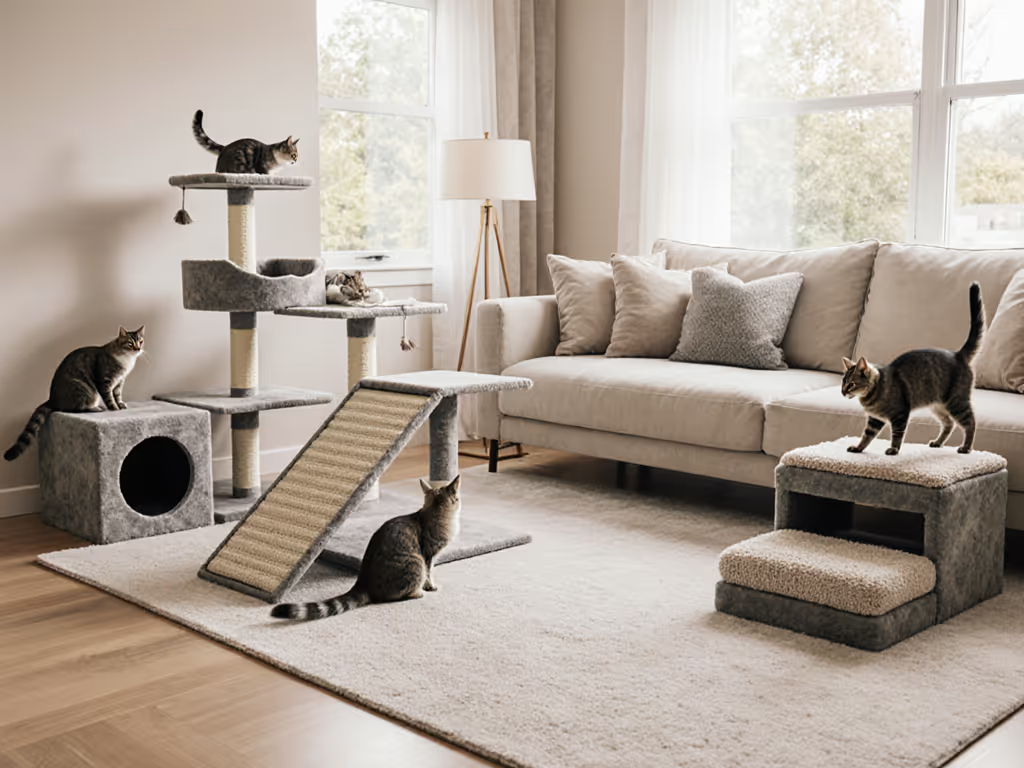
Agitate: The Hidden Stress of Inaccessible Territory
When I'm called in to help with "depression", "clinginess", or new litter issues after an injury or paralysis, the pattern is remarkably consistent.
1. Loss of Vantage = Loss of Control
Cats regulate stress by controlling where they are and what they can see. High perches offer:
- Early warning of other pets and people.
- Distance from noisy areas.
- Temperature control (warmer up high).
A cat grounded by hind-limb weakness loses those vantage points overnight. They:
- Startle more easily when approached on the floor.
- Avoid walking across open areas.
- Hide under furniture because it's the only semi-secure "territory" left.
2. Social Hierarchy Gets Skewed
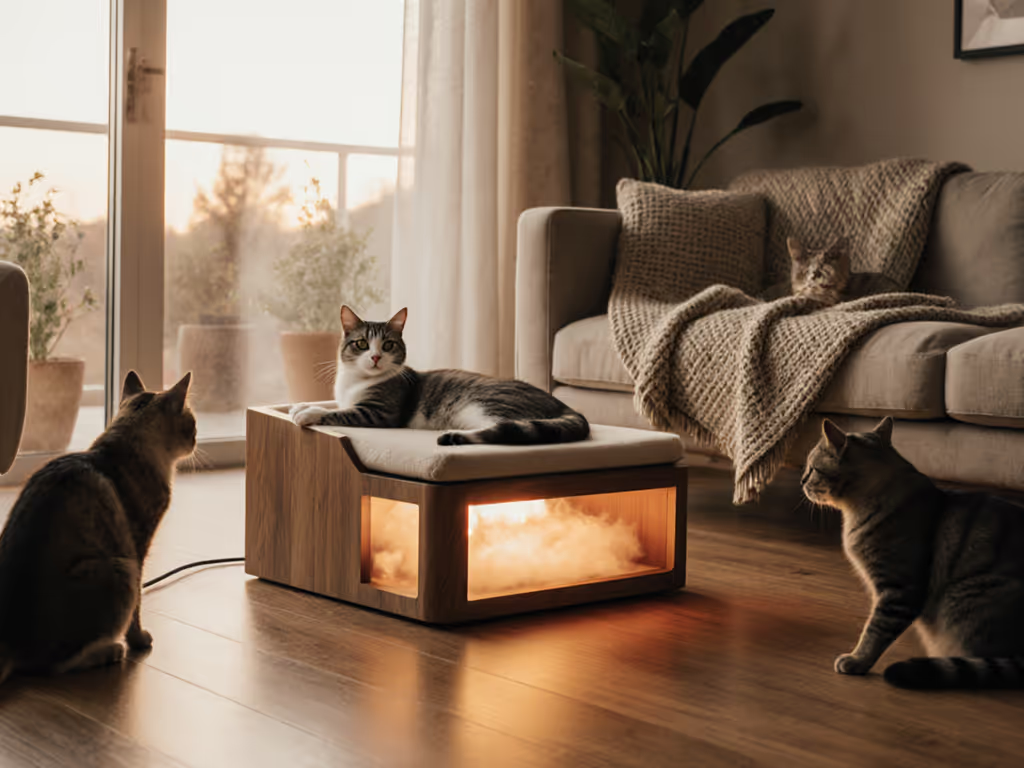
In multi-cat homes, vertical space is social space. For layout strategies that reduce conflict and share resources fairly, explore our multi-cat vertical territory design guide. The cat who can take the upper shelf often "wins" tiny daily negotiations:
- Who claims the sunny spot.
- Who keeps the prime viewing perch.
- Who can eat, then retreat to a safe resting place.
A mobility-limited cat stuck on the floor can't opt out of conflict. This can lead to:
- Increased hissing, blocking, or stalking by other cats.
- Guarding of litter boxes and food routes.
- The injured cat choosing not to eat or eliminate until the house is quiet.
3. Caregiver Stress and Guilt
You're carrying a lot:
- Lifting your cat to the bed or sofa multiple times a day.
- Worrying about falls when you're not home.
- Scrambling to modify furniture with cushions, stools, or boxes.
The home can start to feel like a medical ward instead of a shared, beautiful space. And if you also have a dog recovering from a knee or spinal problem, it can feel like every room needs to be padded and ramped.
But a mobility-adapted environment doesn't have to be chaotic or ugly. It just has to be designed from your cat's point of view, with their new physical realities in mind.
Solve: The OrthoCat Mobility Concept
For this article, I'll use "OrthoCat Mobility" as shorthand for a complete approach to:
- Hind limb support furniture (ramps, steps, low platforms).
- Wheelchair-accessible cat pathways (for cart users).
- Thoughtfully placed spinal injury cat perches (safe but elevated).
- Integrated mobility-limited cat zones that work with your decor.
We're not talking about one gadget. We're talking about a mapped route through your home that lets your cat: If you're planning pathways across multiple rooms, start with our guide to a stable whole-house cat highway.
- Move horizontally and vertically with minimal strain.
- Predict how to reach valued spots.
- Choose between multiple resting and hiding options.
Meet the need, not the symptom.
Instead of trying to "stop complaining", "stop clinginess", or "stop accidents", we build spaces that let your cat do what their instincts demand (but in ways their body can safely manage).
Core Design Principles for Paralysis Recovery Cat Spaces
Whether you buy branded furniture or hack together your own, evaluate every element with three lenses:
- Gradient, not cliff
No single step higher than your cat can confidently lift and place a paw. For many hind-limb-injured cats, that means:
- 10-15 cm (4-6 inches) per step.
- Long, shallow ramps with a grippy surface.
- Predictable pathways
Cats with compromised balance or hind-limb control do best with:
- Straight or gently curving ramps (no tight zigzags).
- Clear, repeatable routes to bed, window, sofa, and litter box.
- Minimal need to "guess" where to land.
- Secure, not showy, verticality
I bias toward anchored structures:
- Low to mid-height perches attached to walls or heavy furniture.
- Window seats supported from beneath and anchored at the wall when possible.
- Absolutely no unanchored tall builds, especially in homes with kids or big dogs.
Key Components of an OrthoCat-Style Setup
Think in routes, not single objects.
1. Ground-Level Safe Zone
A calm, low-traffic resting area that includes:
- Supportive bed with bolsters (for bracing when shifting weight).
- Low-front litter box nearby (but not directly adjacent to food).
- Water and food on non-slip mats.
For paralysis recovery cat spaces, ground level should still feel rich, not like a leftover corner.
2. Assisted Elevation Route
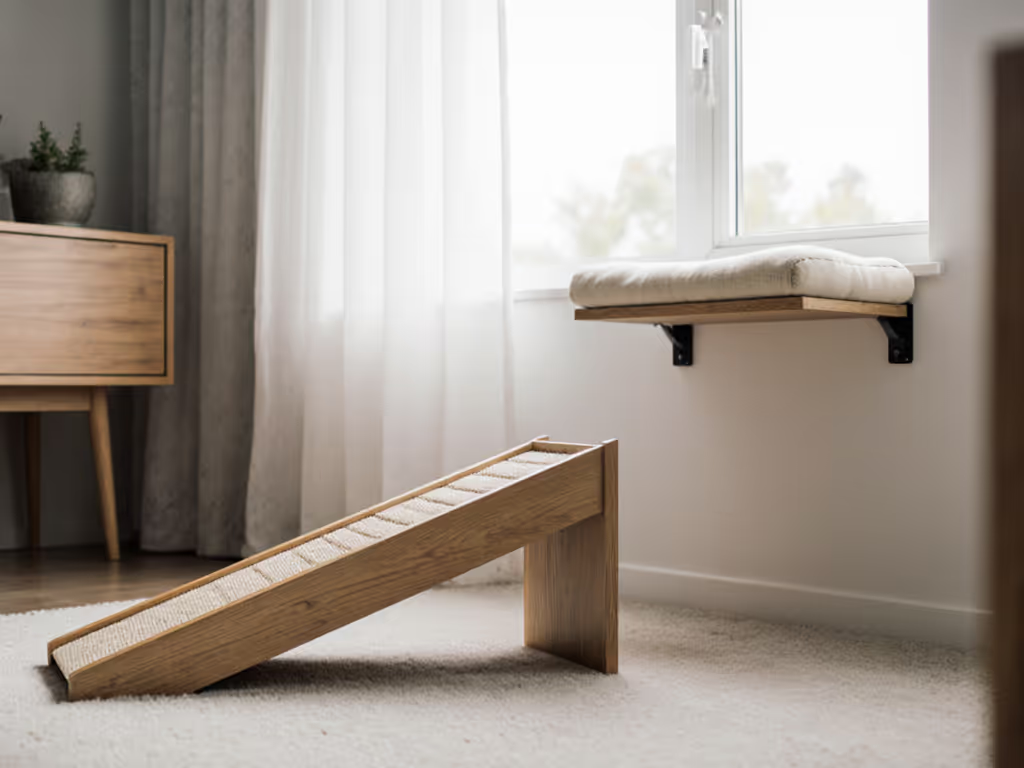
To reach the bed, sofa, or window, your cat needs a reliable ladder made of:
- Wide, stable steps or ottomans.
- Ramps with side rails or raised edges to guide hind paws.
- Grippy textures (rubberized runners, dense carpet, cork).
This is your home's version of hind limb support furniture. Every step should:
- Allow all four paws to be fully placed.
- Rock minimally when tested by you shifting your weight.
3. Safe, Contained Perches
Spinal injury cat perches deserve extra caution. For recovery-specific heights, timelines, and placement, see our post-surgery cat spaces guide. Look for or create perches that:
- Sit mid-height (not ceiling-tall).
- Have at least one solid wall or backboard.
- Offer a rail or lip along exposed edges to reduce rolling off.
Window perches, in particular, should support your cat from beneath, not just via tension on window frames. A low bench under the window plus a well-secured cushion on top often beats any suction-cup design.
4. Integrated Scratching and Scent Posts
Even injured cats need to scratch and rub.
- Mount horizontal or angled scratchers along your cat's daily route.
- Place at least one scratching surface right next to a favorite resting perch.
This maintains scent-marking without demanding full hind-end involvement.
5. Cart and Wheelchair Access
If your cat uses a cart, you're effectively designing wheelchair-accessible cat pathways:
- Ensure ramp widths exceed cart wheel width with margin.
- Avoid plush, sinking carpets on ramps.
- Keep turns wide and gradual.
Again: Behavior blossoms when spaces speak your cat's native language.
What High-Quality Joint Support Looks Like: Ortocanis Dog Knee Brace Review
Many homes with a mobility-limited cat also share space with an older dog facing hind-leg or knee issues. While I don't recommend trying to brace a cat's limb with dog gear, canine orthopedic products can teach us what good support engineering looks like.
A strong example is the Ortocanis Dog Knee Brace for Hind Leg Support (Large, Left Leg). It's designed for dogs with back-leg instability, limping, or joint discomfort.

Ortocanis Dog Knee Brace
Support your dog's hind leg recovery and mobility with balanced compression.
$49.9
Support360° Knee Stability
Support360° Knee Stability
Pros
Reduces joint instability and weakness.
Promotes circulation, easing discomfort and swelling.
Cons
Some users report issues with brace staying in place.
May not provide sufficient support for all dogs.
Customers report that the brace provides good support and a comfortable fit for their dogs, aiding in recovery and stability. However, some found it ineffective, stating it did not stay in place or offer sufficient support.
Customers report that the brace provides good support and a comfortable fit for their dogs, aiding in recovery and stability. However, some found it ineffective, stating it did not stay in place or offer sufficient support.
Design and Materials
The Ortocanis brace uses High Dynamic Resistance neoprene (HDR) to provide:
- 360° compression around the knee joint.
- Warmth to the area, which can support circulation.
- A close, adaptive fit that moves with the limb.
Importantly, it's built to support movement, not completely immobilize it. For cases where immobilization is needed, the manufacturer directs guardians toward a separate knee immobilizer product (that distinction tells you the design has a specific, controlled purpose).
Intended Use and Benefits (for Dogs)
Based on manufacturer information and user feedback, this brace is marketed to help dogs by:
- Supporting the knee during daily activity.
- Reducing strain on unstable joints, such as after cruciate ligament injury.
- Offering gentle compression that may ease swelling and stiffness.
- Serving as a non-surgical or post-surgical support option when professionally approved.
Customers frequently report:
- Improved stability during walks.
- A more confident gait in dogs that previously hesitated or limped.
However, the average rating (about 3.4 stars across more than 1,700 ratings) tells a more nuanced story.
How It Performs in Real Homes
From aggregated customer comments:
Pros
- Many guardians see notable improvement in comfort and joint control.
- The neoprene is generally described as soft yet supportive.
- When properly fitted and introduced gradually, it can stay in place for normal activity.
Cons
- Fit is critical: if measurements are off or straps aren't properly adjusted, the brace can slip.
- Some dogs dislike the sensation initially and need slow desensitization.
- A subset of reviews report less benefit than expected, often tied to slipping or poor positioning.
Practical Use Considerations
The brand emphasizes slow, supervised introduction:
- Measure at the upper thigh (groin area) for sizing.
- Start with short wear periods (around 30 minutes).
- Check the skin for redness or irritation, especially at the groin.
- Increase duration only if the dog appears comfortable and skin remains normal.
This gradual approach mirrors what I advise for any supportive device, ramp, or new furniture introduced to a mobility-limited animal. For step-by-step conditioning, follow our stress-free cat furniture introduction guide. Build tolerance and positive associations step by step.
What This Teaches Us About Cat Furniture
Even though this product is for dogs, not cats, it offers principles we should demand from hind leg injury cat furniture:
- True support is stable, not flimsy. Just as a brace must not slip, steps and ramps must not wobble or tilt.
- Comfort matters as much as function. Soft but supportive surfaces encourage repeated use; harsh or abrasive textures get avoided.
- Fit is individual. A one-size-fits-all ramp angle or step height won't work for every cat; be ready to adjust.
- Slow introduction is non-negotiable. Whether it's a brace or a new mobility route, you build trust over days, not minutes.
If your household includes a dog recovering from a knee issue and a cat with mobility challenges, pairing a canine support like the Ortocanis brace (under veterinary guidance) with a carefully mapped OrthoCat-style environment can dramatically lower stress for everyone.
Step-by-Step: Build a Mobility-Limited Cat Zone in a Weekend
Let's turn concepts into a simple, actionable plan. You don't need to renovate; you need a continuous, predictable route.
Step 1: Map Your Cat's Essential Destinations
Identify 3-5 must-have sites:
- Primary and secondary litter boxes.
- Feeding area.
- One sunny resting spot (often a window or sofa back).
- One nighttime sleep spot (bed, sofa, or armchair).
Sketch a quick floor plan and mark current barriers:
- Tall bed with no intermediate surfaces.
- Narrow windowsill with no support underneath.
- Litter box in a corner that requires a sharp turn.
Step 2: Create One Reliable Route First
Choose one high-value target (often your bed or a favorite window) and build the simplest safe route:
- Use a stable bench or ottoman as a 'mid-landing'.
- Add a low step or sturdy box to bridge floor ↔ ottoman.
- Place a grippy mat or runner on each surface.
Test it yourself:
- Push each piece with your hands. If it rocks, reinforce or replace.
- Try walking it in socks. If you slip, your cat might too.
Step 3: Add Guard Rails Where Possible
Especially for spinal injury cat perches and ramps:
- Use low wooden strips, foam pool noodles, or upholstery tacks with fabric to create raised edges.
- Position ramps so one side is against a wall for natural guidance.
Even a 2-3 cm (1 inch) edge can prevent a hind paw from sliding off, which is mentally and physically reassuring.
Step 4: Layer in Sensory Comfort
Make your new mobility-limited cat zone feel rewarding:
- Place a favored blanket or bed at the destination perch.
- Add a scratcher at the base or on an intermediate level.
- Offer treats or a portion of meals on the steps and at the top.
A timid shelter cat I once worked with only started exploring after we began feeding him on the second step of a new shelf route. Once he realized the path was safe and led to good things, he claimed the higher vantage as his daily greeting spot. Your cat's body may be different, but the principle is the same.
Step 5: Expand to Litter and Secondary Spots
Once your cat uses the first route confidently for a week:
- Add a shallow ramp or step up to the litter box if there's a lip.
- Mirror the success of the first route when building access to a second perch or bed.
Keep changes predictable:
- Don't rearrange routes daily.
- Upgrade materials (e.g., better ramp) along the same path rather than moving locations.
DIY vs. Dedicated Mobility Systems
You can meet your cat's needs with a mix of:
DIY / Repurposed Solutions
- Sturdy human furniture (benches, ottomans, low bookshelves).
- Custom-cut yoga mats or runners for traction.
- Securely attached wall shelves at conservative heights.
Pros
- Highly customizable to your aesthetics.
- Often more sustainable if repurposing existing pieces.
- Cost-effective.
Cons
- Requires planning and testing for safety.
- Can look 'piecemeal' without a cohesive design.
Dedicated Mobility Lines (What 'OrthoCat Mobility' Should Offer)
If you shop for purpose-built hind leg injury cat furniture or modular systems, scrutinize:
- Step height & ramp angle: Are they realistic for a cat that can't power-jump?
- Anchoring options: Can it be fixed to wall or furniture?
- Materials: Are surfaces easy to clean (wood, sealed fabric, removable covers) rather than fur-trapping plush?
- Modularity: Can you rearrange components as your cat improves or ages?
In my work with mobility-limited cats, the most successful setups combine:
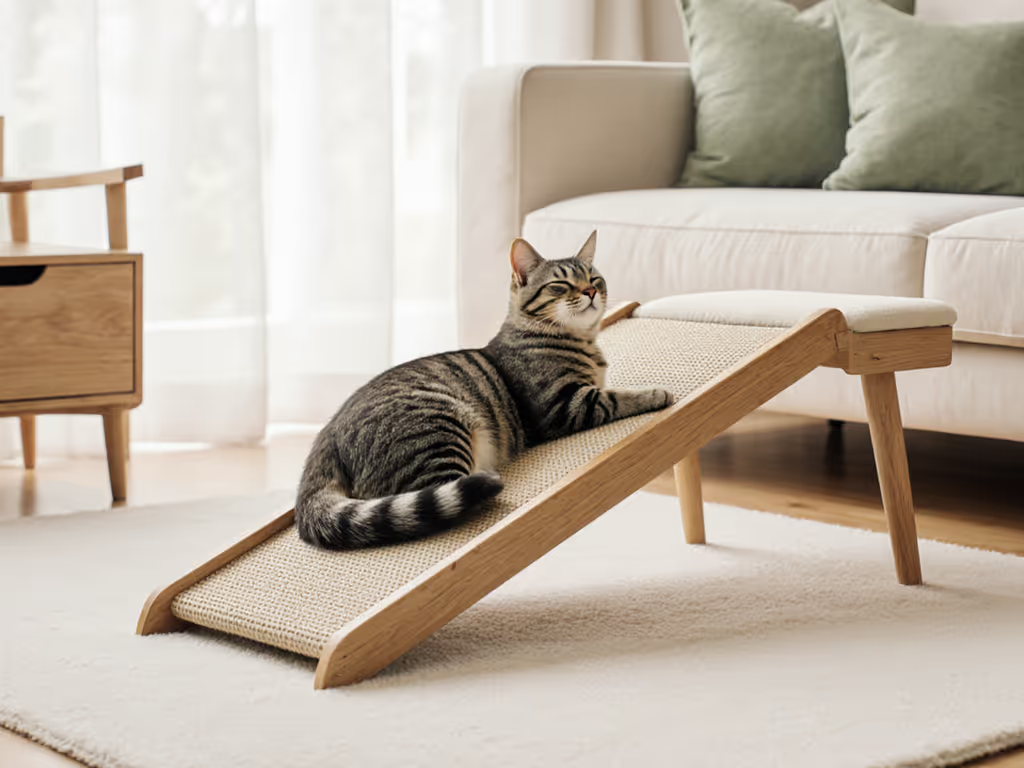
- A few strong, attractive core pieces (like a low, solid-frame cat tree or ramped window bench).
- Thoughtfully placed DIY bridges (steps, stools, mats) tying everything into one predictable loop.
Remember: Meet the need, not the symptom. If your cat is scratching the sofa arm more since their injury, they may not be 'acting out' (they may simply have lost access to their old scratching post).
Place a stable, low scratcher right on their new route, and the sofa often stops being the target.
Actionable Next Steps
You don't need to redesign your home overnight. Start with this focused sequence:
-
Tonight: 10-minute audit
- List your cat's 3-5 must-have locations.
- Circle one that currently feels hardest for them to reach.
-
This week: Build one safe route
- Use what you own: ottomans, sturdy boxes, benches.
- Add grippy mats and small edge guards.
- Reinforce with treats and calm praise.
-
Next 2-3 weeks: Stabilize and expand
- Observe how your cat uses the route.
- Adjust step heights or surfaces based on their hesitations.
- Then replicate the design for litter or a second perch.
-
If you share your home with a mobility-limited dog as well:
- Talk to your veterinarian about whether a knee support like the Ortocanis Dog Knee Brace is appropriate for your dog's specific condition and recovery plan.
- Coordinate your cat's ramps and pathways so they don't conflict with your dog's routes.
-
Stay behavior-first
- Watch where your cat tries to go: that's your design brief.
- If they keep returning to a spot, build them a safe way to own it again.
Your cat's body may have changed, but their need for choice, vantage, and safe retreats has not. When you align your environment with those needs, the anxious vocalizing, clinginess, and floor-bound frustration often soften on their own.
Behavior blossoms when spaces speak your cat's native language. Design those spaces, step by gentle step.
Related Articles