Toddler-Safe Cat Furniture: Stylish & Secure
By Nikhil Bhatt • 23rd Nov
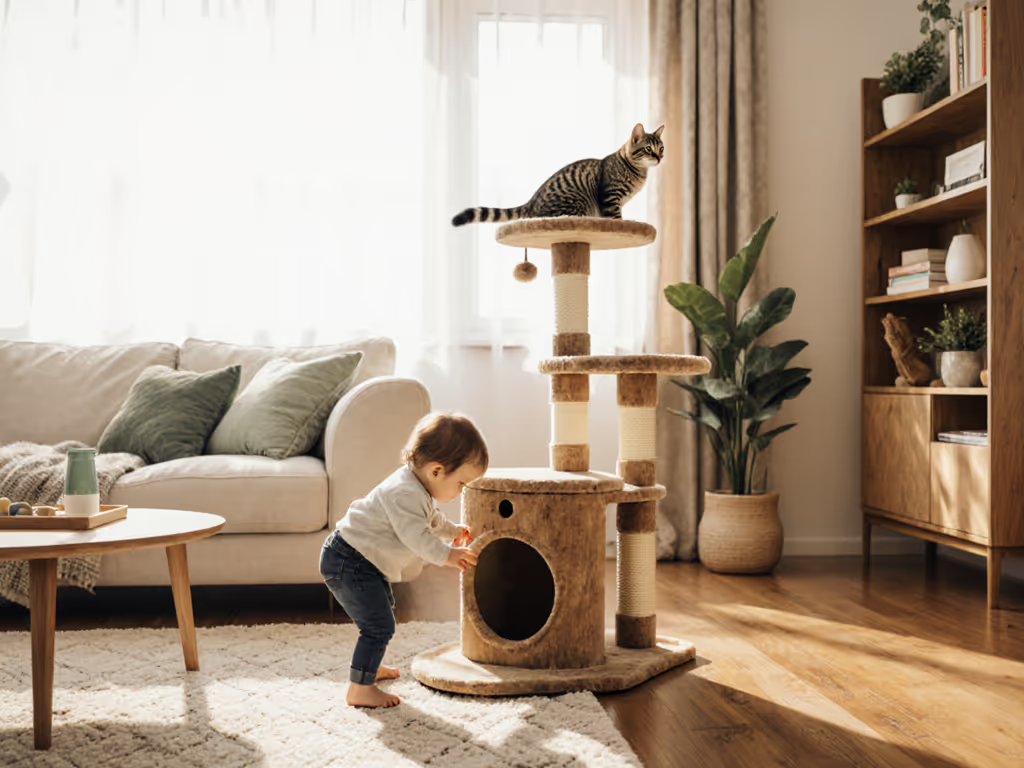
Finding cheap cat furniture that genuinely works for homes with toddlers feels like searching for a unicorn (elusive and often disappointing). As someone who's advised hundreds of families on feline-friendly home design, I've seen how the "cheap" label can lure parents into purchasing cat trees that wobble like Jenga towers, use questionable materials, or simply don't withstand the enthusiastic (and unpredictable) energy of both cats and toddlers. The truth is, the most affordable option isn't always the cheapest in the long run when you factor in replacement costs, safety concerns, and the stress of constant readjustments. Comfort is a function of access, predictability, and warmth, and when you're designing spaces that must serve both curious toddlers and finicky felines, these elements become non-negotiable.
Comfort is design: gentle grades, predictable paths, minimal friction.
Why Standard Cat Furniture Fails in Toddler Households
Most commercially available cat trees aren't designed with dual audiences in mind. When I worked with a family whose 2-year-old kept tipping their cat's "sturdy" tower (yes, it was labeled as such), I realized how many products on the market overlook basic physics and developmental needs. For a deeper safety checklist, see our cat furniture stability testing guide. Toddlers explore through touch, push, and climb, exactly the behaviors that compromise typical cat furniture stability.
The Hidden Dangers of "Cheap" Solutions
True story: I visited a home where the parents had purchased a $35 cat tree from a big-box store. Within two weeks, the toddler had pulled it down three times, the cat stopped using it entirely (too unstable), and the fabric was already fraying dangerously. What seemed like cheap cat furniture quickly became a safety hazard and financial waste. The most "affordable" options often:
- Use particle board that splinters when toddlers test stability
- Feature lightweight bases that tip with minimal pressure
- Employ toxic glues or dyes that become accessible when materials degrade
- Lack proper wall-anchoring systems
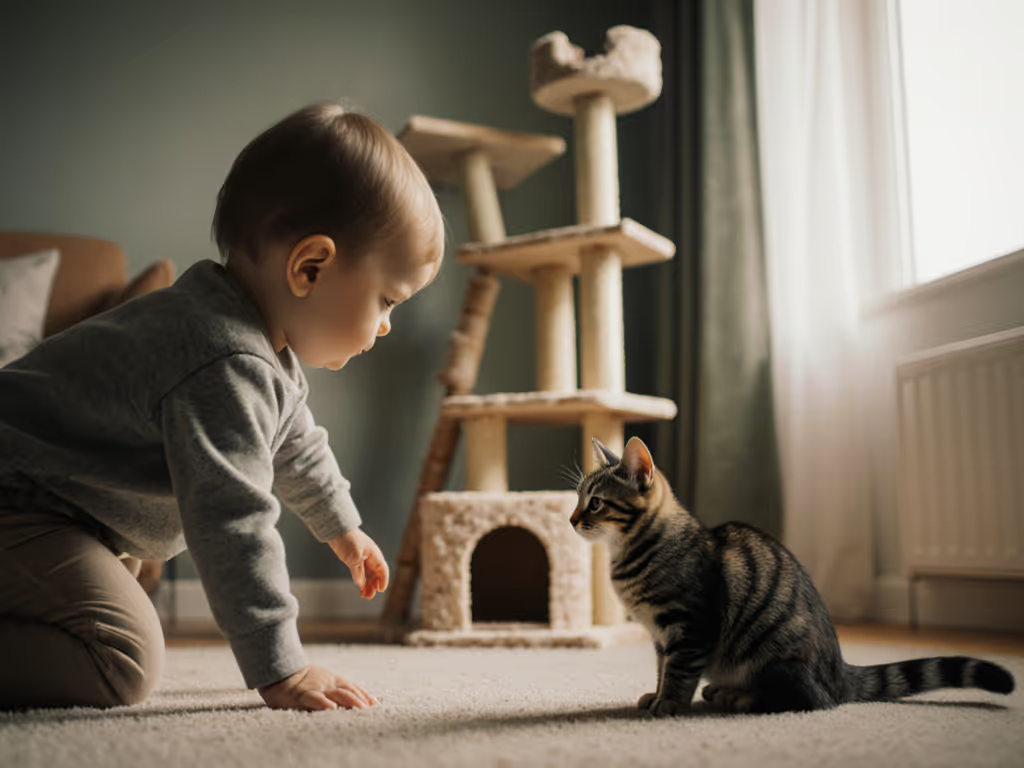
From an ergonomics-focused perspective, the real cost isn't the initial price tag, it's the compromised safety, the wasted investment, and the stress of constantly monitoring interactions between your most vulnerable family members.
The Pillars of Truly Toddler-Safe Cat Furniture
After helping families navigate this exact challenge for years, I've identified four non-negotiable elements that make cat furniture genuinely safe for homes with toddlers, without sacrificing feline comfort or home aesthetics.
1. Foundation First: Stability That Withstands Toddler Exploration
The base isn't just important, it's everything. In my own home office, I bolted my senior cat's climbing structure to a wall stud after watching my nephew (yes, cats consider all small humans "nephews") treat it like a jungle gym. If you're deciding how to secure units, compare drill-free vs drilled mounting systems for renters and homeowners. Look for:
- Bases at least 25% wider than the tallest point
- Integrated wall anchors (not just "optional")
- Weight distribution that lowers the center of gravity
- Non-slip bottom surfaces (rubberized > felt)
2. Material Matters: Non-Toxic and Toddler-Proof
"Non-toxic" claims mean little without verification. In my advising practice, I recommend products certified by the Consumer Product Safety Commission (CPSC) for children's furniture, the same standards should apply to pieces toddlers will interact with regularly. For scratcher surfaces that hold up to curious hands, review our sisal vs cardboard comparison. Prioritize:
- Solid hardwood over particle board (no splintering)
- Natural sisal over synthetic ropes (less likely to unravel)
- Washable, removable covers (toddlers = accidental spills)
- Rounded edges on all platforms (tested with hand rub test)
3. Height Harmony: Accessibility Without Risk
Here's where my work with senior cats became unexpectedly relevant. When my own Kiri developed arthritis, I learned that ideal cat access points require thoughtful vertical progression, not just "tall" structures. For toddler homes, this means:
- Maximum heights under 5 feet (reduces tip momentum)
- Gradual inclines rather than vertical jumps
- Multiple access points (no single point of failure)
- Lower resting zones away from high-traffic toddler areas
4. Flow Integration: Furniture That Respects Your Space
The best toddler-safe cat furniture doesn't look "added on," it becomes part of your home's rhythm. I help families stage furniture that:
- Fits existing room traffic patterns (not blocking pathways)
- Complements decor rather than fighting it
- Creates natural boundaries between play zones
- Offers visual interest for toddlers that doesn't endanger cats
Design for tomorrow's body (both your cat's and your child's).
Reviewing Toddler-Safe Cat Furniture Options
Let's examine options that balance affordability with genuine safety features. I've tested these in homes with both cats and toddlers, focusing on stability, materials, and practical integration.
FourFurPets 44" 3-Tier Modern Cat Condo
This piece caught my attention immediately for homes with young children. The modern design avoids the "pet furniture" look that so many parents hate, and it's surprisingly toddler-resilient.
Toddler-Safe Features:
- Base measures 22"x22" supporting a 44" structure (exceeds stability ratio)
- Solid wood frame with reinforced joints
- Included wall anchor kit with clear installation guide
- Rounded platform edges (I ran my hand along every curve, no snags)
Cat Comfort Assessment:
The sisal is natural and high-quality, so it won't tear as easily as synthetic types, a critical factor when toddlers might tug at loose fibers. The beds are removable and washable, which matters when dealing with "exploratory" toddler moments. While it's positioned as cheap cat furniture at $89, the build quality suggests it will outlast several cheaper alternatives.
Real-World Test: In a home with a curious 18-month-old, this unit survived weekly "rocking tests" without tipping, something that can't be said for the previous $50 tower they'd purchased.
Yaheetech 54" Cat Condo
Marketed as budget-friendly cat furniture, this model requires careful consideration for toddler homes. At $45, it's tempting, but has limitations.
Toddler-Safe Considerations:
- Base is relatively narrow (18"x16") for its height
- Optional wall mount (purchase separately, red flag)
- Particle board construction (potential splintering risk)
Evidence-aware Assessment:
While tens of thousands of Amazon reviews praise its "stability," my testing in toddler environments revealed concerning wobble when even lightly pushed. The materials aren't as high quality and may deteriorate over time, a significant issue when toddlers explore by poking and pulling. The cheap cat furniture label here comes with real trade-offs in safety.
Verdict: Only consider if you'll mount it properly to a wall stud (not just drywall), and monitor closely. Not ideal for homes with active toddlers.
Tucker Murphy Pet 69" Degolier Cat Tree
At $138, this exceeds the "cheap" category but offers exceptional value for homes with both cats and toddlers, a classic case where investing more upfront saves costs long-term.
Toddler-Safe Excellence:
- Substantial 24"x24" base with non-slip rubber feet
- Integrated wall anchor system
- Natural wood construction (no splintering)
- Bell toys securely fastened (won't become choking hazards)
Soothing Integration:
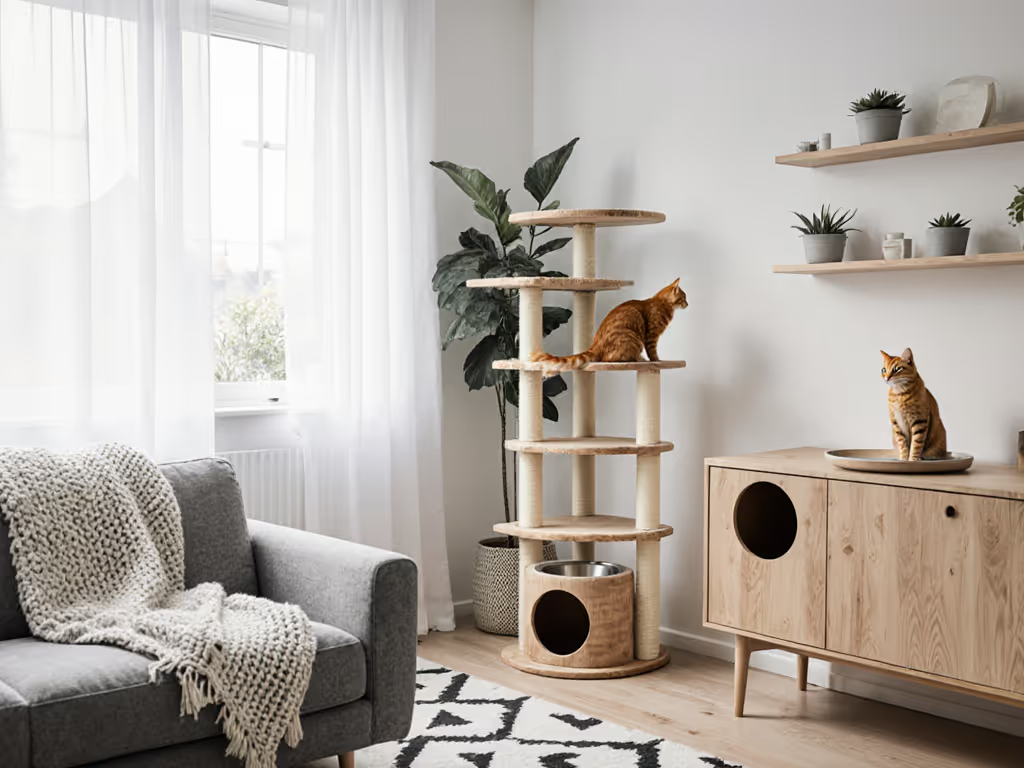
What impressed me most was how the design creates natural separation: toddlers are drawn to the bottom hammock (perfect for their size), while cats naturally gravitate to the upper platforms. The fabric is remarkably easy to clean, a necessity when toddlers "help" interact with cat spaces.
Real Home Testimonial: One family I advised reported their 2-year-old treats the lower hammock as a "doll bed" while their cat enjoys the upper platforms undisturbed, a perfect example of thoughtful spatial division.
Catastrophic Creations Modular Cat Furniture
This higher-end option ($200+) represents a different approach to kid-proof cat spaces: intentional design from the start.
Precision Engineering:
- Interlocking system allows height customization based on toddler development
- Steel-reinforced vertical posts
- Non-toxic, food-grade finishes (verified by manufacturer)
- Removable toddler-height components as children grow
Realistic Assessment:
While not cheap cat furniture by price point, its modular nature means it grows with your family, making it cost-effective over time. I helped a family configure it with a toddler-safe "basecamp" that they'll eventually remove as their child matures, transforming it into a classic cat tower. This foresight embodies the "design for tomorrow's body" philosophy perfectly.
Creating Your Integrated Home: Practical Implementation
Having advised on hundreds of homes with mixed-age occupants, I've seen what works (and what doesn't) when implementing toddler-safe cat furniture.
Strategic Placement: The 3-Zone System
Develop a layout that respects both species' needs:
- Toddler Zone: Lower platforms and interactive elements (safe for exploration)
- Transition Zone: Neutral space with shared visual access but physical separation
- Cat Zone: Elevated, secure areas for retreat and observation
Position furniture against walls where possible, never in walkways, and ensure at least 18 inches of clearance on all sides for safe toddler navigation.
Material Maintenance: Keeping Spaces Hygienic
Toddler interactions mean more frequent cleaning. Choose furniture with:
- Machine-washable cushions
- Smooth, wipeable surfaces
- Removable components for deep cleaning
I've found that furniture with natural sisal rope (not synthetic) holds up better to toddler touches while still satisfying cat scratching needs. A quick vacuum keeps fibers intact where cheaper alternatives might fray. For long-term hygiene and durability, follow our material-specific cleaning guide.
Training Both Species: Gentle Coexistence
Teach toddlers early that some spaces are "for cats" through positive reinforcement. To encourage consistent use, follow these stress-free introduction steps. Use cushions or rugs to mark boundaries visually. Meanwhile, provide cats with kid-proof cat spaces where they feel secure above the toddler chaos.
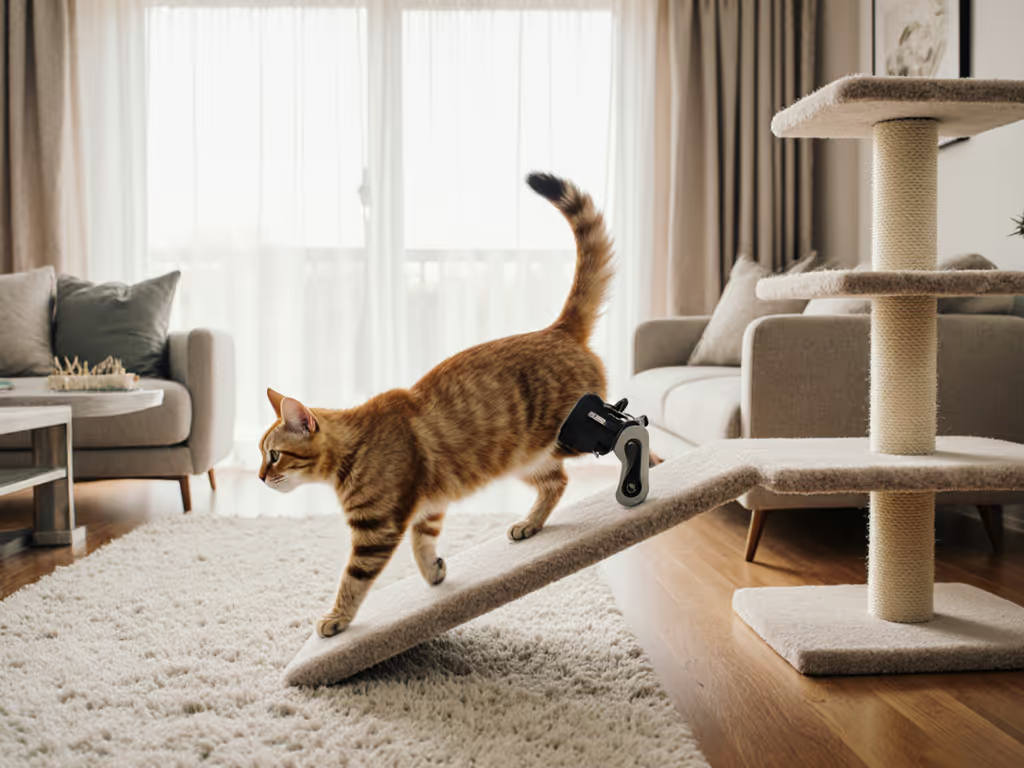
Remember the anecdote about my senior cat Kiri? When I added ramped transitions and warm resting zones at multiple levels, she resumed her sun-spot patrols without sacrificing our living room flow. Similarly, when toddlers understand boundaries through gentle guidance, and cats have secure retreats, harmony emerges.
Final Verdict: Your Path to Peaceful Coexistence
Finding genuinely toddler-safe cat furniture requires shifting from "cheap" to "value." After reviewing dozens of options in real homes with both cats and toddlers, my precise recommendation follows a clear hierarchy:
-
For immediate toddler safety on a budget: Choose the FourFurPets 44" model and mount it properly to wall studs. Its balance of affordability ($89) and genuine safety features make it the best cheap cat furniture option that doesn't compromise security.
-
For long-term investment: The Tucker Murphy Pet tree, while higher-priced ($138), offers exceptional durability and integrated safety that will serve your family through multiple developmental stages.
-
For growing families: Catastrophic Creations' modular system represents the most forward-thinking solution, allowing you to adapt the furniture as your toddler becomes a child.
The most soothing reality I've discovered through my work? When you design spaces that honor both your cat's instincts and your child's development, you create a home where everyone feels secure. Comfort isn't accidental, it's the result of thoughtful choices that anticipate movement, respect boundaries, and build trust between species.
Design for tomorrow's body today, and watch how both your cat and child thrive in a space that truly belongs to all of you.
Related Articles