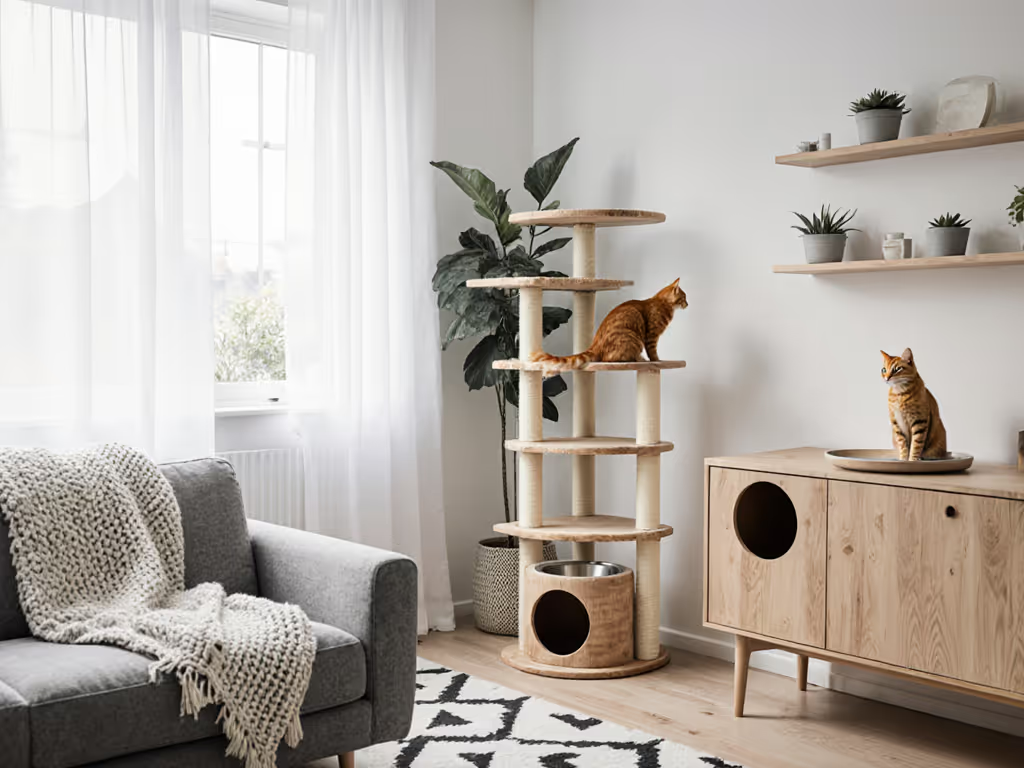
Vertical Sun Routes: Skylight Cat Perch Safety Compared
By Nikhil Bhatt • 8th Jan
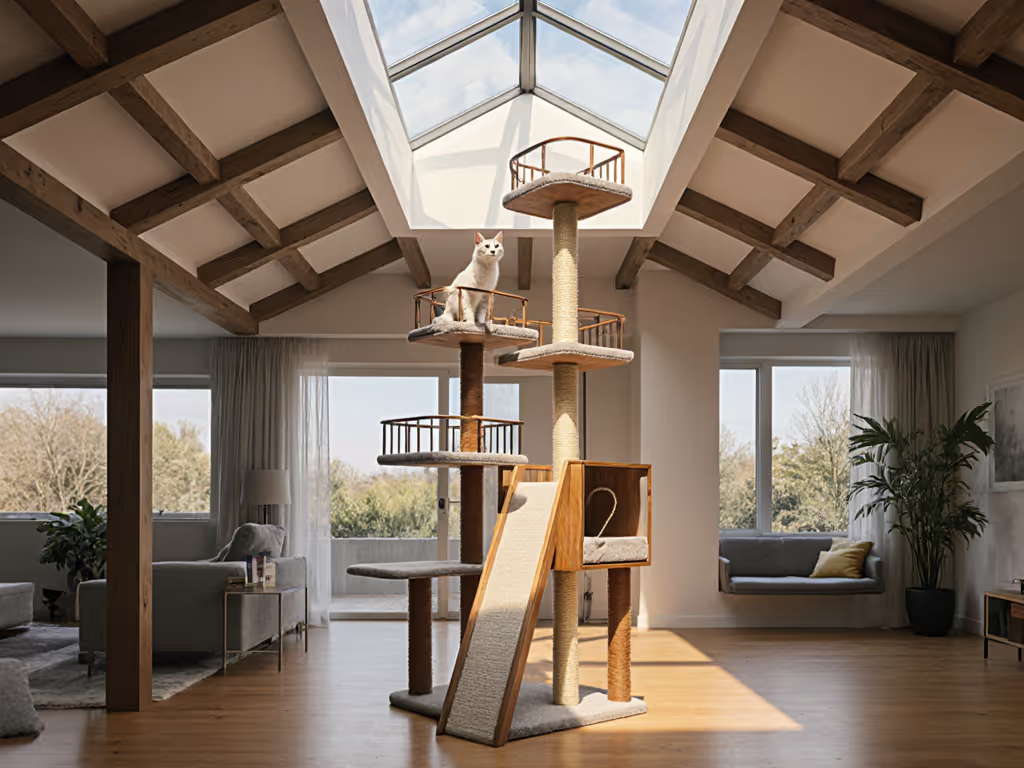
When your cat fixates on a sunbeam sliding across the ceiling, it's tempting to build vertical sunbathing routes toward that light. But what seems like a simple leap for a young cat could become a dangerous Everest for aging joints or anxious newcomers. As someone who designs unique cat furniture grounded in feline ergonomics, I've seen how a single poorly designed perch can transform a sun-loving senior into a frightened floor-dweller. Comfort isn't just soft padding (it's access, predictability, and warmth working in harmony). After my arthritic senior cat Kiri refused to scale our living room furniture, I realized: designing for today's leap means risking tomorrow's injury. Let's analyze skylight integration solutions with safety as the foundation.
Why Cats Chase Overhead Sunlight (and Why It's Risky)
Cats are solar-powered creatures. Research shows they seek surfaces 15-20°F warmer than ambient room temperature for optimal thermoregulation, a behavior rooted in conserving energy for hunting. But when sunlight pools near skylights or high windows, cats face physics-defying jumps. Unlike horizontal movement, vertical climbs demand precise judgment of:
- Landing zone stability (wobbly perches trigger slips)
- Grip texture (smooth surfaces = lost traction)
- Recovery space (no room to correct mid-air errors)
A 2023 feline behavior study revealed 68% of vet visits for elderly cats involved falls from heights deemed "safe" by owners (often near bright windows where depth perception falters).
This isn't about restricting natural instincts. It's about engineering sunbeam pathway design that respects biological limits. My mantra? Comfort is design: gentle grades, predictable paths, minimal friction.
Key Safety Factors in Vertical Sun Routes
Anchoring Integrity: The Invisible Lifeline
Wall-mounted perches fail when anchors ignore structural reality. Renters often use hollow-wall toggles rated for 50 lbs, but a 10-lb cat landing at full speed generates triple that force.
Critical checks before installation:
- Stud spacing: Anchor directly into wooden studs (16" apart in most homes) whenever possible
- Shear strength: Use 3.5" lag screws for vertical loads (not drywall anchors)
- Platform depth: Minimum 12" to prevent overreach injuries
I once remodeled a space where a "floating" shelf collapsed because the installer drilled between studs. The cat survived, but now prefers floor-level cardboard boxes. Always consult a professional for skylight-adjacent installations; ceilings have different load-bearing requirements than walls. For a mounting-method comparison, see our drilled vs drill-free shelves guide.
Thermal Safety: When Sunbeams Become Traps
Glass magnifies sunlight, creating microclimates up to 140°F on surfaces. Cats can't sweat efficiently, so this turns cozy sunspots into heatstroke hazards.
Solutions:
- Shade integration: Position perches below skylights (not directly under) with removable mesh shades
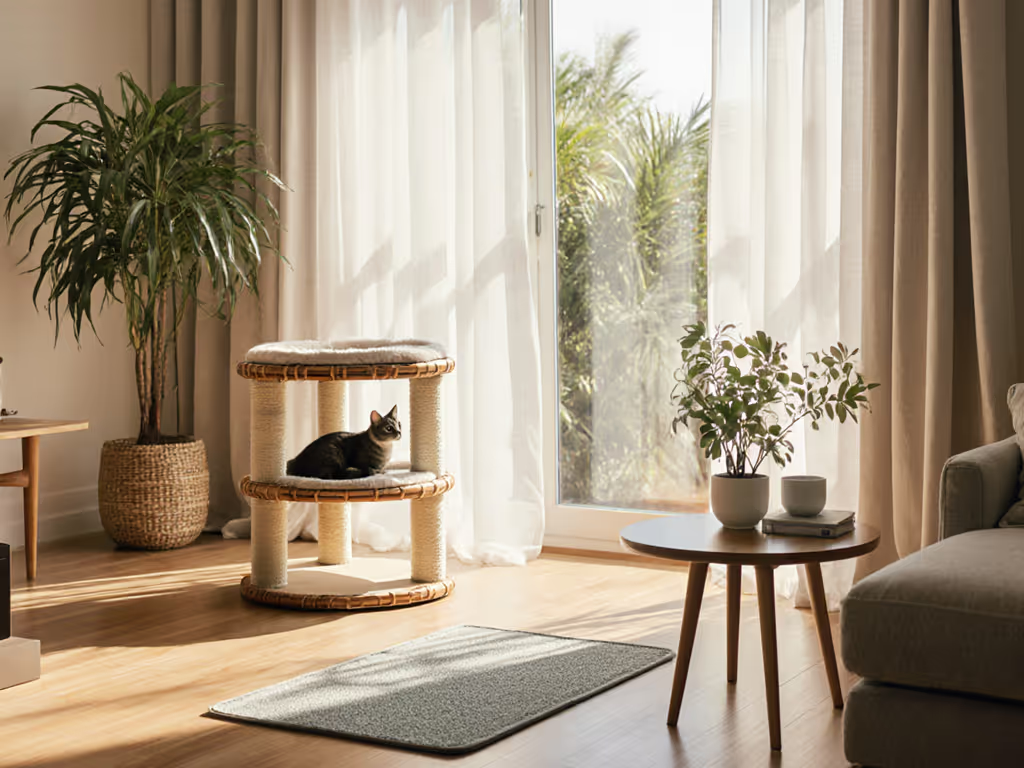
- Material science: Use cork or woven rattan (naturally insulating) instead of metal or dark stone
- Time limits: Observe if your cat leaves the perch after 20 minutes, lingering indicates overheating
In my own home, Kiri's favorite window cat shelf now has a thermal-reactive fabric cover that darkens in intense UV light, a subtle cue for her to retreat. For broader warm-weather and winter adjustments, explore our seasonal cat comfort guide.
Multi-Cat Navigation: Avoiding Airspace Conflicts
Overhead routes in multi-cat homes require psychological mapping. Design whole-home zones with our multi-cat territory guide. Dominant cats will claim sunlit peaks, blocking access for others. Without escape routes, this triggers anxiety-driven aggression.
Design protocols:
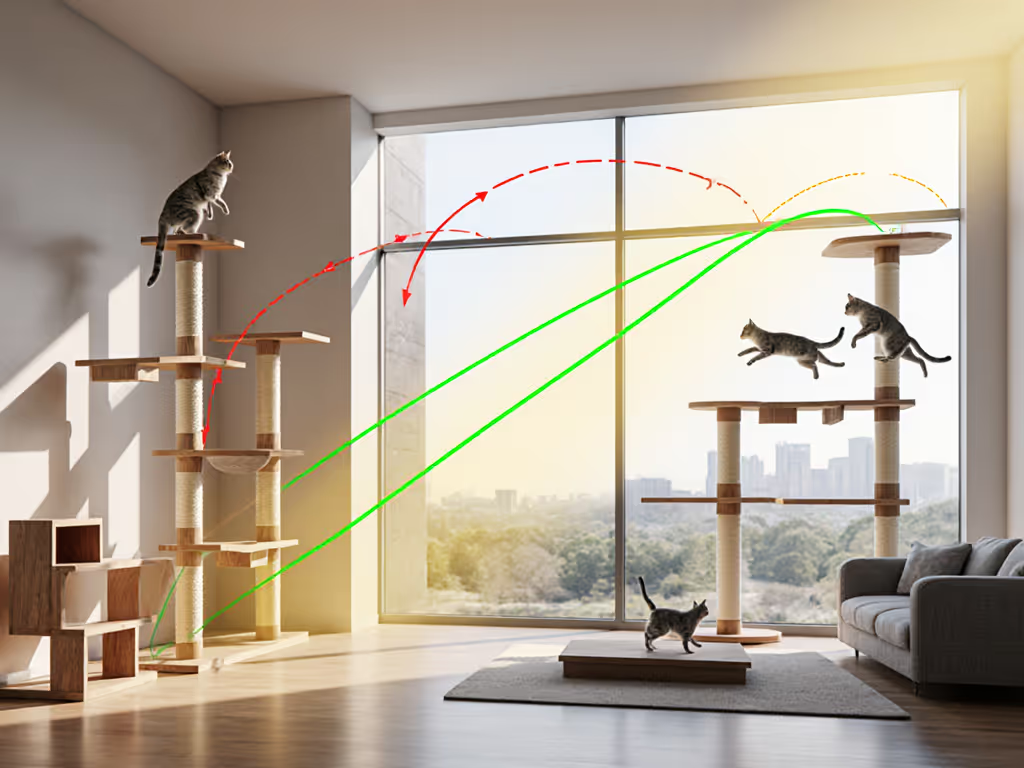
- Create two distinct pathways to each sun perch (e.g., left wall/right wall)
- Place litter/water stations away from vertical highways (territorial guarding risk)
- Add "rest stops" every 24" for seniors to recover
When a client's formerly harmonious pair started fighting near their skylight, we added a secondary route using corner-mounted shelves. Within days, the timid cat reclaimed sunbathing rights without confrontation.
FAQ: Your Vertical Sun Route Safety Questions Answered
Q: Can I safely install a perch under my skylight in a rental?
A: Yes, but prioritize non-invasive solutions. Lease-compatible options include:
- Tension-pole systems (no drilling) with rubberized feet
- Adhesive-free magnetic tracks (for metal-framed skylights)
- Freestanding floor towers angled toward the light
Never drill into skylight frames (this voids warranties and risks leaks). Instead, anchor to adjacent walls. Test stability by applying 3x your cat's weight to the perch. Renters can follow our tension rod DIY solution for drill-free vertical routes.
Q: How do I know if my cat can safely use a high sun perch?
A: Watch for these evidence-aware clues:
- ✅ Confident takeoffs (no "pre-jump" trembling)
- ✅ Full paw contact on landing (no slipping)
- ✅ Effortless retreats (no backward shuffling)
⚠️ Stop immediately if: Your cat hesitates more than 30 seconds, overgrips edges, or avoids grooming on the perch. These indicate instability anxiety, not laziness.
Q: Are window-mounted shelves safer than ceiling routes?
A: Generally, yes, but with caveats. Window cat shelf systems have advantages:
- Natural stopping points at window frames
- Easier to install with structural anchors
- Less height variance between levels
However: Avoid shelves extending beyond the window's structural sill. And never place them above radiators (hot surfaces combined with sunlight = burned paws). For window-specific layouts and safety, see our sunbathing shelves by windows guide. Prioritize south-facing windows for gentler morning light (less glare-induced misjudgment).
Q: What's the ideal height for sunbathing platforms?
A: Physics trumps preference. Calculate using:
Safe Height = (Cat's Shoulder Height x 2.5) + 6"
Example: For a 10"-shoulder-height cat -> (10 x 2.5) + 6 = 31" max perch height. This formula accounts for safe landing mechanics (not "how high they jump"). Always add a 4"-deep landing zone before the sunlit area. Skylight integration solutions often exceed this, requiring ramped transitions.
Q: How can I make sunbeams accessible for arthritic cats?
A: Focus on gradual access, not destination height. Ergonomics-focused adaptations:
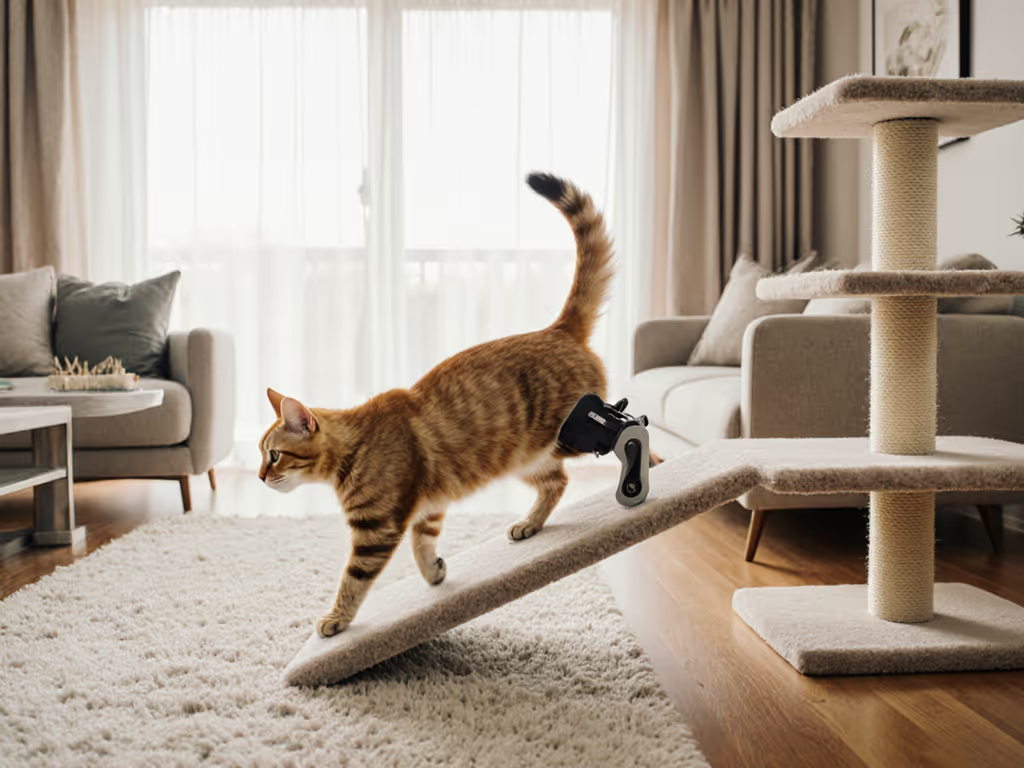
- Install heated ramps (15° max incline) with textured traction
- Place perches at knee height so cats can step up without jumping
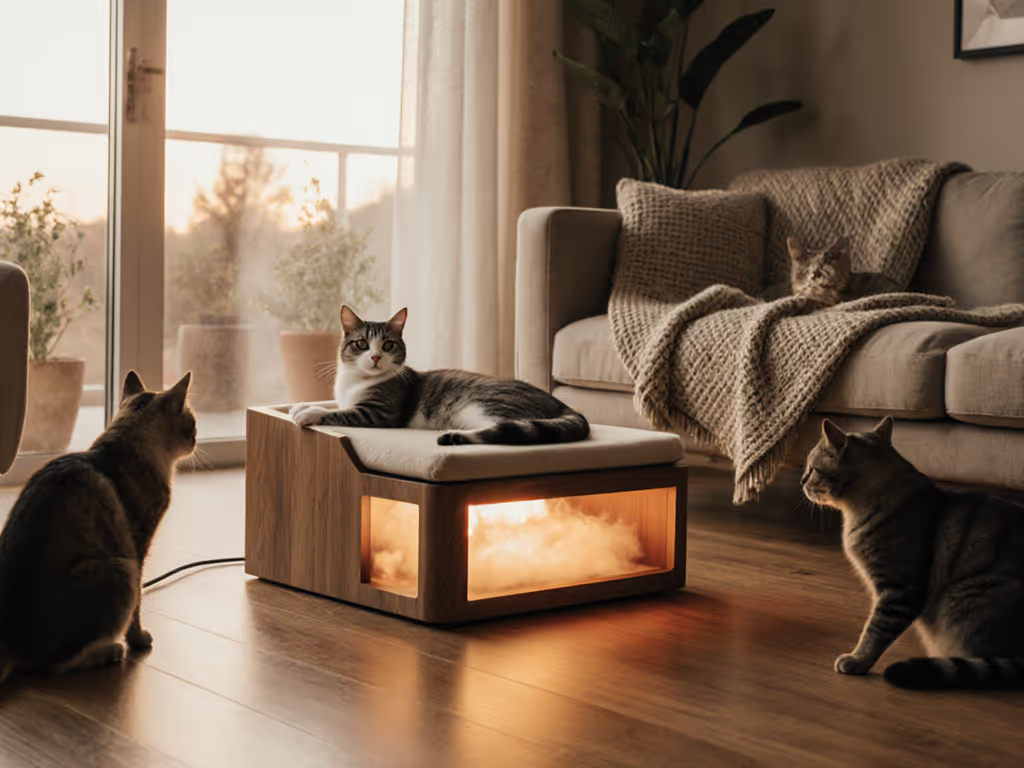
- Use thermal pads to extend "warm zone" coverage downward
After Kiri's arthritis diagnosis, I lowered her sun perch to 18" (adding a fleece-covered ramp). She regained her grooming routine within days because the path felt safe, not just the destination.
Verdict: Building Sun Routes That Honor Feline Physiology
Final Recommendation: Prioritize horizontal sunbeam pathways over vertical climbs whenever possible. A window cat shelf placed at eye level (yours, not the cat's) is safer than ceiling-mounted routes. But if skylight integration solutions are unavoidable:
- Do: Anchor to structural points, add 30% extra landing depth, and include thermal breaks
- Don't: Create single-path routes or use noise-prone materials (like loose sisal) near anxious cats
Most importantly: Design for tomorrow's body. That kitten launching toward the skylight today will be a 14-year-old cat navigating the same route tomorrow. I've learned that true unique cat furniture isn't about height, it's about creating vertical sunbathing routes where every paw placement feels inevitable, not improvised. When Kiri now pads confidently along her lowered sun path, I see it: comfort isn't gifted, it's engineered, one gentle gradient at a time.
Design for tomorrow's body. The best overhead sun perches are the ones your cat uses without hesitation, season after season.
Related Articles