Vestibular Disease Cat Furniture: Safe Low-Height Designs
By Nikhil Bhatt • 18th Jan
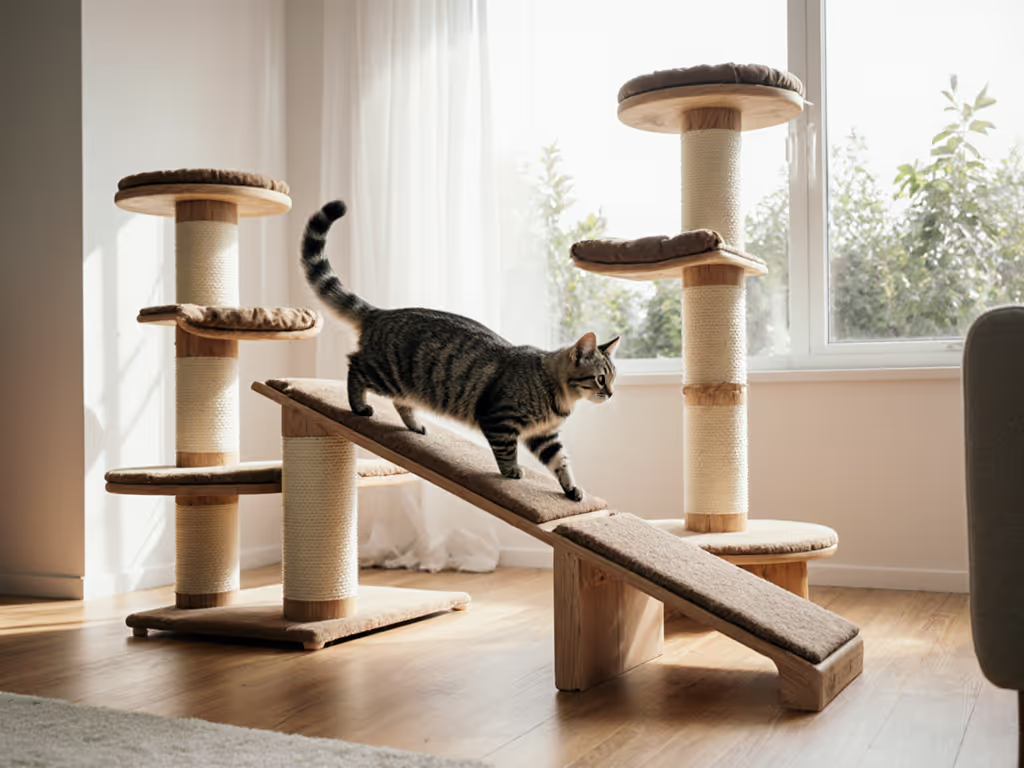
When your cat develops vestibular disease, ordinary household items transform into treacherous landscapes. Suddenly, the beloved cat tree becomes a dangerous obstacle course, and the simple act of reaching a water bowl feels like scaling a mountain. This is where thoughtful vestibular disease cat furniture becomes essential, not as a luxury but as a lifeline. The right balance-supporting cat furniture creates stability in a world that seems to spin, offering your disoriented companion safe pathways when they need them most. For planning multi-room routes, see our whole-house cat highway guide.
As someone who has guided hundreds of families through modifying their homes for cats with mobility challenges, I've seen how proper environmental design transforms recovery. Comfort is a function of access, predictability, and warmth, a principle that became crystal clear when my senior cat Kiri suddenly developed balance issues. What I learned from that experience forms the foundation of today's guide to vestibular-friendly home modifications.
Understanding the Challenge: When Your Cat's World Spins
Vestibular disease in cats creates a profound spatial disorientation. Imagine your entire world suddenly tilting on its axis, what was once familiar becomes unpredictable and frightening. Cats with vestibular disorders experience head tilts, sudden falls, circling behavior, and rapid eye movements as their brain struggles to process spatial information. These symptoms make navigating standard cat furniture incredibly dangerous.
The Hidden Dangers of Standard Cat Furniture
Most conventional cat furniture designs operate on assumptions that don't account for vestibular challenges. When your cat is experiencing balance issues, these features become hazards:
- Abrupt height changes: Standard cat trees with significant vertical jumps force dizzy cats to make dangerous leaps
- Slippery surfaces: Many perches use smooth materials that offer no traction for unsteady paws
- Narrow pathways: Thin walkways become precarious tightropes for cats struggling with coordination
- Unpredictable transitions: Changes between surfaces without warning create tripping hazards
- Isolated resources: Food, water, and litter boxes placed too far apart require unsafe travel
As one client told me during a home consultation, "My cat used to jump four feet onto her favorite perch without thinking. Now she stares at it like it's a cliff edge." This heartbreaking reality is why standard furniture solutions simply won't work during vestibular episodes.
Core Design Principles for Vestibular-Friendly Spaces
When designing furniture for cats with vestibular disorders, we must prioritize safety without sacrificing dignity. Drawing from feline ergonomics research and clinical observations, I've identified several non-negotiable elements that transform spaces from threatening to trustworthy.
The Stability Triad: What Truly Matters
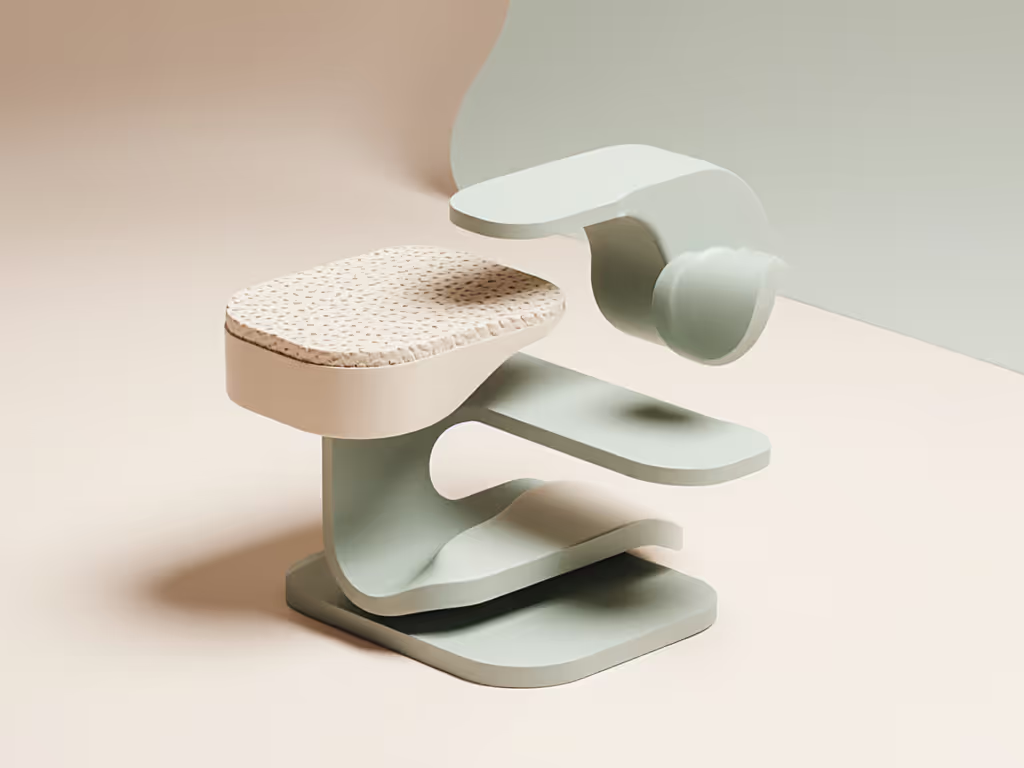
Effective vestibular disorder furniture must address three interconnected elements that form what I call the Stability Triad: For anchoring methods and safety benchmarks, consult our cat furniture stability guide.
- Surface Stability: Furniture should have a low center of gravity with minimal wobble
- Textural Traction: Non-slip surfaces that provide confident footing
- Predictable Pathways: Clear, consistent routes between essential resources
Cats experiencing vestibular symptoms need to trust each paw placement completely. When a surface feels unstable or slippery, it triggers anxiety that worsens their disorientation. This isn't merely about physical support, it's about building psychological confidence that directly impacts recovery.
The Critical Height Threshold
Research shows that cats with vestibular disease can safely navigate heights of 6-8 inches without significant risk of injury from falls. Beyond this threshold, the risk of dangerous tumbles increases dramatically during active symptoms. This understanding has led to what I call the "kneeling height" principle (designing furniture that allows cats to interact while in a partially crouched position, which provides greater stability than standing).
When I advised the Thompson family whose cat Oliver was recovering from vestibular disease, we implemented this principle throughout their home. Within days, Oliver stopped attempting dangerous jumps to his favorite window perch and instead used the newly created low-level resting spot. His confidence visibly improved as he realized his environment could be navigated safely. The change was both practical and reassuring. If your cat is older or arthritic, our senior comfort solutions offer low-entry designs aligned with this approach.
Essential Furniture Modifications for Vestibular Support
Transforming your home for a cat with vestibular disease doesn't require expensive renovations or eyesore solutions. Strategic, evidence-aware modifications create a supportive environment while maintaining your home's aesthetic flow.
Crafting Safe Low-Height Pathways
Creating low-height cat pathways involves more than just lowering existing furniture, it requires thoughtful route planning. Focus on establishing ground-level circuits that connect your cat's essential resources (food, water, litter box, resting areas) with minimal elevation changes.
Comfort is design: gentle grades, predictable paths, minimal friction.
This means:
- Using wide base platforms (at least 12 inches) for stability
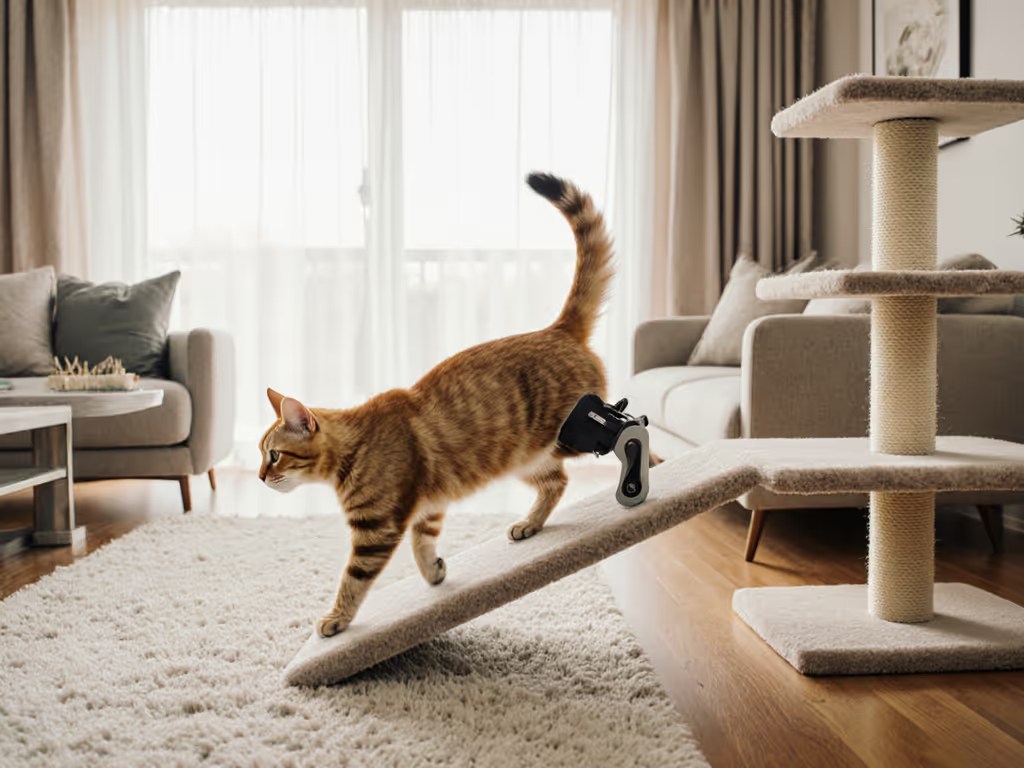
- Creating horizontal pathways instead of vertical climbs
- Ensuring no gaps larger than 4 inches between connected elements
- Adding gentle transitions between surfaces of different heights
A client with a Persian cat named Mochi implemented this approach using repurposed furniture bases covered with textured fabric. The result was a continuous low-level pathway that let Mochi safely patrol her territory without risking falls. Family members reported she seemed calmer and less anxious within 48 hours of the modifications.
Designing Motion-Sensitive Perches
Traditional perches require cats to commit fully to a jump with uncertain landing. Motion-sensitive cat perches instead offer intermediate resting zones that accommodate partial movements. These thoughtful designs allow cats to gauge their stability before committing to more challenging movements.
Key features include:
- Gradual height increments of 2-3 inches
- Multiple exit options from each platform
- Strategic placement against walls for additional support
- Rounded edges to prevent catching paws during instability
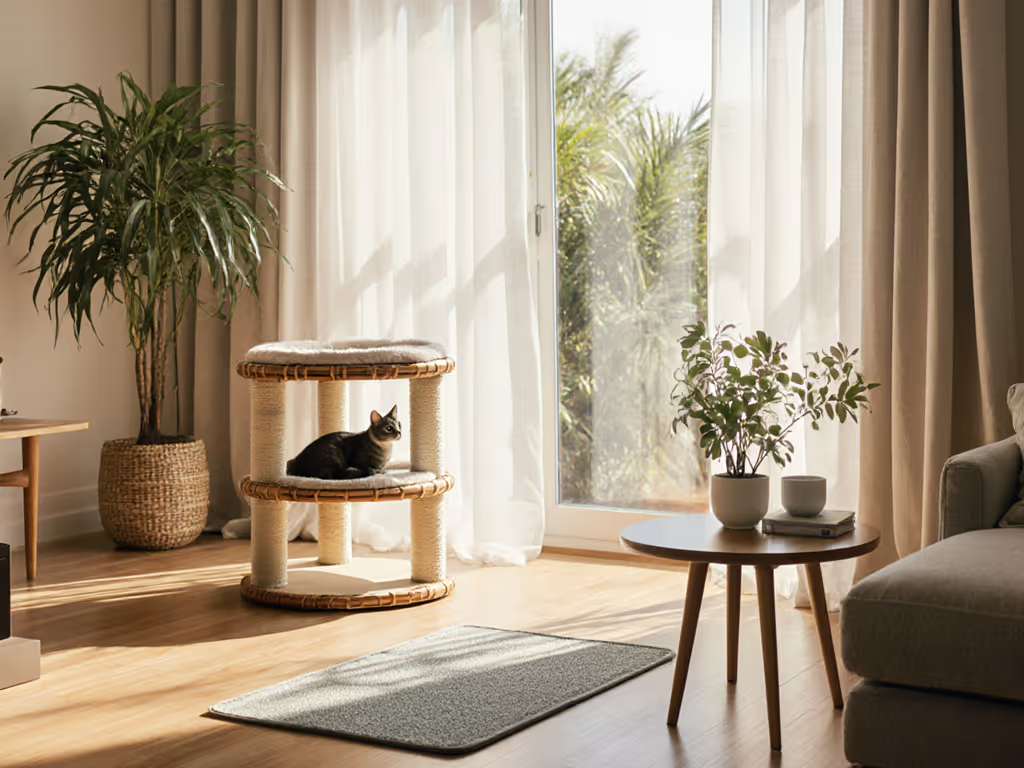
One particularly effective solution I've recommended involves creating "half-perches": platforms positioned just high enough for cats to rest their front paws while keeping their hindquarters on stable ground. This partial elevation satisfies their instinct to observe their territory while maintaining security.
Material Matters: Creating Confidence Through Texture
The right materials do more than prevent slips, they rebuild confidence. When your cat's vestibular system is compromised, each paw placement becomes a decision point. Textured surfaces provide crucial sensory feedback that helps disoriented cats navigate safely.
The Traction Continuum
Not all non-slip surfaces are created equal. Through careful observation of cats with vestibular issues, I've developed what I call the "traction continuum" (a spectrum of surface textures that provide appropriate support without causing anxiety):
- Soft-textured surfaces (like looped cotton rugs): Ideal for acute phases when paws are extremely sensitive
- Medium-textured surfaces (like tightly woven sisal): Best for recovery phases when confidence is rebuilding
- Structured surfaces (like ribbed rubber mats): Suitable for maintenance phases when stability has improved
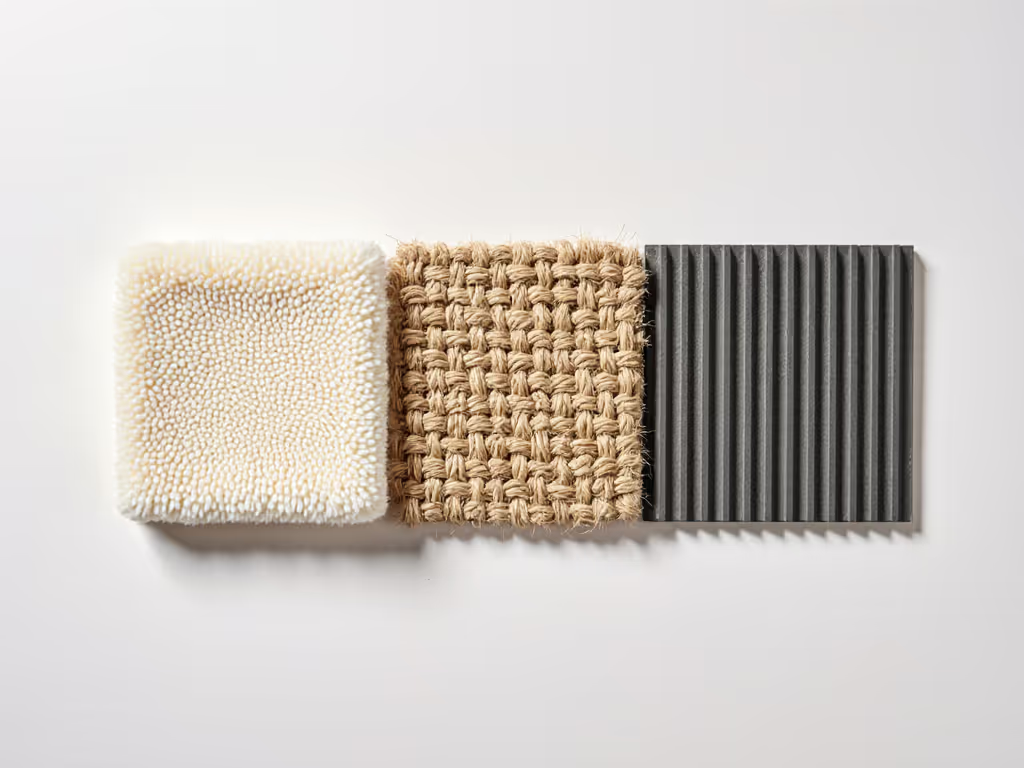
Learn which textures grip best in our sisal vs. cardboard comparison.
Crucially, avoid noise-heavy materials like crinkly plastics that can startle anxious cats, a boundary I've learned to respect through painful experience when my own cat startled at a noisy mat during a vestibular episode.
Integration Strategies: Blending Function with Aesthetics
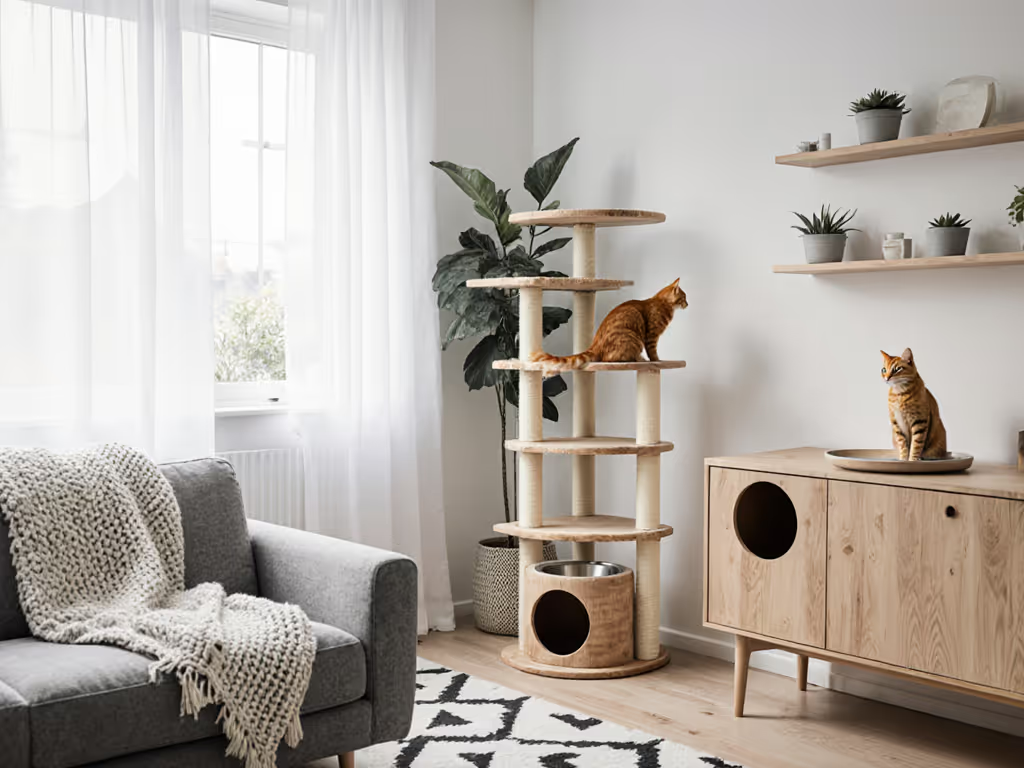
One of the biggest concerns I hear from clients is that vestibular support furniture will ruin their carefully curated home aesthetics. Nothing could be further from the truth. The most effective solutions often enhance your space while serving dual purposes.
Hidden in Plain Sight: Furniture That Pulls Double Duty
The most successful modifications become indistinguishable from regular home furnishings. Consider these approaches that maintain your home's style while supporting your cat:
- Window benches with textured tops that serve as both human seating and cat observation posts
- Low bookshelves positioned strategically to create gradual height changes
- Textured ottomans that provide stable resting spots while complementing your decor
- Wall-mounted shelves installed at consistent, low heights for predictable pathways
When designing for the Williams family, I recommended replacing their standard cat tree with a series of wall-mounted shelves at 6-inch intervals, covered with the same wood finish as their bookshelves. Not only did their cat Luna gain safe access to her favorite sunspot, but family members reported the new arrangement actually improved their living room's aesthetic flow.
The Warmth Connection
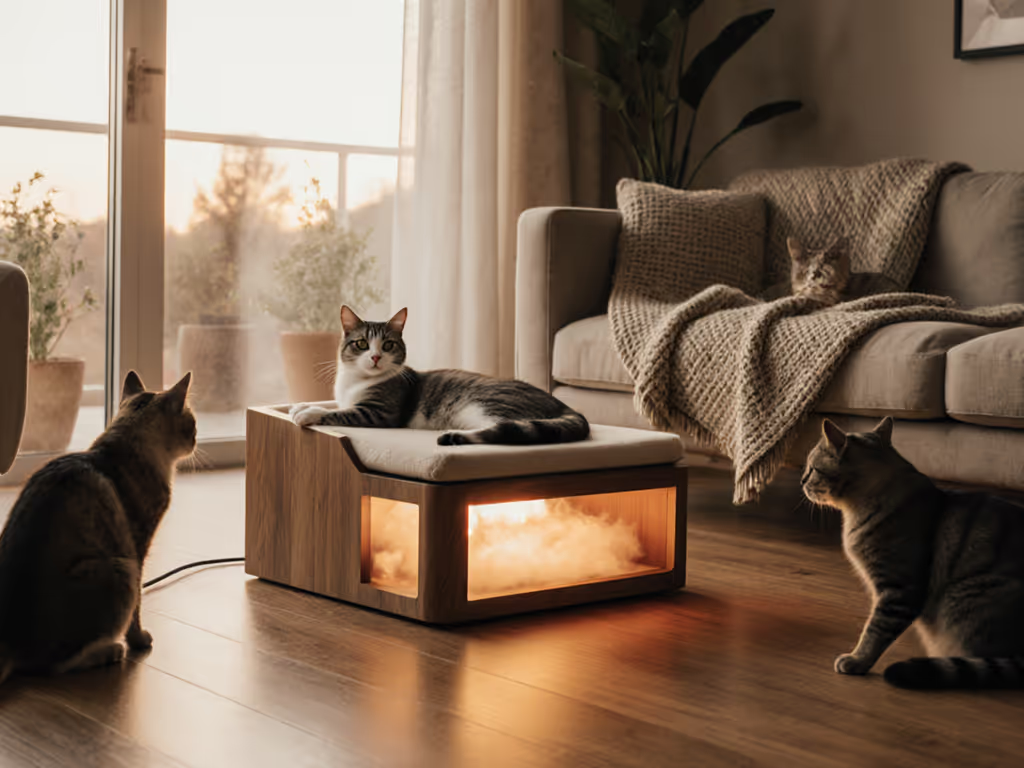
Warmth plays a critical role in vestibular recovery that many overlook. Cats with balance issues often become reluctant to move, leading to stiffness that compounds their difficulties. Integrating gentle warmth into resting zones encourages movement without pressure.
- Heated mats placed on low platforms (with temperature controls set to 95-100°F)
- Sun-trapping positioning of resting areas near natural light sources
- Thermal rugs made from materials that retain body heat
This principle proved essential for my own cat Kiri, adding warmth to her low-level resting zones dramatically increased her willingness to move between resources, which in turn improved her mobility and reduced her anxiety. Small comforts can unlock bigger gains. Before adding heat, review our heated cat bed safety review for temperature and electrical safeguards.
Implementation Roadmap: Creating Your Vestibular-Supportive Home
Transforming your space doesn't require expensive purchases or major renovations. Follow this realistic, step-by-step approach to create immediate improvements:
- Map your cat's essential circuit: Identify the path between food, water, litter box, and favorite resting spots
- Lower the entire circuit: Ensure no element requires jumping higher than 6 inches
- Add continuous traction: Create a textured "carpet" pathway between key areas
- Create multiple rest stops: Position low platforms at intervals along the circuit
- Introduce gentle warmth: Add controlled warmth to 1-2 key resting zones
Monitor your cat's movements for 2-3 days to identify problem areas, then make targeted adjustments. The most effective solutions often come from repurposing existing household items rather than purchasing specialized equipment.
Final Verdict: Essential Support for Vestibular Recovery
When your cat is struggling with vestibular disease, the right environmental support isn't just helpful, it's therapeutic. Thoughtful vestibular disease cat furniture creates a foundation of stability that directly supports neurological recovery by reducing anxiety and preventing injury from falls.
The most effective solutions share these key characteristics:
- Maintain height thresholds below 8 inches for safe navigation
- Provide continuous, predictable pathways between essential resources
- Integrate seamlessly with home aesthetics rather than fighting against them
- Offer multiple resting options to accommodate changing energy levels
- Prioritize texture and warmth for sensory feedback and comfort
Rather than viewing these modifications as temporary accommodations, consider them permanent enhancements to your cat's environment. Many owners report that even after vestibular symptoms resolve, their cats continue to prefer these safer, more accessible pathways, a testament to how well they meet fundamental feline needs.
Fewer barriers, more confidence. That's not just a design philosophy, it's the key to helping your disoriented cat rediscover the joy of movement in a world that once felt unstable. By implementing these evidence-aware, ergonomics-focused solutions, you're not just modifying your furniture; you're rebuilding your cat's relationship with their environment, one gentle step at a time.
Related Articles