Adaptive Cat Furniture: Stylish Solutions for Limited Mobility
By Lena Okafor • 25th Nov
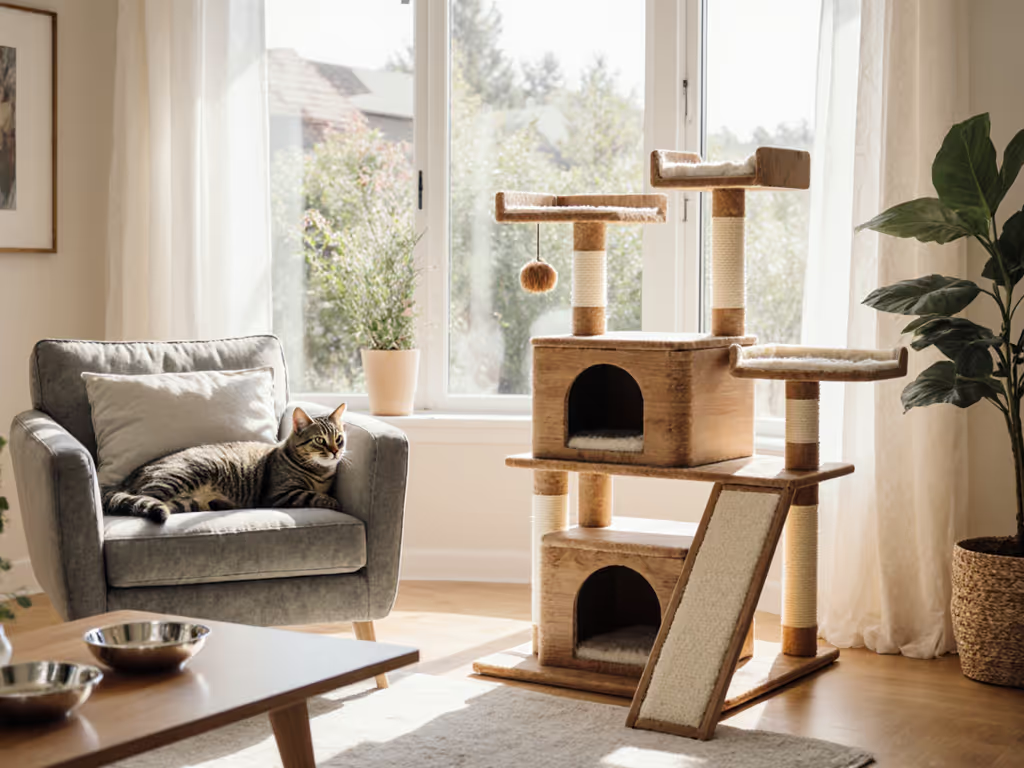
Finding truly unique cat furniture that accommodates mobility challenges shouldn't mean settling for cheap cat furniture that compromises aesthetics or function. For apartment dwellers and style-conscious cat owners, the real struggle lies in reconciling feline needs with spatial constraints, especially when mobility limitations affect either cat or human. Recent data reveals 6.8 million Americans rely on mobility aids, while veterinary studies show 90% of cats over age 10 develop arthritis-related mobility issues. The solution? Adaptive cat care solutions that serve dual purposes: supporting physical accessibility while elevating room harmony. When I transformed my sunlit studio with a wall run built from FSC offcuts, Luna didn't just claim her perch; she reclaimed our shared space. Form meets instinct: pieces that uplift rooms and enrich routines.
Mapping Mobility Challenges: Cats and Humans
Understanding Physical Limitations
Cats with limb deformities, paralysis, or age-related arthritis require thoughtful spatial planning. Unlike dogs, cats instinctively seek vertical territory, but jumps exceeding 18 inches become hazardous for mobility-impaired felines. Cat furniture must compensate for reduced leaping ability through graduated platforms. For human caregivers with limited mobility, floor-level litter boxes create daily strain: 78% of wheelchair users report back pain during standard litter maintenance (LoftyLoo Accessibility Survey, 2024). The key insight? Design must address both species' needs simultaneously.
Spatial Flow Analysis
Measure your room's traffic zones with this 3-step audit:
- Identify pinch points: Note areas where wheelchairs or mobility aids struggle to maneuver (minimum 32-inch clearance required)
- Track feline pathways: Observe your cat's preferred routes; they'll avoid narrow gaps under 10 inches wide
- Calculate vertical access: Measure existing jump heights; if >18", consider ramps or tiered landings
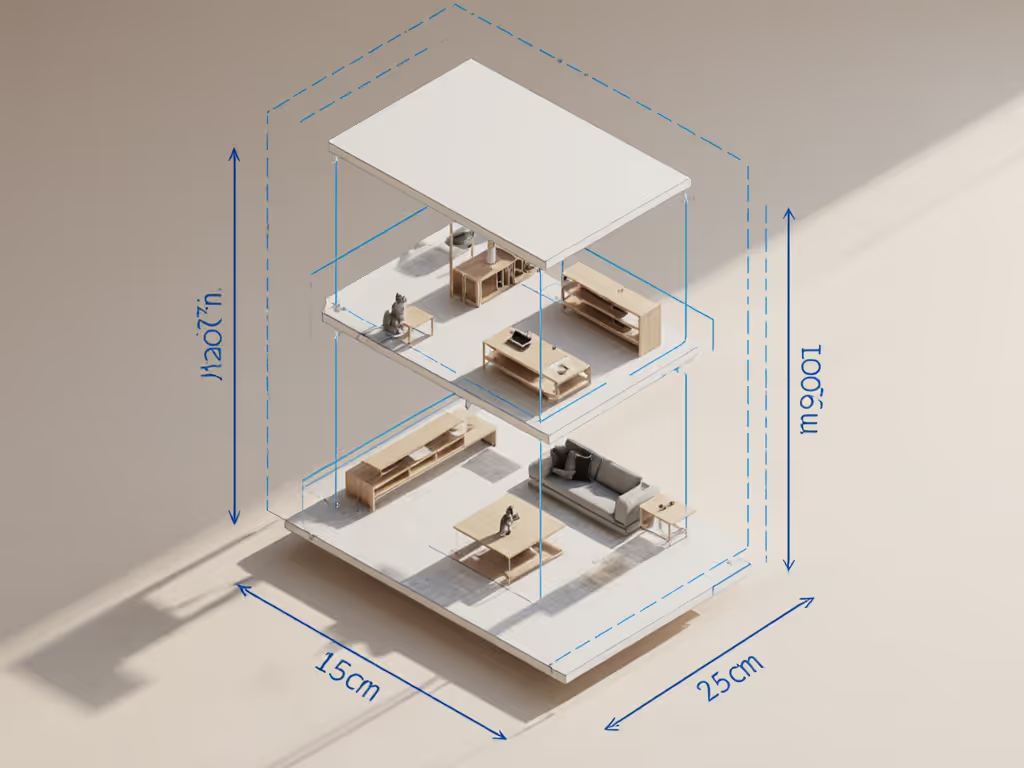
Think in layers: floor, mid, sky. This spatial framework prevents obstructive single-level solutions.
Designing with Dual Accessibility
Strategic Furniture Placement
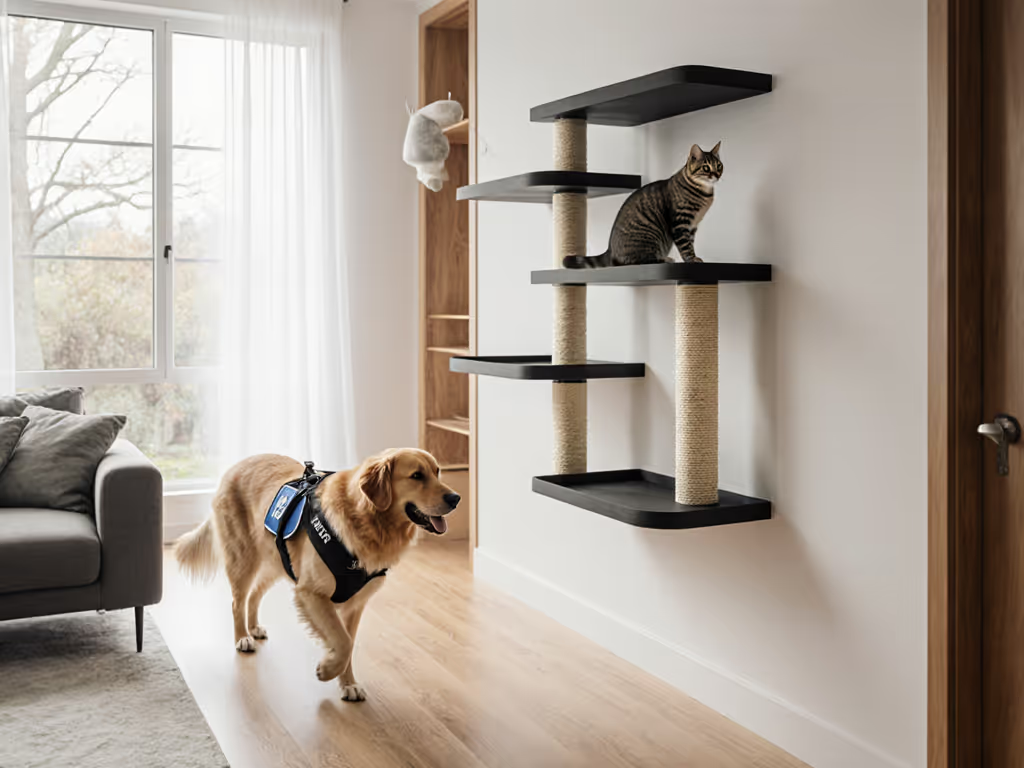
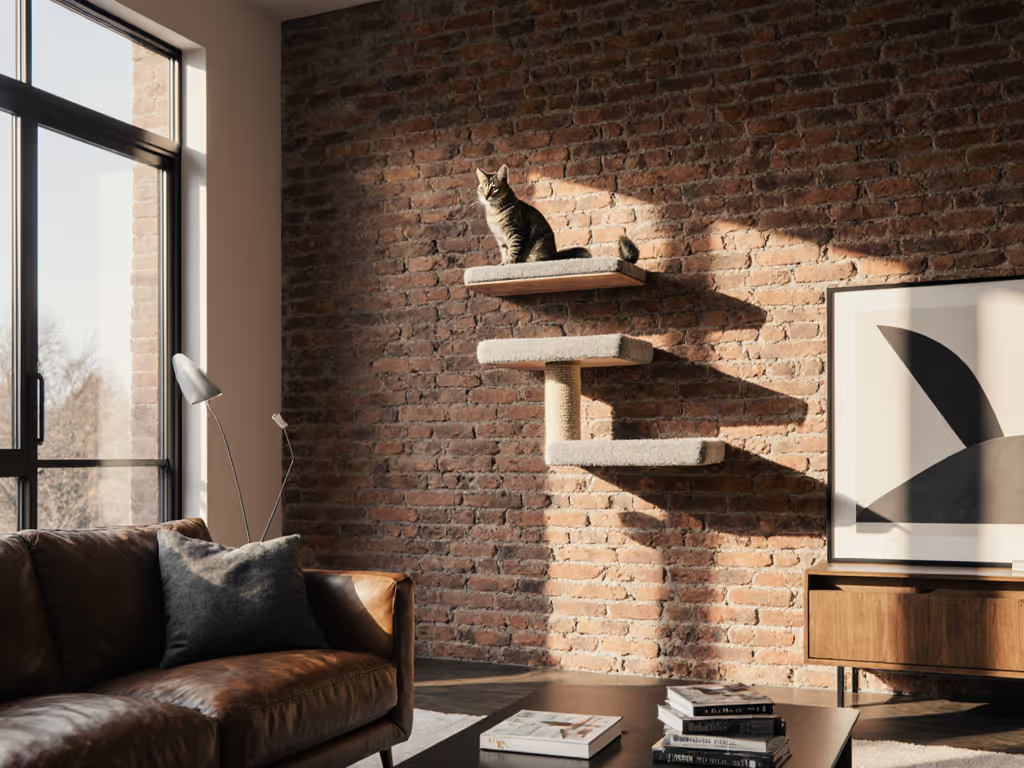
Adaptive cat care solutions thrive when integrated into existing architecture. Anchor wall-mounted perches to stud locations between human furniture, like the 14-inch-deep ledge above my bookcase that replaced a freestanding tower. For cats with limited mobility, position low-platform bases (max 8" height) near resting zones, then build upward in 6-8" increments. Crucially, align litter boxes with wheelchair turning radii: LoftyLoo's elevated design eliminates bending by raising the pan to seated height, proving that unique cat furniture can serve human ergonomics too.
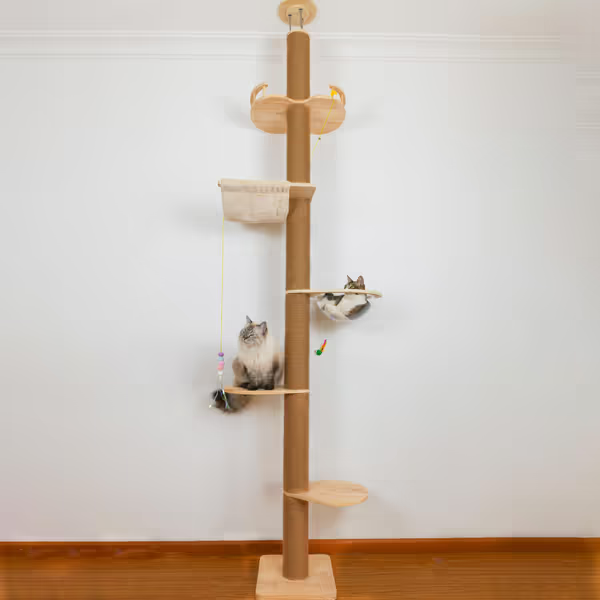
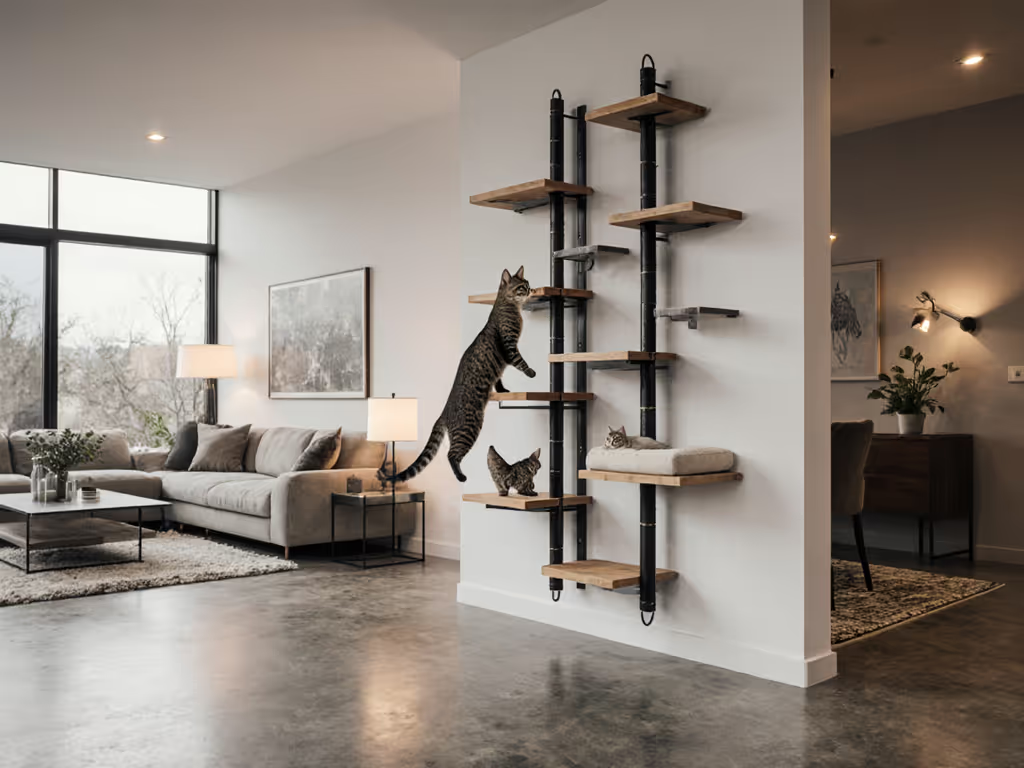
Floor to Ceiling Adjustable Cat Tree
Stable, adjustable cat tower enriches feline environments and complements home aesthetics.
$132
Adjustable Height55" to 120" (no drilling)
Adjustable Height55" to 120" (no drilling)
Pros
Unmatched stability for multi-cat play (supports 140 lbs).
Blends seamlessly with diverse home decor.
Cons
May require some effort for initial assembly.
Large footprint might not suit all very small spaces.
One customer described it as a "cat tower heaven," with cats getting endless entertainment from the levels and toys.
One customer described it as a "cat tower heaven," with cats getting endless entertainment from the levels and toys.
Material Intelligence for Safety and Style
Prioritize surfaces that assist mobility while complementing decor:
- Non-slip flooring: Rubberized mats (secured with double-sided tape) under furniture prevent sliding on tile or vinyl
- Grip-optimized platforms: Hemp or woven seagrass mats on landings (30% more stable than plush fabric for arthritic cats)
- Color-contrasted edges: Dark trim on light platforms helps visually impaired cats judge jump distances
When selecting cat furniture, verify weight capacities match your needs. For proven standards and anchoring methods, see our cat furniture stability testing guide. That multi-cat household? Ensure bases support 140+ lbs (like the TQEW tree's reinforced steel screws) without bulky footprints. CARB-certified pine and PVC offer dent resistance in high-traffic zones, not cheap particleboard that warps under humidity.
Low-Effort Maintenance Systems
Low-effort cat maintenance begins with intentional surface choices. To keep adaptive pieces safe and sanitary long-term, use our cat furniture cleaning guide. Avoid fabric-covered posts where hair embeds; opt for wipeable sisal-wrapped columns (12 cm diameter minimum) that resist shredding. For litter management, integrate hidden storage compartments (like the LoftyLoo's built-in scoop caddy) that keep tools within seated reach. Strategic placement reduces cleaning steps by 40%:
- Position scratching posts away from airflow paths to contain dust
- Angle ramps at 30 degrees maximum for safe ascents (test with a 15-lb sandbag)
- Use modular pieces that disassemble in <60 seconds for spot-cleaning
Harmonizing Aesthetics with Function
Color and Texture Integration
Cheap cat furniture often fails by screaming "pet product." Instead, weave feline necessities into your palette:
- Match platform wood stains to existing shelves (walnut for mid-century, birch for Scandinavian)
- Use the same upholstery fabric on cat hammocks as your sofa cushions
- Conceal litter boxes within custom cabinetry with 8" front openings (wider than standard but invisible when styled with plants)
For renters, removable wall systems like tension-mounted perches (55-120" height range) avoid drilling while supporting 20+ lbs. Try our tension-rod DIY solution for drill-free perches that stay secure in rentals. Measure ceiling height first, then subtract 4" for safety clearance. These become architectural features rather than add-ons.
Scaling for Small Spaces
In studios under 600 sq ft, multi-functional cat furniture is non-negotiable. The Purrrrfect End Table concept proves brilliant: a 19x19" platform doubles as side table by day, cat lookout by night. Key dimensions for compact designs:
| Function | Minimum Size | Ideal Placement |
|---|---|---|
| Scratching | 32" height | Corner near entryway |
| Perching | 18x12" platform | Above human seating eye level |
| Litter Zone | 1.5x cat length | Adjacent to structural wall |
This spatial efficiency eliminates the "clutter guilt" plaguing 65% of urban cat owners (Interior Pet Survey, 2024). When every piece serves dual roles, your space tells one intentional story, not two competing narratives.
Your Action Plan: Adaptive Space Audit
Start tomorrow with this 15-minute exercise to build dignity into your shared home:
- Trace your wheelchair/furniture path with painter's tape; note where cats currently cross
- Place non-slip mats at 3 high-traffic zones (e.g., beside sofa, near fridge)
- Install one mid-level perch (12-18" height) using existing shelving brackets
Think in layers: floor, mid, sky. This spatial framework prevents obstructive single-level solutions.
True accessibility isn't about special accommodations: it is designing spaces where limitations dissolve. When Luna finally perched above our bookcase, she didn't just gain height; she claimed her place as co-author of our home. Your turn: map one flow zone this week where human and feline needs converge. Measure, then build, not for the cat or the room, but for the space between them.
Related Articles