Sunlit Cat Furniture: Health & Home Harmony
By Nikhil Bhatt • 4th Apr
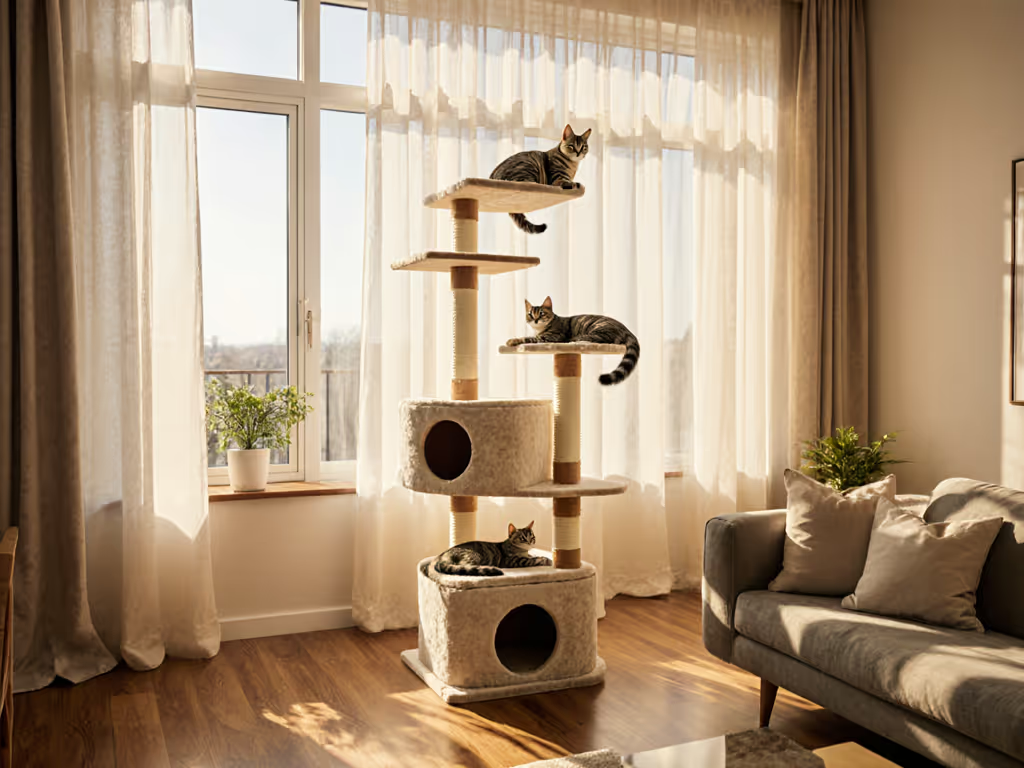
Your cat's wellness and your home's aesthetics don't have to be at odds, but the way you position their furniture might be the missing link. Circadian cat lighting and thoughtful furniture placement directly influence your cat's sleep quality, activity patterns, and stress levels, creating a foundation for both physical health and behavioral harmony.
Why Light Matters More Than You Think
What Role Does Natural Light Play in Feline Health?
Cats are crepuscular animals, meaning they're most active at dawn and dusk, but their entire circadian rhythm depends on consistent light-dark cycles. Feline photoperiod requirements are subtle but significant: exposure to natural light helps regulate melatonin production, supports immune function, and encourages the activity-rest balance that keeps indoor cats from becoming sedentary and overweight. When cats lack predictable light exposure, they often shift their sleep patterns, sometimes bunching their rest into chaotic blocks that leave them wired at 2 a.m.
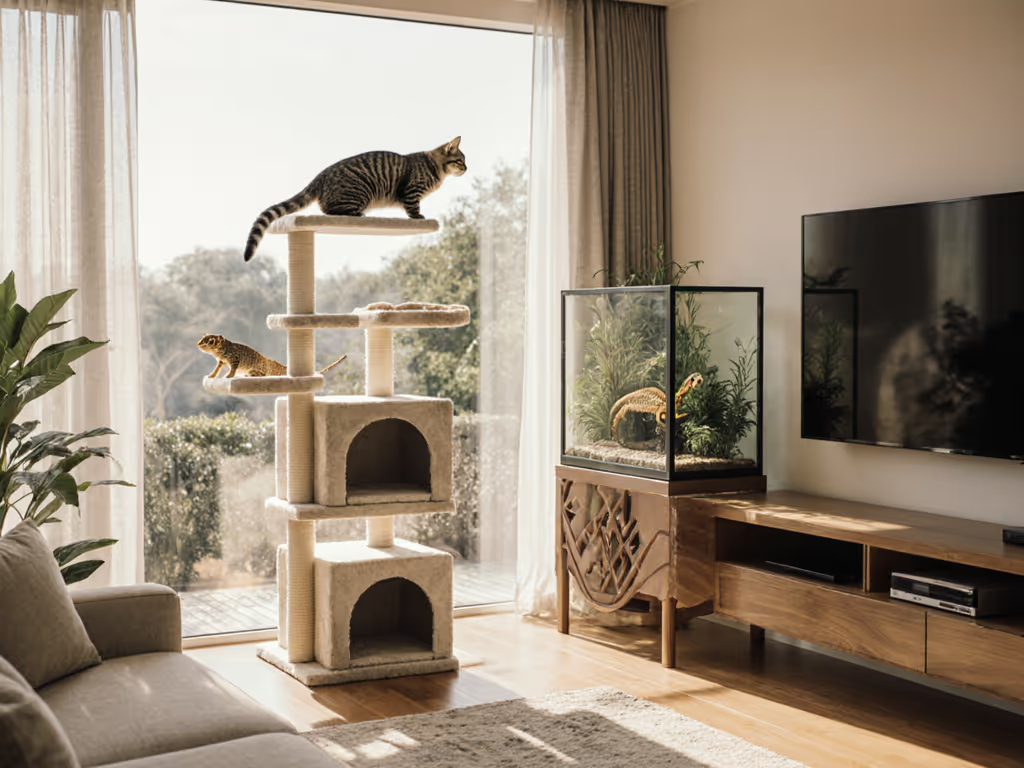
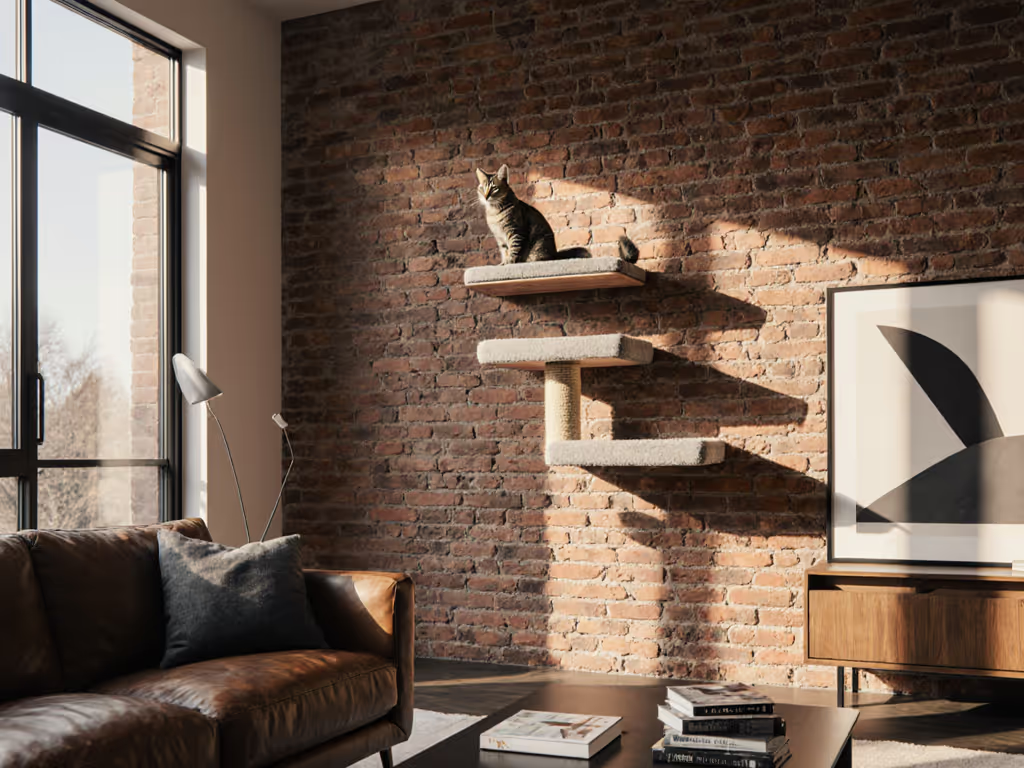
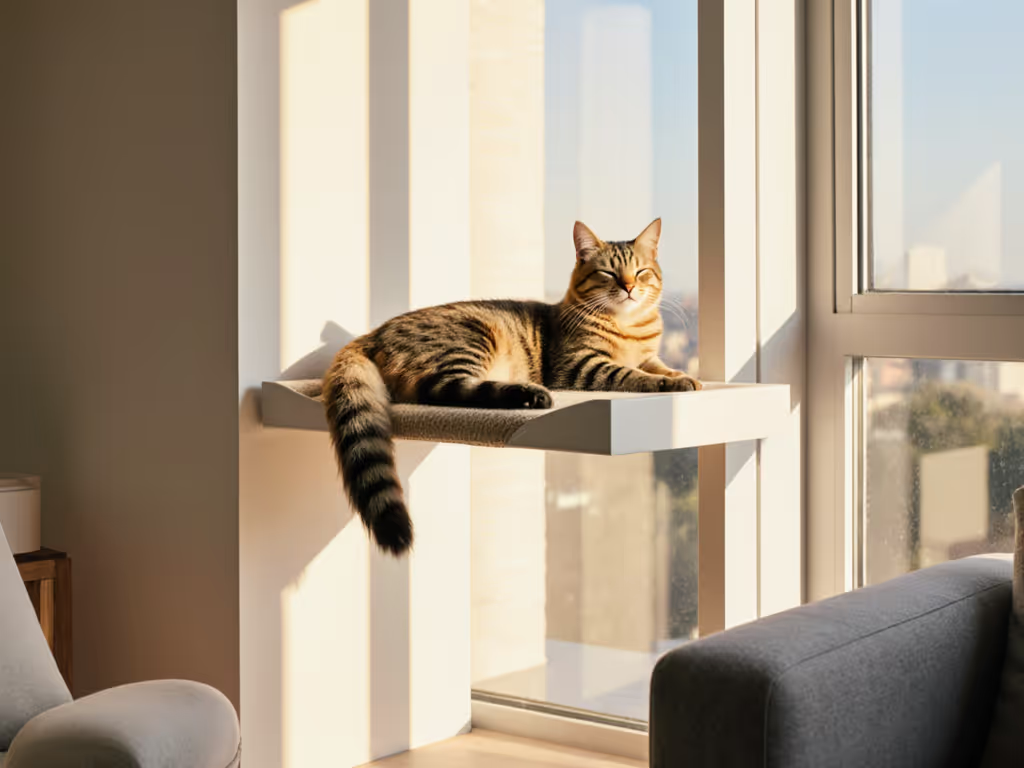
What's less obvious: light exposure is also an opportunity. A well-placed window cat perch transforms a passive view into active engagement. For window-specific safety, see our window sunbathing shelves guide. When your cat can bask in morning sun while maintaining visual territory over their domain, they're satisfying both warmth-seeking and surveillance instincts simultaneously.
How Does Seasonal Light Adaptation Affect Indoor Cats?
Seasonal light adaptation directly influences your cat's mood and behavior. For strategies to adjust setups across seasons, explore our seasonal cat comfort guide. Winter months bring shorter daylight hours and lower light intensity, which can suppress activity and appetite regulation. Conversely, spring and summer's extended daylight naturally encourage more movement and climbing.
For indoor cats without seasonal variation, this cycle flattens, and so does their motivation to move. This is precisely where furniture positioning becomes ergonomic strategy, not just decoration. By aligning cat furniture with windows and natural light sources, you're creating soothing anchor points that invite your cat to follow the sun throughout the day.
Furniture Design That Honors Both Light and Movement
How Should You Position Cat Furniture for Optimal Lighting?
Ideal placement follows a principle I've refined through years of observing cats in real homes: comfort is design: gentle grades, predictable paths, minimal friction. This means your cat's path to sunlit areas should feel natural, not like climbing Everest.
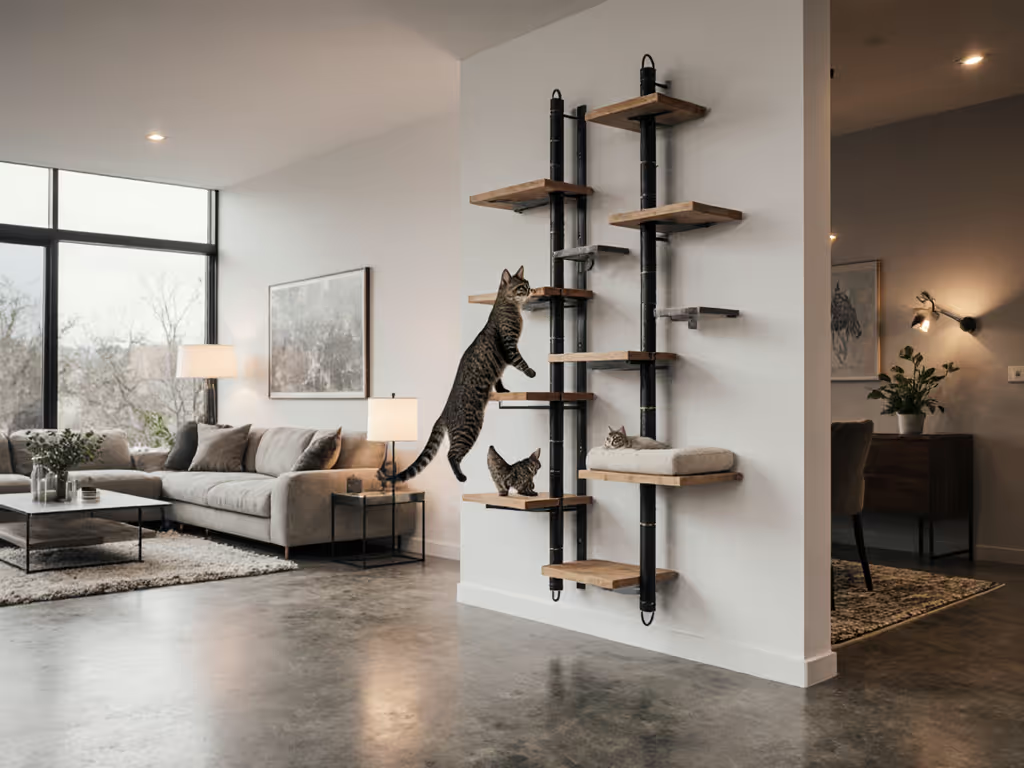
Start by mapping your home's light throughout the day. Most homes have a progression: morning sun on the east side, midday light through central windows, afternoon warmth on the west. Rather than placing a single tall tree in one corner, consider distributing multiple unique cat furniture pieces (lower perches, window-mounted shelves, and fabric-lined platforms) along these sun paths.
Why? Because cats at different life stages have different needs. A young, agile cat thrives on vertical challenge, but mobility changes with age. By offering graduated heights and multiple access routes, you're designing for both the sprinting 2-year-old and the arthritic senior who still wants sunlight but needs gentler inclines.
What Height and Material Choices Support Healthy Movement?
When positioning furniture near windows, height matters ergonomically. A perch at 2-3 feet (not the full 6-foot tower) allows your cat to rest in sunlight without the recovery time needed after a dramatic jump. Softer landing zones matter here: natural fabrics like jute or soft carpet provide better traction and joint protection than slippery plastic.
Material choice also connects to UV exposure management: fabric that filters but doesn't fully block sunlight creates a soothing environment. Darker, tightly woven fabrics reduce glare and heat stress while still allowing beneficial light. This matters most for senior cats, whose eyes are more sensitive to intense brightness.
Balancing Natural Stimulation with Indoor Realities
Why Do Some Cats Become Destructive Despite Having Furniture?
Often, the answer isn't what furniture you have; it's whether the furniture connects to your cat's natural rhythms and instincts. Cats need to climb, scratch, and rest, yes, but these behaviors are triggered by environmental cues: light, temperature, territorial markers, and opportunity.
A cat tree sitting in a dark corner, away from windows and family activity, can feel isolating rather than enriching. Your cat might ignore it entirely and instead scratch your couch, which sits in the bright living room where you are. The furniture isn't the problem; the lack of compelling reasons to use it is.
This is where quiet changes yield big gains. Move that window perch slightly forward. Add a scratching post where your cat watches you work. Layer in soft blankets to create warm nesting zones that invite lingering. Within days, behavioral patterns shift because the environment now supports what your cat already wants to do: rest in warmth, monitor their territory, and move between safe zones predictably.
How Does Furniture Placement Reduce Stress and Anxiety?
Stress in indoor cats often stems from unpredictability and lack of retreat spaces. When furniture is clustered strategically, it creates a soothing network of safe zones. For anxious cats, design calming hideouts with our cat cubby placement guide. Hiding spots, elevated perches for surveillance, and cozy resting areas all reduce cortisol levels and help cats feel in control of their environment.
Natural light amplifies this effect: a sun-warmed hideaway perch becomes a sanctuary. The combination of thermal comfort, visual security, and predictable daily light patterns (what I call the "soothing triad") works surprisingly quickly to settle anxious cats and encourage healthier sleep patterns.
Integrating Light-Aware Furniture Into Your Home Aesthetic
Can Stylish Furniture Meet Your Cat's Natural Needs?
Absolutely. Modern design and feline wellness aren't opposing forces. Contemporary cat furniture increasingly features clean lines, neutral palettes, and modular designs that blend into living spaces rather than dominate them. Wooden frames, natural fiber platforms, and furniture pieces that double as side tables are no longer novelties, they're mainstream.
The key is intentional selection and placement. Rather than one large statement piece, consider a cohesive set of smaller, intentional items: a low window shelf, a fabric cube under a side table, a jute scratching post in the corner where your cat naturally gravitates. This evidence-aware approach treats your space like a system, not a collection of separate items.
Your Next Steps: Creating Light-Aligned Harmony
Observe before you rearrange. Spend three days watching where your cat naturally seeks sunlight, when they're most active, and where they attempt to hide or climb. This reveals their lived needs (not designer assumptions).
Map your light. Note which windows receive morning, midday, and afternoon sun. These aren't just beautiful light sources; they're therapeutic resources.
Start small. Add one window perch or rearrange existing furniture to create a gentle path toward light sources. Watch what changes: sleep quality, activity duration, scratching behavior, grooming frequency. Often, quiet changes, big gains emerges within a week.
Choose materials for maintenance. Natural fibers and tightly woven fabrics are easier to clean and maintain long-term, reducing the guilt that comes with visible wear. For material-specific care, use our cat furniture cleaning guide. Quality furniture ages gracefully; cheap furniture just looks tired.
Your cat isn't asking for complexity, they're asking for comfort, defined as access to what they need, paths they can predict, and warmth they can trust. When circadian cat lighting meets thoughtful furniture placement, your home stops being a cage and becomes what it should be: a harmonious space where your cat's wellness and your aesthetic vision coexist peacefully.
Related Articles