Modern Cat Furniture IKEA Fans Love: Nordic Harmony Review
By Keiko Tan • 25th May
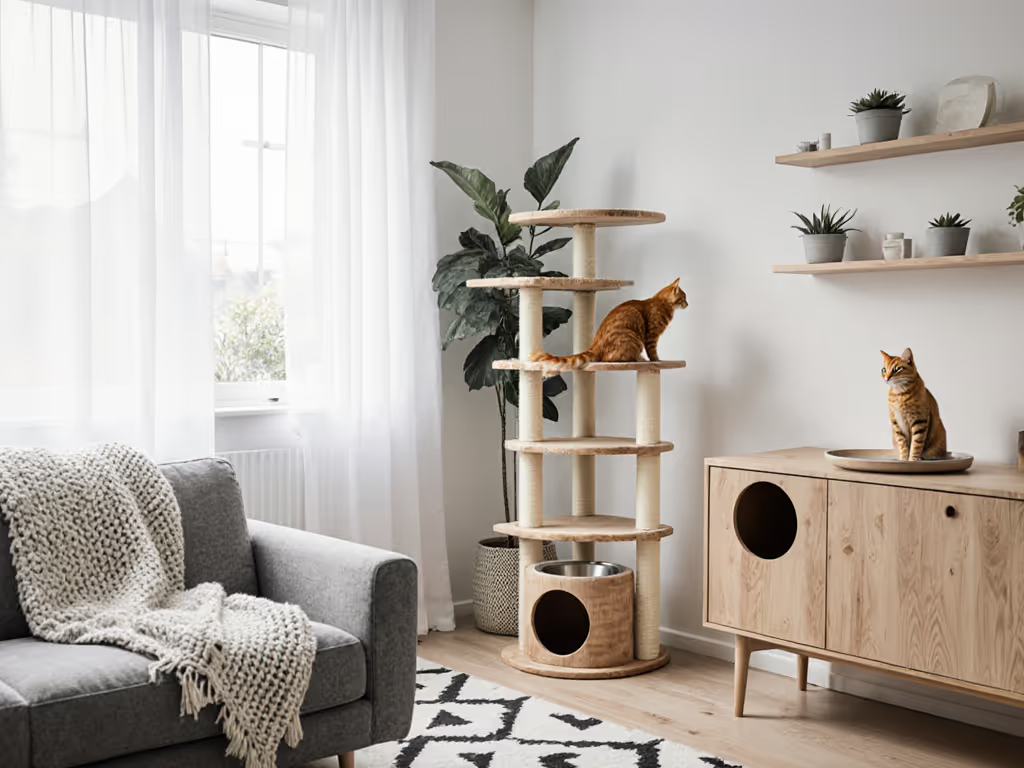
Modern cat furniture IKEA fans love sits right at the intersection of Nordic minimalist cat spaces, safety, and daily livability. The challenge: a lot of what looks clean and Scandinavian on Instagram wobbles, sheds fibers, or chips at the edges long before your cat loses interest.
In this deep-dive FAQ, I'll treat "Nordic Harmony" as the benchmark style: calm, Scandinavian functional design, light woods, and quiet lines that integrate with your IKEA-heavy room, and then stress-test whether the most common options (IKEA's own cat line, IKEA hacks, and third-party minimalist cat trees) actually deserve space in your home.
Safety first; then style, then everything else falls into place. For a whole-home framework that balances feline needs with Scandinavian aesthetics, see our harmonious design checklist.
At a Glance: Who Is "Nordic Harmony" Cat Furniture Really For?
If any of this sounds like you, this article is written for your living room:
- You live with one or more indoor cats in an apartment or smaller home.
- You like Scandinavian design integration, KALLAX, BESTA, light wood, soft neutrals.
- You want a minimal cat tree or wall system that looks like furniture, not a "cat explosion."
- You're tired of replacing flimsy towers every 18 months.
You are exactly the type of person gravitating toward modern cat furniture IKEA fans love: KALLAX inserts, LURVIG pieces, Nordic color palette furniture, and sleek wall shelves that double as decor. You're not wrong to want it, but the engineering under the surface matters more than the styling on top.
If it wobbles, it fails.
FAQ 1: What counts as "modern cat furniture IKEA fans love"?
In practice, it clusters into four main categories:
-
IKEA's own cat products
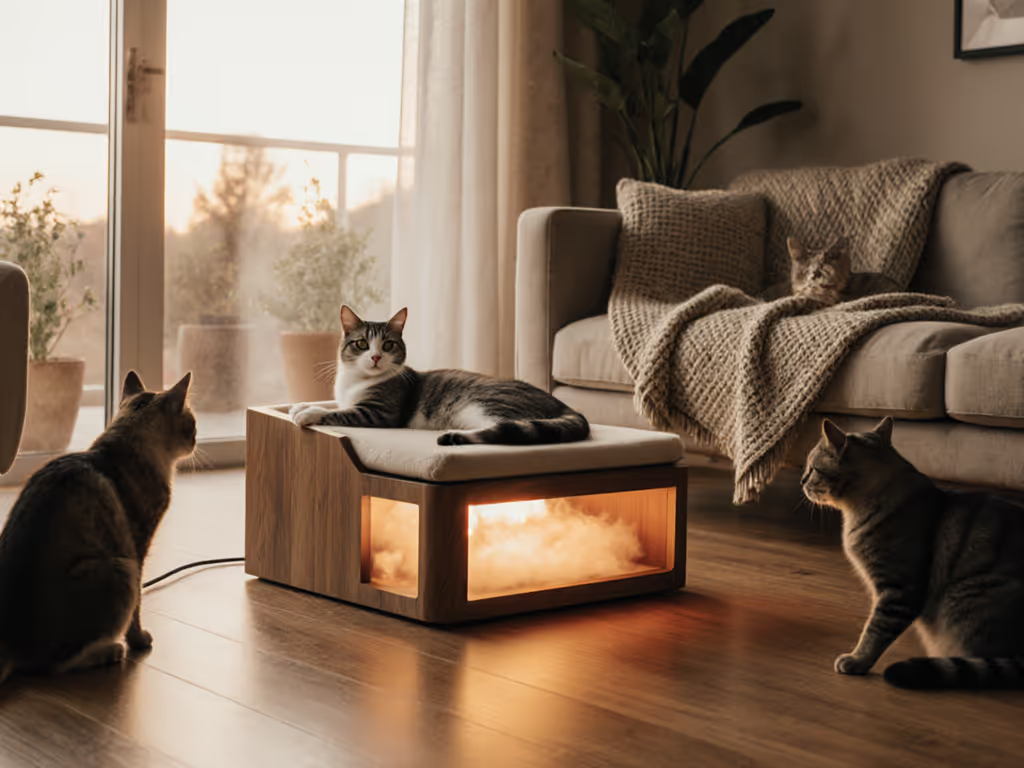
IKEA's pet collections (such as the widely covered LURVIG line) include cat beds, houses, scratchers, and even inserts that fit into existing shelving, designed to blend with their regular home furniture. -
IKEA hacks turned cat furniture
People routinely convert items like MOSSLANDA picture ledges, KALLAX shelving, DUKTIG doll beds, and tables into perches, bunk beds, climbers, or even hidden litter cabinets. -
Third-party Nordic-style cat furniture
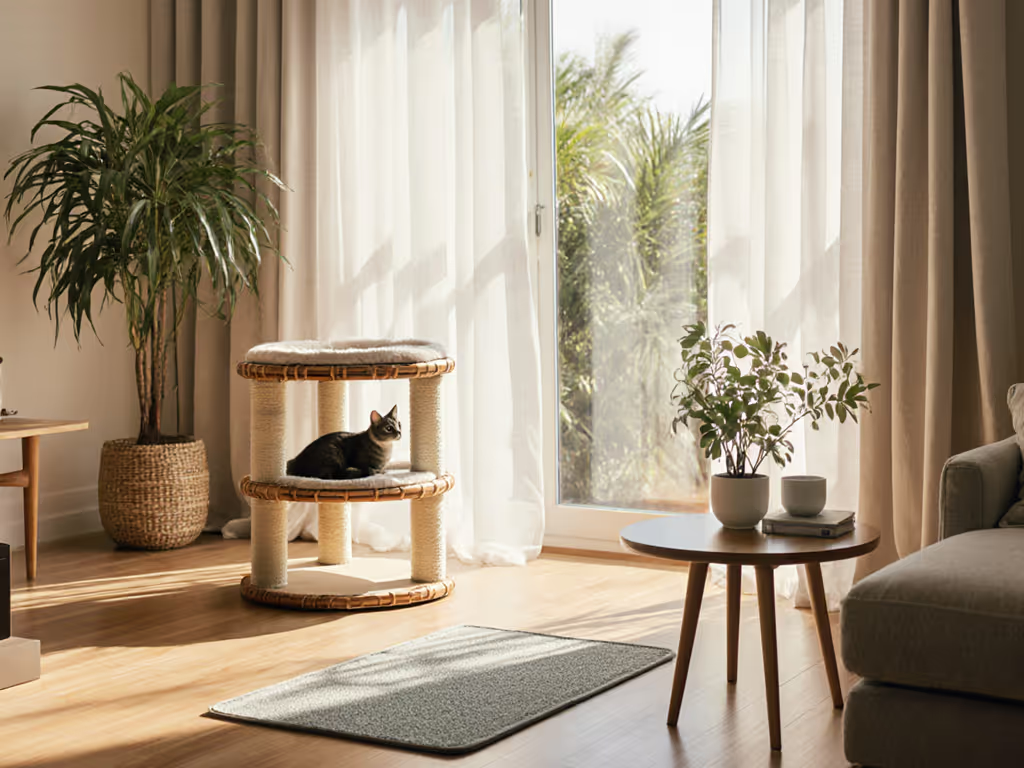
Think pale birch, white steel, and simple forms: wall steps that look like floating shelves, low-profile scratching posts, and modular towers designed to echo Scandinavian functional design. Many are marketed specifically as "modern" or "minimal" cat furniture for style-conscious homes. -
Hybrid setups
A KALLAX unit for hideouts, a minimalist freestanding tower for climbing, a slim scratching post by the sofa, all chosen within a Nordic color palette furniture scheme (whites, greys, sand, light oak) so the whole layout reads intentional, not patched together.
All four can create Nordic minimalist cat spaces that don't visually fight your sofa and dining set. The key question is not whether they integrate, but how they perform under feline load and daily wear.
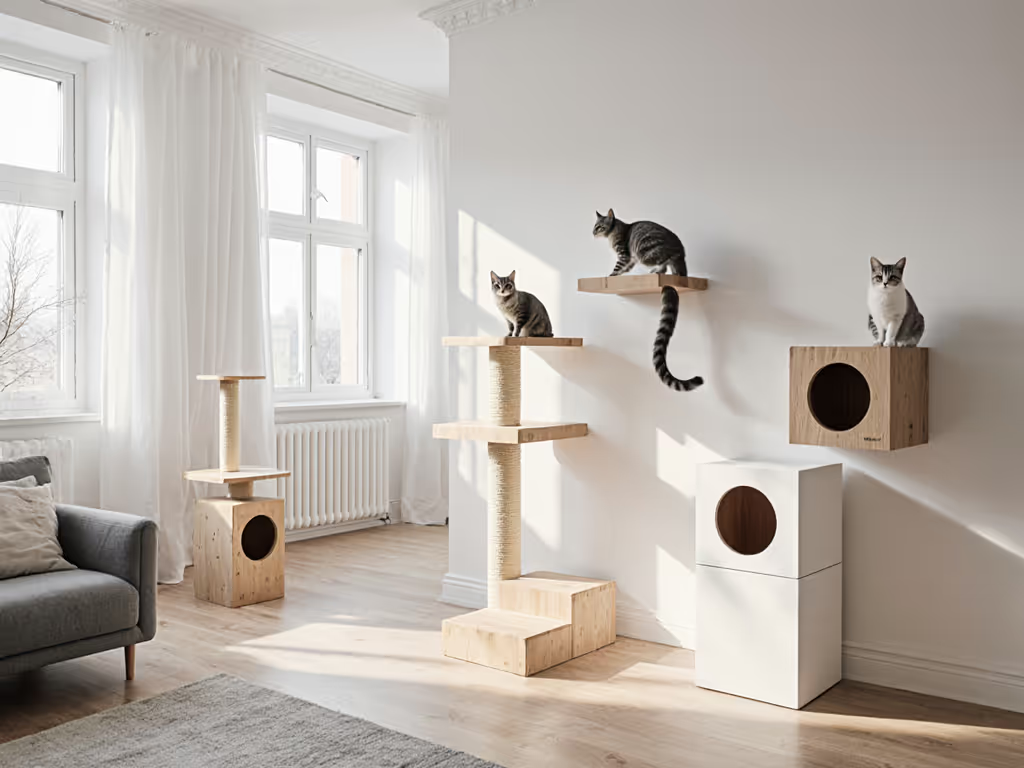
FAQ 2: Do these Nordic minimalist setups actually meet my cat's needs?
Aesthetics are the easy part. Your cat's checklist is harder:
- Scratching (vertical and sometimes horizontal)
- Climbing and jumping
- High perching
- Hiding and retreat
- Surveying doors, windows, and "territory"
Here's how each category typically scores:
1. IKEA cat products
- Scratching: Mats and posts are available, often attachable to table legs or usable on the floor.
Issue: Many are relatively low and short; strong vertical scratchers are not always the focus. - Climbing & perching: Some products are inserts for shelving, turning a KALLAX cube into a hideout or bed.
Good for lounging, weaker for true vertical climbing. - Hiding: Soft beds and enclosed houses do this well.
Verdict: Great for hiding and napping, modest for serious climbers.
2. IKEA hacks
DIY conversions often use:
- MOSSLANDA ledges as wall shelves for cats.
- KALLAX compartments with cushions as hideouts or lounges.
- BESTA cabinets converted into hidden litter boxes.
If built carefully, hacks can satisfy climbing, perching, and hiding exceptionally well.
Critical gaps: Most online builds don't publish load ratings, fastener details, or safety factors. They show the pretty after, not the testing phase.
3. Nordic-style third-party cat furniture
This is where you see minimal cat tree designs and wall steps made specifically for cats, often marketed with phrases like Scandinavian functional design.
- Scratching: Frequently integrated, but sometimes undersized to keep the silhouette slim.
- Climbing: Better than IKEA inserts when the product is purpose-built; multiple levels, offset steps, and tall posts.
- Hiding: Many minimalist lines under-deliver on enclosed hideouts because boxes "bulk up" the design.
Verdict: These can be excellent if (and only if) stability and materials are good.
4. Hybrid setups
For most homes, the best "Nordic Harmony" is a mix:
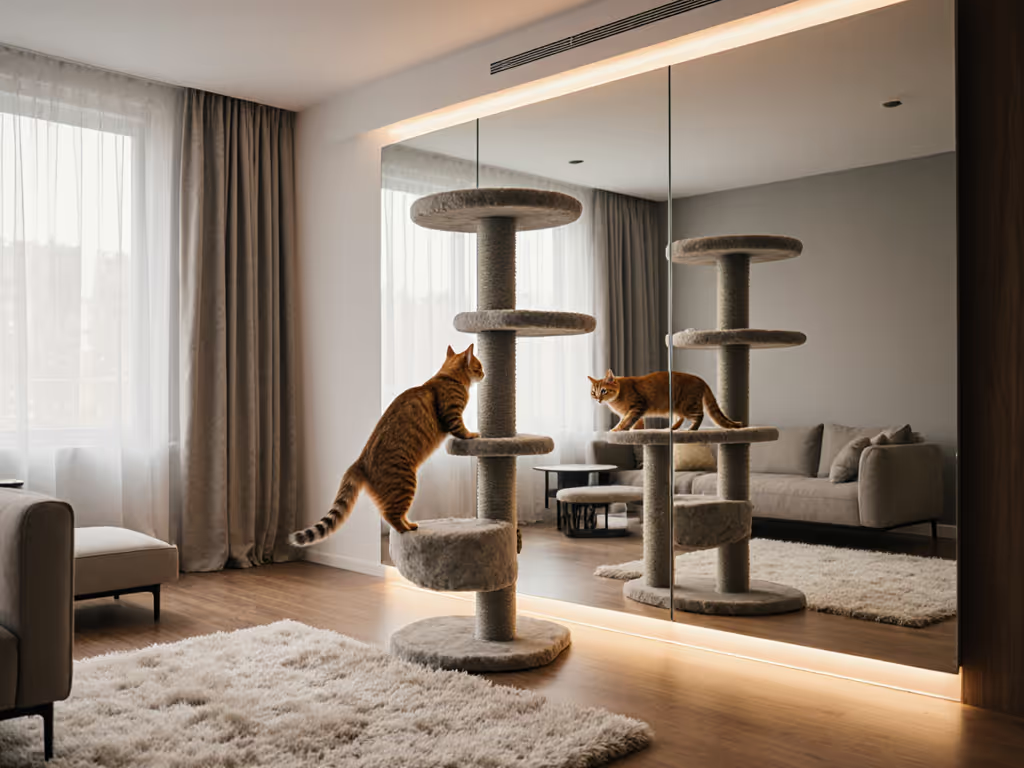
- One tall, stable climbing structure.
- One or two enclosed hideouts (often via IKEA pieces or hacks).
- Multiple scratch points near human furniture.
A single stylish minimalist post in the corner almost never covers everything.
FAQ 3: How safe and stable is modern cat furniture in this style?
Stability is the failure point I see most often, right after cheap finishes that chip or off-gas.
Use this stability checklist whenever you evaluate a modern cat piece:
- Base-to-height ratio
- A floor tower taller than 1.2 m (about 4 ft) needs a wide footprint, heavy base, or wall anchoring.
- A slim Nordic tower with a small base is essentially a lever just waiting to tip.
- Anchoring options
- For tall towers or wall shelves, look for included wall brackets and clear instructions for drywall, plaster, and masonry.
- "Leaning" structures that rely only on friction against a wall are not enough if the cat launches from halfway up.
- Hardware quality
- Confirm metal hardware (not brittle plastic brackets) for wall mounts.
- Bolts and inserts should bite firmly into wood or metal, not just chipboard edges.
- Material of load-bearing parts
- Solid wood or thick plywood beats thin particleboard.
- Hollow tubes and low-density fiberboard are lighter and cheaper, but they dent and loosen over time.
- Surface traction
- Steps and perches should have enough grip (felt, cork, textured finish) for a cat to launch and land without slipping.
In the lab and at home, the simplest field test is brutal but honest: stack weight on the structure equal to at least 2-3 times your cat's weight, then simulate side impacts (gently rocking and bumping). If it flinches, creaks, or sways significantly, it's under-designed. For step-by-step anchoring methods and global standards, see our stability testing guide.
For any tower or wall system: If it wobbles, it fails.
FAQ 4: How do IKEA's own cat products compare to third-party Nordic brands?
We're not comparing brand names here, but typical design choices.
| Feature / Aspect | IKEA Cat Products | Third-Party Nordic-Style Cat Furniture |
|---|---|---|
| Integration with IKEA furniture | High, many pieces coordinate with existing series and shelving. | Moderate, complements the style but not designed for specific units. |
| Aesthetic match to Nordic palette | Good; simple shapes, neutral colors, plastic and fabric-heavy. | Often excellent; real wood, metal, and textiles chosen to mirror Scandinavian interiors. |
| Stability (freestanding) | Generally stable for low beds and houses; fewer very tall towers. | Highly variable, some are rock solid, some are dangerously top-heavy. |
| Wall system options | Limited, more about inserts than full climbing routes. | Many offer full wall-mounted systems with steps, bridges, and shelves. |
| Durability | Adequate for light to moderate use; fabrics and scratch surfaces may wear faster. | Best lines use hardwood or high-grade plywood; cheaper lines cut corners similar to budget towers. |
| Price vs. lifespan | Usually low to mid price; replacement becomes likely as fabrics wear. | Mid to high price; can be cost-effective if structurally sound and repairable. |
Key takeaway:
- IKEA's cat range is safe and predictable for low, simple items like beds, houses, and small scratchers.
- For serious vertical territory and long-term durability, you'll likely be considering third-party Nordic-style towers or wall steps.
Just don't assume every "Scandi" cat tower is engineered with the same rigor as your sofa.
FAQ 5: Are IKEA hacks a smart way to create Nordic minimalist cat spaces?
Short answer: they can be, but they're rarely plug-and-play.
Common hacks include:
- Stacking DUKTIG doll beds as bunk beds for cats.
- Attaching MOSSLANDA picture ledges to create climbing routes.
- Converting KALLAX cubes into hideouts or lounges via cushions and curtains.
- Turning BESTA cabinets into hidden litter boxes.
These ideas are popular because they preserve a cohesive IKEA aesthetic while saving floor space, especially when using vertical walls.
Engineering concerns you should address:
- Weight ratings
- Picture ledges and small shelves are not originally rated for dynamic feline loads.
- Jumping forces are higher than sitting weights; double your cat's weight as a minimum safety factor.
- Fasteners and wall type
- Use wall anchors rated for solid and hollow walls as applicable. If you're debating fasteners, our mounting stability comparison explains trade-offs for renters and homeowners.
- Never rely on generic plugs that come in the box if your wall type differs from the original spec.
- Edge safety
- Ledges with sharp front edges or thin lips can dig into paws or encourage slipping.
- Add non-slip surfaces and consider rounding or padding edges.
- Ventilation in hidden litter hacks
- Enclosed BESTA or KALLAX setups need serious airflow; cut vents or use mesh panels.
- Finish durability
- Many IKEA surfaces are laminated particleboard. Cutting openings exposes fragile core material; seal exposed edges to reduce chipping and swelling.
I've seen beautifully staged hack photos that hide hairline fractures and wobbly brackets just out of frame. That's why I quietly load-test with sandbags before a cat ever jumps.
If you enjoy DIY and understand wall anchors, hacks can give you Scandinavian design integration at a low cost. If drilling into walls or calculating load makes you nervous, stick to purpose-built pieces with published hardware and instructions.
FAQ 6: What should I demand from a "minimal cat tree" before I buy it?
A minimal silhouette should not mean minimal safety or minimal enrichment. Use this pre-purchase checklist:
Structure
- Base width: Aim for a base at least half the height of the tree; more if you have large or very active cats.
- Anchoring: Look for included wall straps or brackets for taller designs.
- Core materials: Prefer solid wood or good plywood for main posts and platforms.
Surfaces & scratching
- Scratching height: At least one post should allow a full-body vertical stretch.
- Material: Sisal rope or tightly woven sisal fabric outlasts thin carpet.
- Replaceability: Posts or sleeves you can replace extend the tree's lifespan and reduce waste.
Finishes & toxins
Here my bias is strong:
- Choose low-VOC finishes; avoid pieces that smell aggressively of chemicals after 24 hours.
- Avoid heavily scented coatings; cats' noses are more sensitive than ours.
- Check edges and corners for splinter risk, especially on cheaper plywood.
Fabric & cleaning
- Favor removable, washable cushions or covers.
- Avoid deep, shaggy faux fur if you're concerned about hair and litter trapping.
- Consider color: mid-tone greys and beiges hide fur better than pure black or white.
A minimal cat tree deserves floor space only if it can withstand years of use without becoming a tilt hazard, a splinter source, or a cleaning nightmare.
FAQ 7: How do I keep a Nordic minimalist cat space easy to clean?
A big pain point with conventional cat trees is their deep carpet and nooks that catch hair, dust, and litter.
For a clean Nordic Harmony setup:
- Prioritize hard or semi-hard surfaces (sealed wood, laminate, powder-coated metal) for main structures.
- Use thin, removable pads rather than permanently attached plush.
- Place scratching elements where shedding fibers won't get embedded in nearby textiles.
- Select fabrics with tight weaves that vacuum easily and don't snag claws.
- Keep at least one climbing route away from food prep areas so you're not constantly wiping counters.
I aim for cat structures I can fully vacuum and wipe down in under ten minutes. If it takes longer, either the surfaces are wrong or the design has too many dust traps. For material-specific care that keeps Nordic pieces fresh, use our cat furniture cleaning guide.
FAQ 8: Will modern Scandinavian-style cat furniture reduce scratching on my sofa?
It can, if you align it with feline behavior rather than just your moodboard.
To shift scratching away from your furniture:
- Place a tall, sturdy scratcher right next to the sofa or chair being targeted.
- Ensure the scratcher is more rewarding than the sofa: better texture, more stable, taller.
- Offer both vertical and horizontal scratch options; some cats prefer one, some like both.
- Include at least one high perch with a good view; reducing territorial stress often reduces destructive behaviors.
Modern pieces that match your decor make it easier to put these resources where they're behaviorally effective, not hidden in a hallway where the cat rarely goes.
Just remember: stylish but undersized scratchers may look great and still lose the competition to your favorite armchair.
FAQ 9: Can Nordic minimalist cat furniture work for multi-cat homes?
Yes, but only if you deliberately design for traffic and hierarchy:
- Provide multiple routes up and down: one cat should be able to bypass another without a dead end.
- Offer more perches than cats, at varying heights, to prevent resource guarding.
- Ensure that top platforms are large and solid enough for the heaviest cat.
- Anchor tall towers or wall systems especially well; two cats chasing each other create far higher dynamic loads.
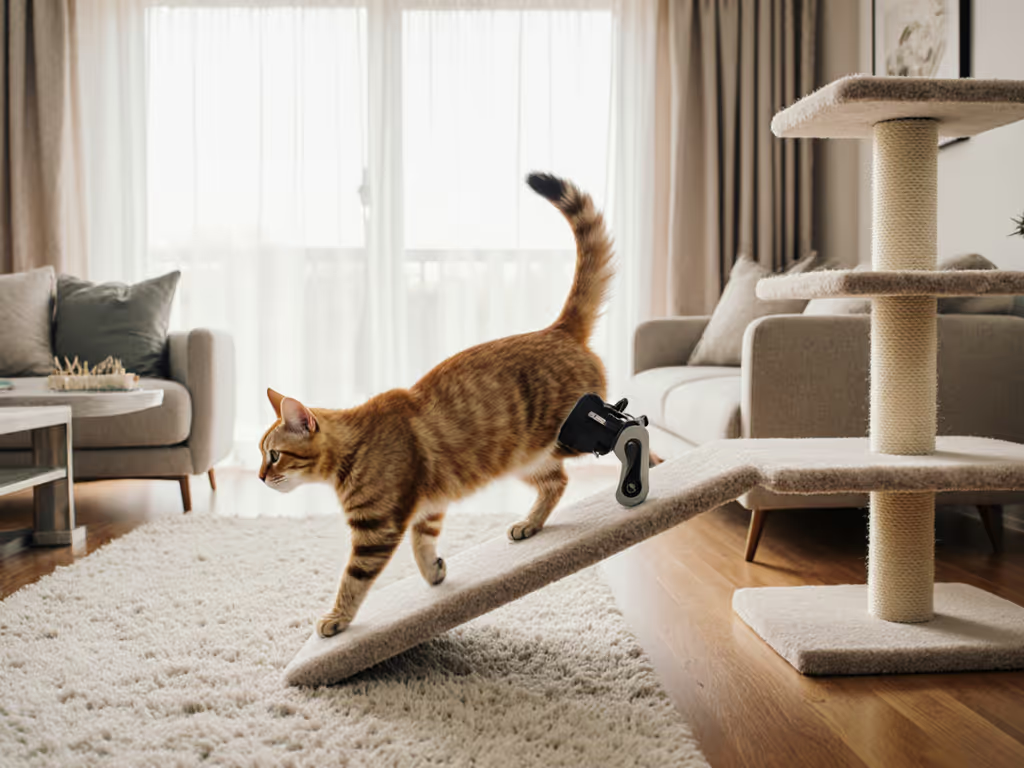
Wall-mounted "cat highways" built from shelves, steps, and bridges are especially popular with IKEA fans because they preserve floor space and keep the profile minimal. Just remember: more anchors, not fewer, for multi-cat zoomies. To plan traffic-friendly vertical territory for multiple cats, follow our multi-cat territory design guide.
FAQ 10: Final Verdict: Is "Nordic Harmony" cat furniture worth it for IKEA lovers?
Let's align this with your main goals.
If your top priority is aesthetics
- Pros: Nordic-style cat furniture and IKEA integrations create visually calm, cohesive spaces that feel like part of your interior design, not an afterthought.
- Risks: It's easy to under-buy on scratching height, stability, or durability in favor of a slim silhouette.
What to do: Choose the most structurally solid pieces you can find, then shape the room around them.
If your top priority is feline enrichment
- Pros: Wall systems, tall towers, and integrated hideouts can absolutely meet climbing, perching, and hiding needs without clutter.
- Risks: Many minimalist designs lack true hide boxes or full-height scratchers; IKEA's own line leans more toward beds and small accessories than full vertical routes.
What to do: Combine categories, a stable tall structure, a couple of hideouts (including IKEA options), and strategically placed scratchers.
If your top priority is longevity and safety
- Pros: Well-built Nordic-style furniture in real wood or quality plywood can outlast multiple cheap towers and reduce waste.
- Risks: There's huge variation in build quality; neither a high price tag nor a Scandinavian look guarantees structural integrity.
What to do:
- Demand clear assembly instructions, proper hardware, and ideally weight guidance.
- Treat all wall mounting as a serious structural job, not decor hanging.
- Trust your testing: if a freshly built piece feels borderline, reinforce or return it.
Summary and Final Verdict
For design-led cat guardians, modern cat furniture IKEA fans love is not a frivolous trend; it's a way to keep your home coherent while finally giving your cat permission to climb the walls, literally.
But the order of operations matters:
- Safety and stability: A wide base, solid anchoring, and durable materials.
- Functional enrichment: Scratching, climbing, perching, hiding, and observing.
- Style and integration: Nordic color palette, clean lines, and harmony with your existing furniture.
Turn that list upside down and you get the common failure pattern: pretty, underbuilt structures that age badly or tip at the worst moment. I still remember the last time a store-bought tower left me picking tiny splinters out of my palm, that was the day I stopped trusting appearances and started load-testing.
So when you're choosing your version of "Nordic Harmony," whether via IKEA's own cat pieces, carefully engineered third-party furniture, or robust IKEA hacks, keep one line in mind, and repeat it as you tighten every bolt:
If it wobbles, it fails.
Get that right, and you'll have what you were after all along: a quiet, sturdy setup your cat naps on even during vacuum drills, and a home that looks as calm as it feels.
Related Articles