Modern Cat Furniture for Smart Homes: Mirror-Safe Design
By Nikhil Bhatt • 24th Apr
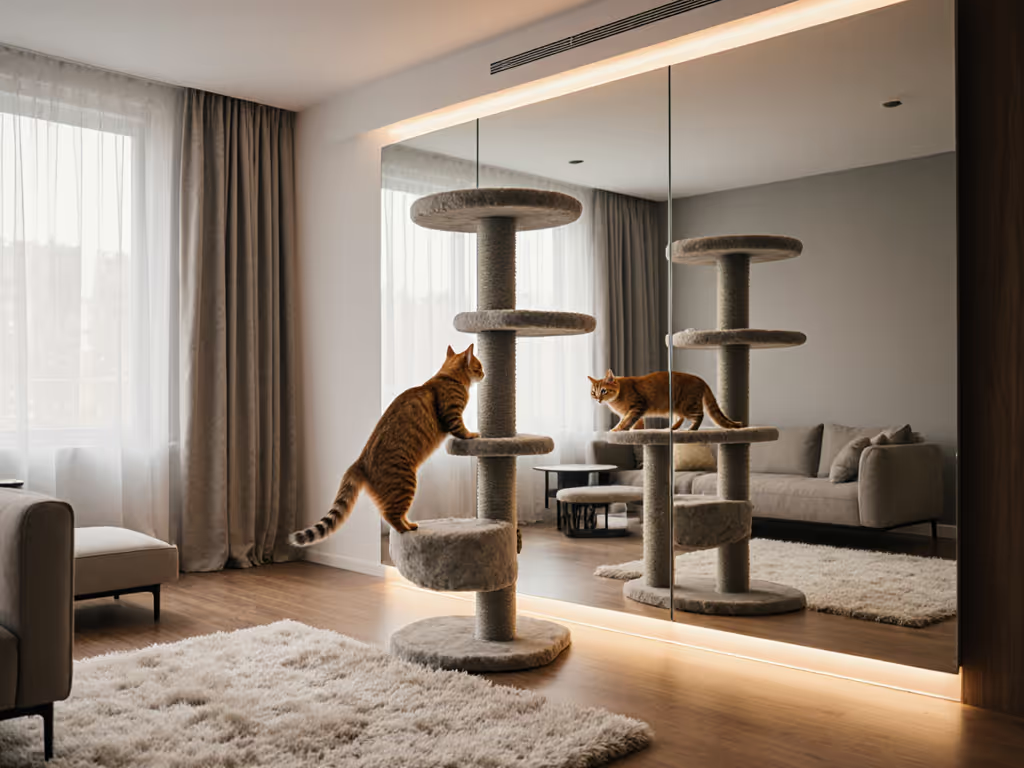
Your modern apartment catches light beautifully. Floor-to-ceiling mirrors open up the space, smart displays blend seamlessly into the wall, and glass surfaces give the room an airy, curated feel. But here's the honest truth: your cat experiences that same environment as a maze of potential surprises. When you bring a sophisticated, reflective-heavy living space together with a cat who needs to climb, perch, and explore safely, one critical design detail emerges: mirror-safe cat pathways aren't optional. They're essential. The intersection of modern cat furniture design and reflective surface cat safety represents one of the most overlooked (yet transformative) aspects of creating a home where both you and your feline companion thrive.
Why Mirror-Safe Design Matters for Modern Homes
Cats rely on predictability to feel secure. A reflection moving in peripheral vision (even a familiar reflection) can trigger a startle response. Over time, repeated surprises erode that confidence, leading to hesitation on pathways, reluctance to use certain furniture, or worse: a jump that lands wrong on a smooth surface because your cat miscalculated depth on a mirrored wall.
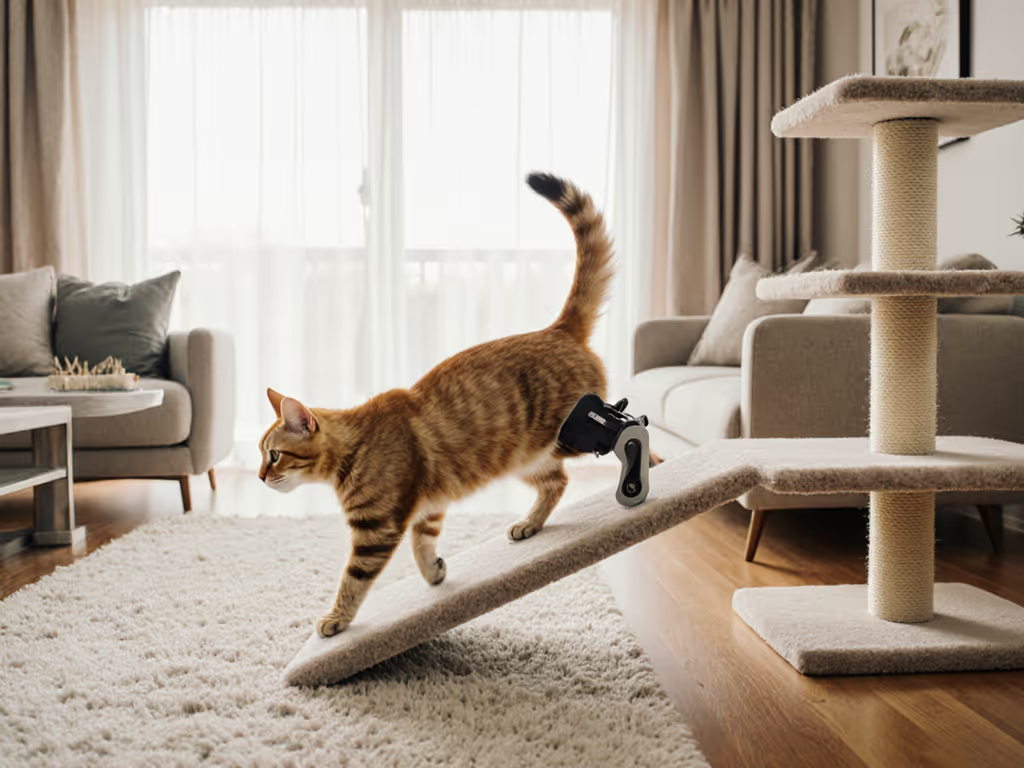
Comfort is design: gentle grades, predictable paths, minimal friction.
Modern cat furniture positioned near reflective surfaces (mirrors, glass, smart displays) needs design features that eliminate these micro-stressors. This isn't about wrapping your cat in bubble wrap. It's about building pathways your cat can read at a glance without second-guessing themselves. When your living room doubles as a showcase for architectural glass and contemporary design, that principle becomes urgent.
The challenge sharpens in smaller homes and apartments, where space optimization means every piece of furniture must do double duty. Cat furniture can't hide in a corner anymore, it must coexist with your mirrors, your smart displays, your carefully curated surfaces. That coexistence is only possible when design accounts for your cat's perception from the start.
FAQ Deep Dive: Mirror-Safe Design in Modern Cat Furniture
How Do I Know If My Cat Is Reacting Negatively to Reflections?
Look for these subtle behavioral shifts:
- Hesitation before familiar jumps: Your cat slows down or makes a shorter leap than usual when approaching a mirrored or glass-backed furniture piece.
- Averted eye contact with surfaces: Your cat glances away or tilts their head oddly when walking past a reflective wall near their perch.
- Reduced perch usage: Furniture positioned near mirrors or glass gets ignored, even if it's otherwise ideal.
- Increased grooming or pacing: Anxiety-driven behaviors spike near reflective zones.
- Failed landings or clumsy interaction: Your cat misjudges distance or grips, sliding slightly on smooth furniture adjacent to mirrors.
These aren't dramatic signs. They're the quiet ways cats communicate discomfort. The challenge (especially for indoor cats in smaller homes) is that when your entire living room has reflective elements, your cat has nowhere to fully relax. "Fewer barriers, more confidence" becomes impossible when every pathway feels uncertain.
What Specific Design Features Make Cat Furniture "Mirror-Safe"?
Modern cat furniture should incorporate these ergonomically sound features:
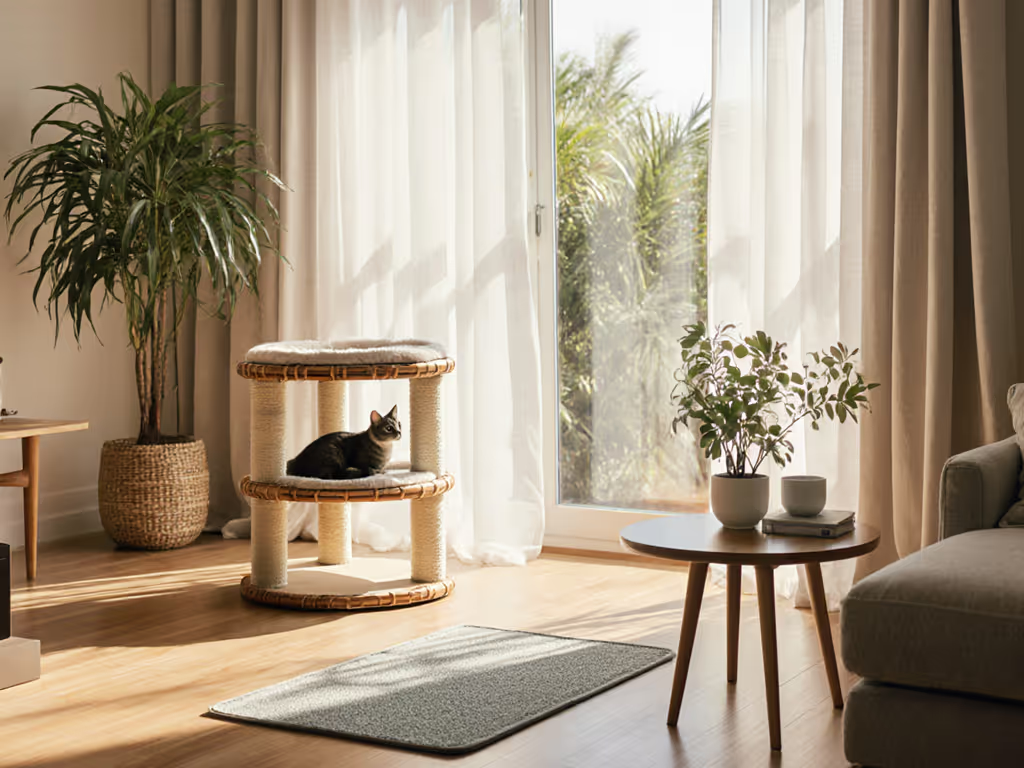
Textured traction surfaces. Matte finishes, sisal rope, or rubberized coatings on platform surfaces prevent slipping and provide tactile feedback. Your cat's paws can "read" the surface. This is especially critical on furniture positioned within sight lines of mirrors. When a cat feels their grip solidify, confidence follows immediately.
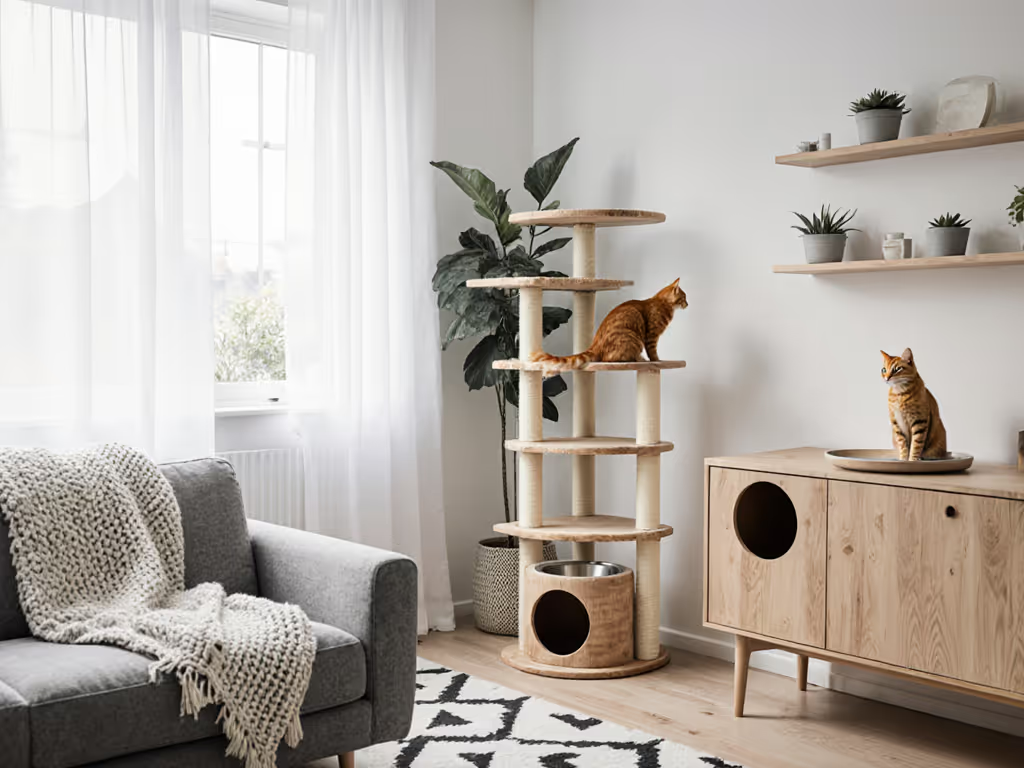
Strategic positioning and height variation. Rather than linear arrangements, create a gentle grade of perches. Staggered heights (low platform to medium shelf to high perch) reduce the need for dramatic jumps and give your cat multiple safe entry points. When furniture is positioned away from direct mirror-reflection lines, predictability increases exponentially.
Non-reflective or semi-matte backing. If your cat furniture backs against a mirror or sits in front of a reflective surface, choose materials with low-gloss finishes. Some modern designs use frosted glass or textured panels to reduce the startle effect without sacrificing aesthetics.
Enclosed or semi-enclosed resting zones. A soothing hideaway (even a simple enclosed pod or cave-like space on the second tier) gives your cat a refuge where they can retreat from visual complexity. These spaces also reduce the need to rely on sight lines to feel safe, which proves especially valuable in open-plan apartments.
Soft, non-skid landing zones. Cushioned platforms with memory foam or supportive fabric (not slippery satin) ensure that even a misjudged landing is forgiving. The materials should absorb impact, not amplify it. For anchoring methods and standards that prevent tip-overs near glass and mirrors, see our cat furniture safety guide.
How Do Smart Home Integrations Work with Mirror-Safe Furniture Design?
This is where modern design gets interesting. Smart home systems don't inherently make cat furniture safer, but they can reduce the stress factors that mirrors introduce. For ecosystem setup and voice-assistant tips, see our comparison of smart home-compatible cat furniture.
Lighting control. Smart lighting systems can soften reflections. Directional LEDs positioned to avoid creating bright spots on mirrors near cat furniture create a less visually chaotic environment. Some advanced setups use motion sensors to adjust lighting as your cat moves, reducing sudden shifts in reflection intensity.
Voice-controlled monitoring. Cameras positioned strategically (never directly at your cat, which can feel invasive) allow you to check whether your cat is using furniture near reflective surfaces. Over time, you'll identify which positions trigger hesitation and which feel safe. This data-gathering becomes invaluable for optimizing placement.
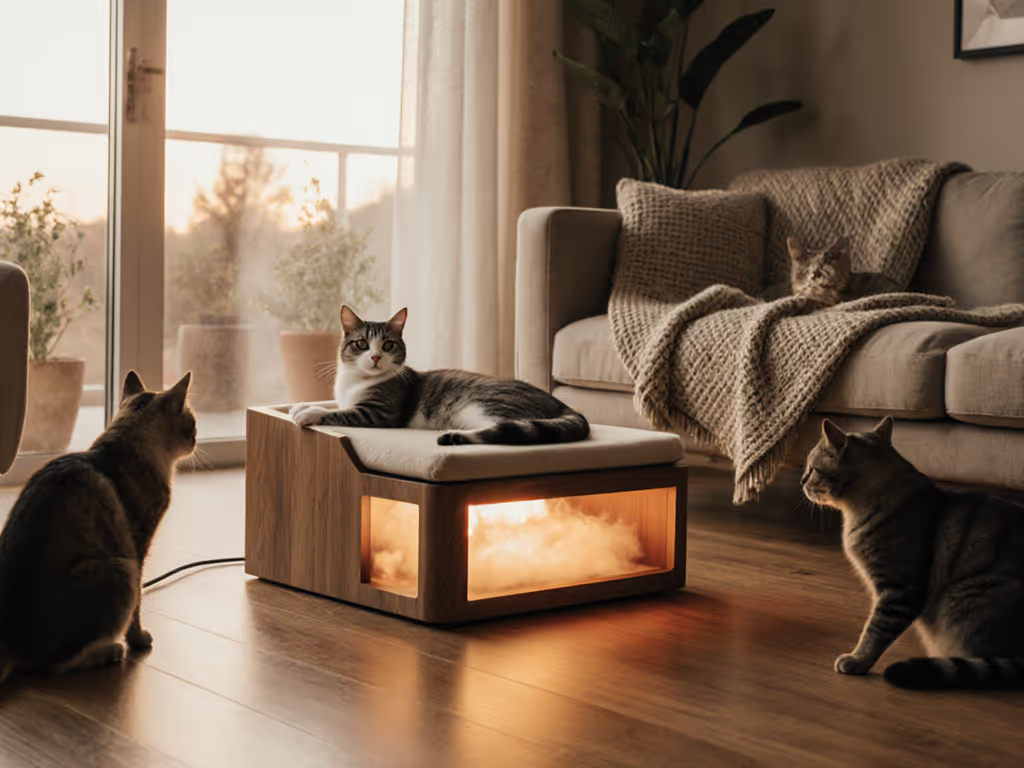
Environmental sensors and temperature control. Cats gravitate toward warmth. A heated perch positioned in a non-reflective corner becomes more attractive than one near a mirror. Smart thermostats can maintain consistent warmth in these zones, encouraging confident, repeated use. This transforms "warm corner near the wall" into reliable, predictable territory.
Modular furniture with adaptive placement. Some modern lines now offer furniture pieces with mounting flexibility. An adjustable shelf or repositionable ramp lets you adapt the furniture to your cat's actual behavior, rather than forcing your cat to adapt to fixed design.
The honest reality: smart home tech enhances cat comfort indirectly by letting you optimize placement and reduce stressors. It's not the technology solving the problem, it's better data letting you solve it yourself. Voice-controlled cat environments work best when they support, rather than replace, thoughtful physical design.
What Should I Look For When Choosing Modern Cat Furniture for a Mirror-Heavy Room?
Material matters more than style. Yes, aesthetic appeal is important (and that's real). But furniture designed for mirrored environments must prioritize grip and depth perception over visual shine. Look for:
- Matte or textured surfaces on all climbing and landing zones
- Sisal rope or natural wood finishes rather than polished wood or chrome
- Rubberized feet and non-slip coatings on platform bottoms
- Soft, cushioned resting areas (not hard plastic or slick fabric)
When materials feel soothing underfoot and visually unambiguous, your cat's nervous system relaxes.
Placement strategy is half the solution. Even the best furniture can't override poor positioning. If your layout features large glass walls or bay windows, use our guide to safe sunbathing shelves by windows to avoid glare-driven missteps. Place cat furniture:
- Perpendicular to mirrors rather than facing them directly
- Away from bright windows that create reflective glare on glass furniture backing
- In corners or alcoves that naturally reduce visual clutter
- Adjacent to solid walls when possible, creating a sense of containment
Consider multi-cat dynamics. If you have multiple cats with different energy levels or ages, modern furniture that accommodates staggered perching ensures everyone can coexist without competing for space near reflective surfaces. A senior cat's low platform, a young cat's high perch, and a mid-level resting zone for a cat in transition creates hierarchy without conflict. For conflict-free layouts and vertical territory mapping, see our multi-cat territory design guide. Safer spacing means fewer collisions and chases that might end in a clumsy landing.
Test the hesitation factor. Before committing to a piece, set it up temporarily in your target location for 2-3 days. Does your cat use it confidently? Do they pause before jumping? Are they grooming excessively near it? These early signals tell you whether the location or design is working. Evidence-aware decision-making beats assumptions every time.
What About Mixed-Age Households or Senior Cats?
For older or mobility-limited cats, mirror-safe design becomes critical. Senior cats have:
- Slower reaction times to visual stimuli (reflections startle them more easily)
- Reduced muscle recovery if they land awkwardly
- Greater reliance on routine and predictable pathways
The furniture approach shifts toward accessibility and soothing integration:
- Lower entry points (6-12 inches, not 24+) reduce jump impact
- Ramps or gradual transitions instead of vertical climbs
- Warm resting zones positioned away from visually busy areas
- Wider platforms for stable landing
- Soft, forgiving materials that absorb impact
After my senior cat, Kiri, developed arthritis, the couch became Everest (not because of the couch itself, but because the open floor plan amplified uncertainty). For arthritis-friendly layouts and low-entry solutions, see our guide to small furniture for senior cats. Lowering perches, adding ramped transitions, and creating warm resting zones away from mirrors transformed her movement. Within a week, she stopped slipping and grooming excessively, and resumed her sun-spot patrol without sacrificing our living room's flow. That shift came not from removing her from the space but from removing uncertainty from her path. That's what evidence-aware ergonomics looks like in practice.
How Do I Maintain Modern Cat Furniture in a Reflective Environment?
Reflective surfaces show dust and fingerprints (and so does cat furniture positioned nearby). Here's a practical maintenance approach:
- Weekly wiping: Matte surfaces accumulate dust. A damp microfiber cloth weekly keeps them fresh and visible (important for your cat, who relies on seeing their perches clearly).
- Spot-clean textured areas: Sisal and rope gather fur. A lint roller or soft brush works better than vacuuming (which can be loud and disruptive to anxious cats).
- Cushion care: Removable, washable cushions are essential. Machine wash on gentle cycle monthly, or spot-clean as needed.
- Monitor reflective backing: If your furniture has glass or mirrored elements, keep them smudge-free. Clarity equals fewer visual confusions for your cat.
Can Modern Cat Furniture Actually Fit My Aesthetic?
Yes, because modern design, when done right, is functional design. The furniture that works best in a mirror-heavy apartment is often the furniture that looks best too. Why? Because thoughtful ergonomics and visual coherence stem from the same principle: clarity.
When your furniture has clean lines, warm materials, and strategic placement, it reads as intentional. When it has textured surfaces and warm tones, it integrates rather than intrudes. Your cat benefits from non-slip grip, and you benefit from a living room that doesn't scream "cat furniture" (it whispers it).
The guilt many cat owners feel about sacrificing aesthetics? That guilt dissolves when you realize that mirror-safe, ergonomically sound cat furniture often is the most aesthetically integrated option. It's not compromise. It's design working the way design should.
Summary and Final Verdict
Modern cat furniture in reflective, smart home-integrated spaces isn't a contradiction. It's a design challenge with clear solutions, and those solutions happen to make your space better for everyone.
The furniture itself must prioritize grip, depth clarity, and soothing resting zones over glossy finishes. Placement strategy matters as much as the piece itself: position furniture perpendicular to mirrors and in sight lines that feel safe. For multi-cat or senior households, staggered heights and ramps replace dramatic jumps. Smart home features enhance this design through better monitoring and environmental control, not by replacing thoughtful physical placement.
Your apartment's aesthetic doesn't have to sacrifice your cat's confidence. Fewer barriers, more confidence: that's the principle that connects mirror-safe design, modern furniture, and homes where cats truly thrive. When comfort functions through access, predictability, and warmth, modern furniture becomes both beautiful and fundamentally ergonomic. Your cat navigates with certainty. You enjoy your curated space without guilt. That's the balance worth pursuing, and it's entirely achievable when design respects how cats actually move through the world.
Related Articles