Small Cat Trees Engineered for Open Floor Plans
By Keiko Tan • 31st Mar
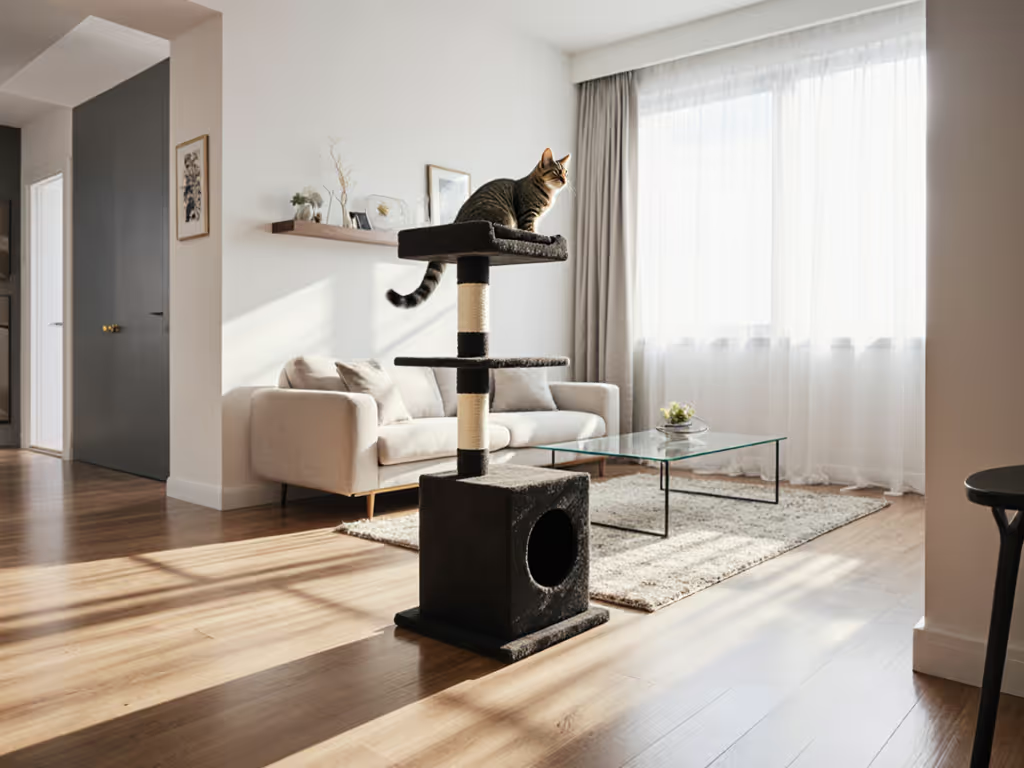
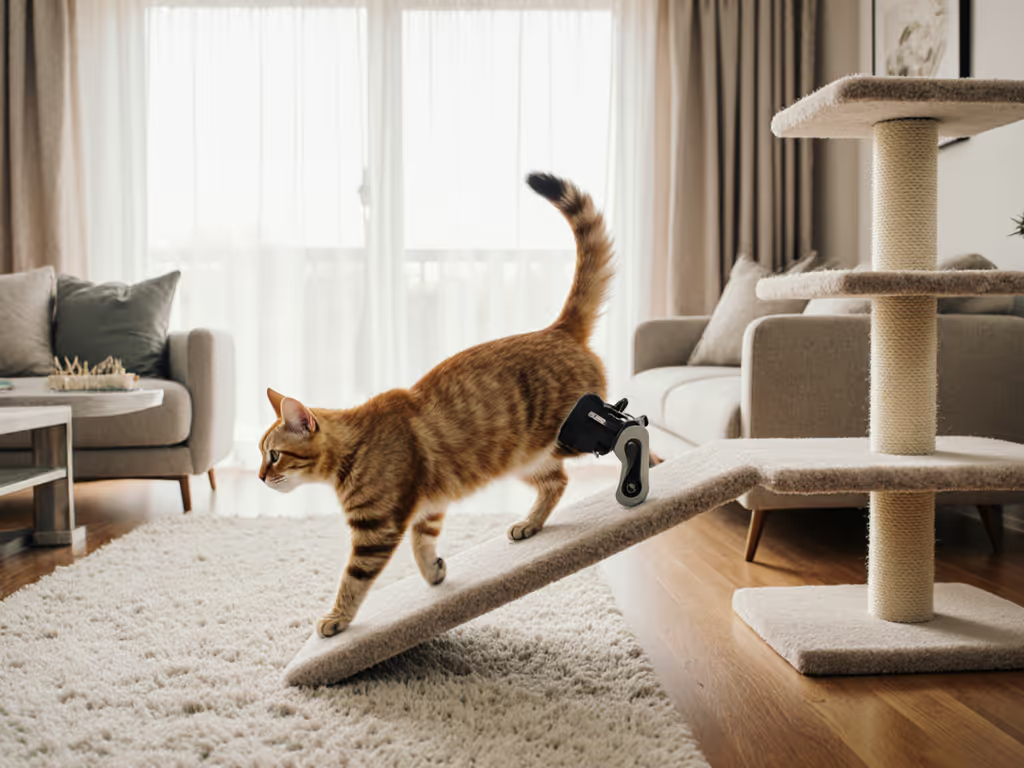
Small cat furniture designed for open floor plans demands a different engineering philosophy than traditional tower models. When you remove walls as anchors and compress the footprint, every joint, bracket, and fastener becomes critical. The gap between a beautiful design and a safe one often comes down to one thing: whether the builder assumed the leap, then designed, or designed first and hoped the cat wouldn't test the weak points.
I test these systems the way engineers test bridges: load them, shake them, watch where they fail. Most unique cat furniture sold for small spaces passes the visual inspection but crumbles under real-world use. Here's what you need to know before committing square footage and trust to any new piece.
FAQ: The Critical Questions About Small Cat Trees
Can a narrow cat tree really be stable without a wall?
Yes, but only if the base is engineered correctly. A wide base-to-height ratio is non-negotiable.[1] For open layouts, see our small furniture strategies for open homes to create stable territories without bulky footprints.
Here's the measurable reality: most narrow cat trees marketed for apartments fail the stability test because manufacturers prioritize aesthetics over physics. A cat tree with a 12-inch base diameter and a 5-foot height creates an inviting target for a running leap. When your 12-pound cat launches from your sofa at full sprint, the momentum concentrates force on a footprint smaller than a dinner plate.
The checklist for freestanding stability:
- Weighted base with a minimum footprint of 16 × 16 inches (non-negotiable for cats over 10 pounds)
- Center of gravity deliberately lowered through base mass, not architectural height alone
- All vertical supports connected to the base with hardware rated for 200+ pounds of shear force (not glued, not stapled)
- No wobble when you push horizontally at the highest point with your full body weight
I've tested this by load-testing platforms with sandbags before a single paw touches them. The ones that survive aren't the lightest; they're the ones where the engineer calculated failure points and overbuilt at those exact junctures.
Isn't vertical space the whole point of a small cat tree?
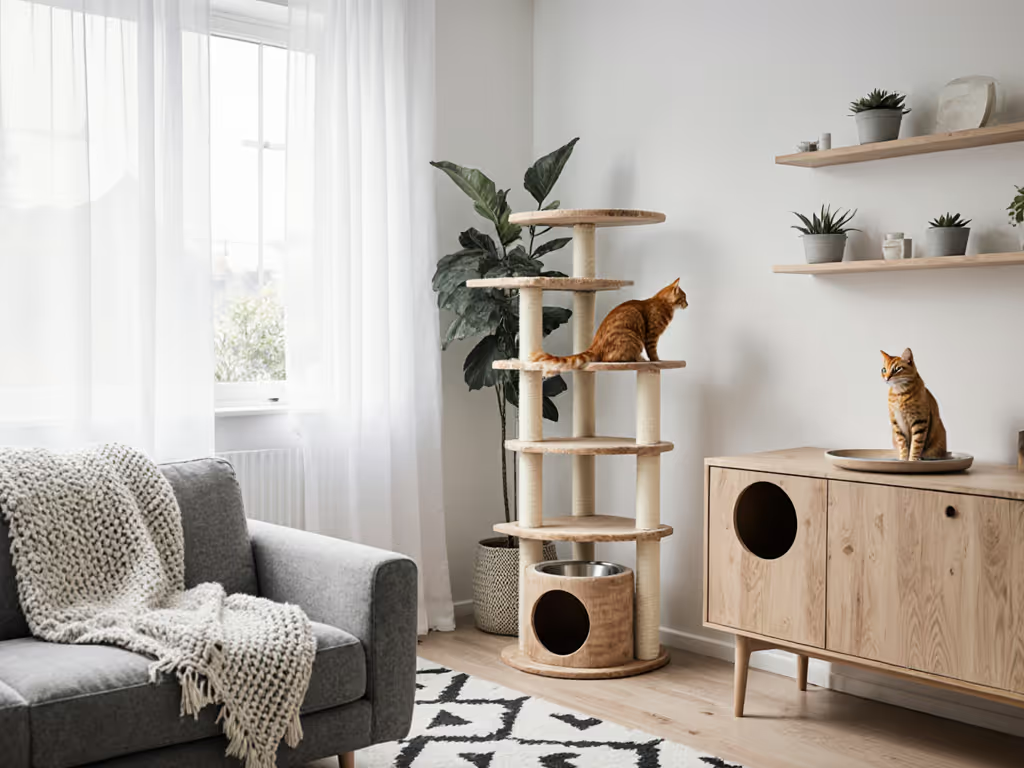
Yes, but how you stack that vertical space matters far more than the total height. Two trees of identical height can differ drastically in usability and safety.[2]
Staggered shelves work, but only with rigorous spacing. A spacing of 12 to 18 inches accommodates most adult cats comfortably; closer spacing for younger or more agile cats.[2] Too far apart, and cats hesitate or jump awkwardly. Too close, and you've sacrificed climbing enrichment for visual economy.
The critical distinction: wall-mounted designs vs. freestanding tall designs. Wall-mounted shelves let the wall carry load, making narrow profiles safe.[1] For a deeper comparison, read wall shelves vs cat trees to choose the safest vertical approach for your layout. Freestanding tall designs must compensate by widening the base or adding internal bracing. Many manufacturers skip this step.
Stability and non-toxicity are the foundations of true comfort, and a cat tree is only comfortable if the cat doesn't dread the wobble.
What about those corner-mounted or L-shaped designs?
Corner placements are geometrically clever and genuinely space-efficient.[1] Two walls do half the structural work, allowing a narrower base. But there's a catch: the cat tree must be securely fastened to both walls, not wedged optimistically into the corner.
The failure mode I've observed: owners install corner trees without wall anchors, assuming gravity alone will hold. A large cat launching from a nearby perch tests the integrity immediately. If the tree is anchored only to drywall studs (standard 16 inches on center), you're betting on a single fastening point.
Proper anchoring requires:
- Two mounting points into studs on each wall (four anchor points minimum)
- Heavy-duty lag bolts or equivalent, not expansion anchors
- Testing the installation by pushing sideways with significant force before allowing cat access
I rejected three corner trees before finding one where the mounting bracket was substantial enough to inspire confidence. If you're unsure about hardware, our drill-free vs drilled mounting guide explains stability trade-offs and the right anchors for each wall type. The price difference was minimal; the durability difference was absolute.
Does "minimal design" mean it meets my cat's enrichment needs?
No. Minimalism and stimulation are often at odds. A sleek, narrow tree with two perches looks clean but may bore an active cat.
Search the gap between looking minimal and actually functioning minimally. A cat needs:
- At least one scratching surface (sisal rope or carpet, not just vertical poles)[3]
- A hiding space or elevated den (cats feel safer when partially enclosed)[3]
- Multiple perching heights for surveying the room
- At least one window-adjacent perch if possible, for bird-watching stimulation[3]
You can deliver all of this in a narrow footprint, but it requires intentional design. Tree with no hideaway plus a separate wall-mounted shelf equals a system. A single sleek tower that nods to minimalism but leaves your cat understimulated equals expensive decoration.
What materials actually hold up in an open-plan apartment?
Solid wood construction with proper fasteners outperforms anything else, and the cost difference is less dramatic than you'd expect.[3]
The material breakdown:
| Material | Durability | Maintenance | Non-Toxic Finish Availability |
|---|---|---|---|
| Solid wood (hardwood) | Excellent | Requires regular dusting | Generally yes; opt for low-VOC finishes |
| Particleboard with veneer | Good initially; fails under stress | High; scratches reveal interior | Often not; synthetic finishes outgas |
| MDF with fabric wrapping | Poor; absorbs moisture and cat urine | Very high; fabric traps odor | No; synthetic wrapping problematic |
| Bamboo plywood | Very good; renewable | Moderate | Possible; verify finish curing time |
I've tested finishes by smell alone. If the tree smells strongly after 24 hours in an open room, reject it. Off-gassing indicates solvents that persist. Low-VOC (volatile organic compound) finishes cure faster and don't introduce airborne toxins into your living space where you and your cat breathe continuously.
How do I avoid the "cat tree that dominates the room" problem?
Footprint discipline. If you measure twice, you won't regret once.[2]
Before purchasing:
- Measure your floor space with a tape measure and mark the exact dimensions on your floor with painter's tape
- Walk around that taped rectangle and assess the impact on traffic flow
- Measure your wall dimensions if considering wall-mounted options
- Account for clearance - the tree shouldn't restrict access to windows, doors, or vents
- Test sight lines: imagine your cat on the highest perch and confirm you won't be staring directly at a cat butt from your sofa
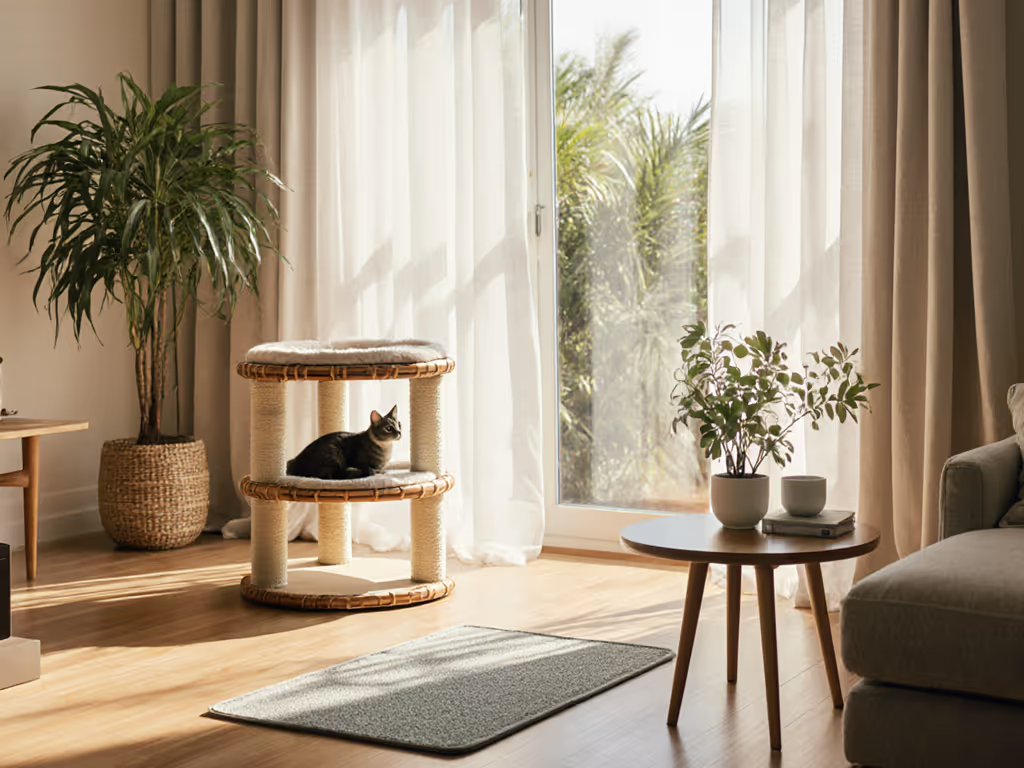
The best space-saving designs use vertical height while keeping horizontal footprint under 2 square feet.[4] That's measurable. If a "compact" design claims otherwise, sketch it to scale or request dimensions before committing.
What about safety for multiple cats or larger cats?
Scaling these designs upward introduces new failure modes. A tree safe for a 9-pound domestic shorthair may not handle a 16-pound Maine Coon or two cats using it simultaneously. For conflict-free layouts and vertical routes, see the multi-cat territory design guide.
Bigger cats need:
- Wider perches (minimum 10 inches deep for comfort and stability)[2]
- A proportionally larger base to handle concentrated jumping force
- Reinforced internal supports where platforms connect to vertical posts
- Substrate testing: will that sisal rope or carpet actually handle a larger cat's scratching weight?
Manufacturers often list weight capacity but rarely specify the conditions under which that capacity was tested. Was it a static load test (dead weight sitting still) or a dynamic load test (a running jump)? A cat jumping applies 2-3 times body weight on impact. Demand clarity, or assume conservatively and reduce the manufacturer's stated capacity by half.
Is DIY or custom-built really better?
Not universally, but it lets you control the variables that matter most.
A custom-built tree lets you:
- Specify materials explicitly and verify low-VOC finishes
- Test joints and fasteners before cat integration
- Adjust dimensions precisely to your space and cat's size
- Choose sisal, carpet, or other substrates without compromise
The tradeoff: you must have the skills, tools, and time. A half-finished DIY project is worse than an imperfect purchased one.
If you go the prototype route, I suggest creating a small 3D mockup first, before cutting any wood, ensure proportions and sightlines align with your space.[2] This saves material waste and catches design flaws early.
If purchasing ready-made, scrutinize the same variables: base dimensions, material composition, fastener specifications, and finish curing time.
How do I maintain a small cat tree in an open floor plan?
Cleanliness becomes more critical because the tree sits in plain sight. Open floor plans don't hide messes. Use our cat furniture cleaning guide for material-specific maintenance that keeps high-visibility pieces fresh.
Choose designs with washable, removable covers if fabric is used.[2] Regular carpet-covered surfaces trap hair and absorb urine odor (a problem in open living areas where airflow carries smells everywhere).
The maintenance checklist:
- Vacuum or brush weekly to prevent hair matting
- Check fasteners monthly for loosening under repeated impact stress
- Inspect sisal rope for unraveling and replace when fraying becomes structural risk
- Wash removable cushions every 4-6 weeks to control odor
- Inspect for urine saturation (use a blacklight) and treat immediately or replace soaked sections
If the tree becomes a maintenance burden, the design failed. The best small trees are the ones you don't think about because they simply work.
Summary and Final Verdict
Small cat furniture engineered for open floor plans works when every structural decision prioritizes safety first; then style, then everything else falls into place.
The market is flooded with designs that photograph well but fail under real-world stress. Your job is to be skeptical: demand stability specs, verify materials, test finishes for off-gassing, and measure your space with precision.
The ideal tree for an open floor plan:
- Occupies 2-4 square feet of floor space (measured precisely)
- Reaches at least 60 inches in height to justify the footprint
- Uses solid wood or high-quality plywood with low-VOC finish
- Includes a hideaway or enclosed perch, scratching surface, and window perch
- Connects to walls with heavy-duty fasteners if space allows, or features a weighted base wider than 16 inches
- Passes a push-test (you apply sideways force and feel zero wobble)
- Requires realistic maintenance but doesn't dominate your home aesthetically
Invest in a tree that won't require replacement in two years. Your cat's safety, your space, and your sanity are worth the discipline of measurement and scrutiny now. The trees that survive aren't the ones that look best in photos, they're the ones where the engineer tested the failure points first and overbuilt at exactly those places.
Related Articles