Sliding Door Cat Pathways: Design for Safety
By Sofia Petrovic • 3rd Mar
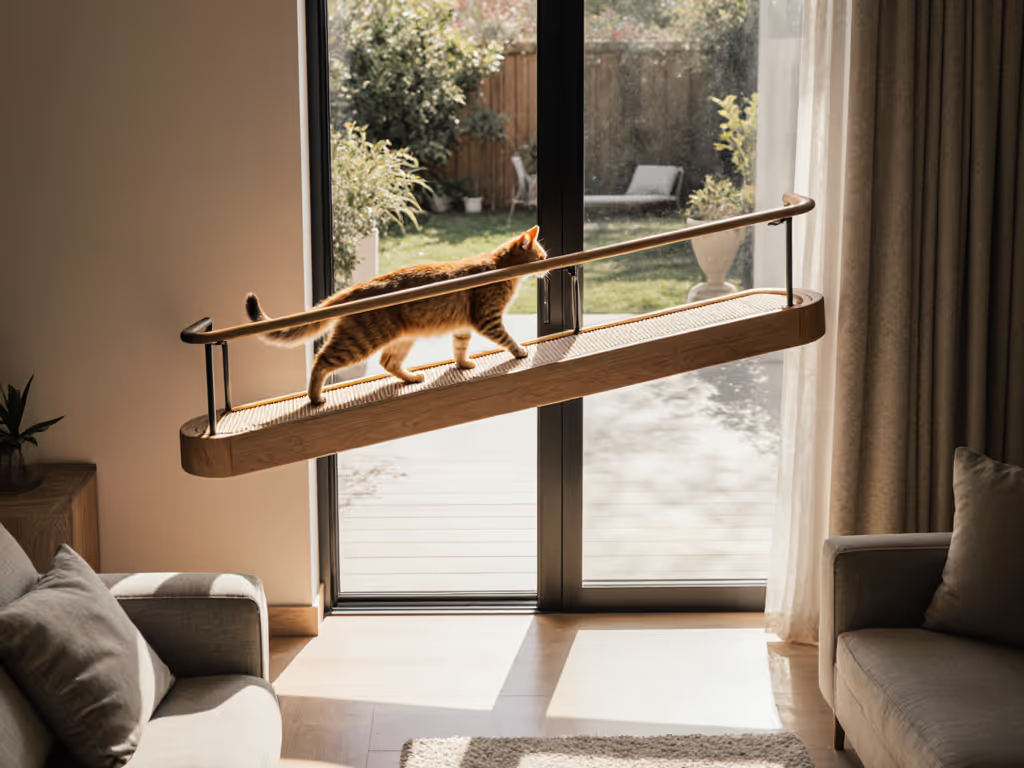
Small cat furniture shouldn't sacrifice safety or durability just to fit your sliding glass door. The challenge many homeowners face is straightforward: how do you create a sliding door cat pathway that keeps your feline safe, maintains your home's aesthetic, and actually lasts through years of daily use? Modern urban living often means apartments and smaller homes with limited floor space, making sliding glass doors an obvious architectural feature (and an overlooked opportunity for thoughtful cat access design). If you're mapping routes beyond a single door, see our whole-home cat highway guide for multi-room pathway planning and conflict-free traffic flow.
The Problem: Safety Gaps in Common Solutions
Sliding glass doors are ubiquitous in apartments, condos, and modern homes, but most off-the-shelf cat door inserts are built for quick installation, not longevity or design coherence. Renters face particular pressure: they want to give their cats autonomy without risking their security deposits, yet the market largely offers flimsy, short-lived solutions that look temporary and feel cheap. For deposit-safe ideas that still look intentional, explore our damage-free renter solutions.
Many cat owners resort to one of three unsatisfying paths. First, they leave the sliding door slightly ajar (convenient for their cat but wasteful of heating or cooling), and it creates security vulnerabilities. Second, they install a standard window or panel insert that looks out of place, doesn't integrate with the room's design language, and often requires retrofit modifications. Third, they forgo outdoor access entirely, then wonder why their indoor cat is bored, destructive, or mentally unstable. If your sliding door leads to a patio or catio, compare options in our weatherproof catio transition systems guide.
Here's the agitation: your cat is driven by instinct to explore, patrol territory, and experience natural stimuli. Denying that need isn't kindness, it is constraint. When cats lack environmental enrichment and territorial expansion, stress-related behaviors emerge: excessive scratching of furniture, urine marking, aggression, or learned helplessness. Yet most "solutions" force you to choose between your cat's wellbeing and your home's integrity.
The Core Principle: Space-Efficient Door Integration Through Design
Solving this properly means abandoning the quick fix mindset entirely. Instead, treat space-efficient door integration as a design problem where materials, durability, and modularity are the variables you control.
The best sliding door cat pathways work because they respect three foundational ideas:
- Material transparency: The system must not hide what it is. A semi-transparent or framed insert that shows glass and metal is honest. It doesn't pretend to be a window; it becomes part of the window system.
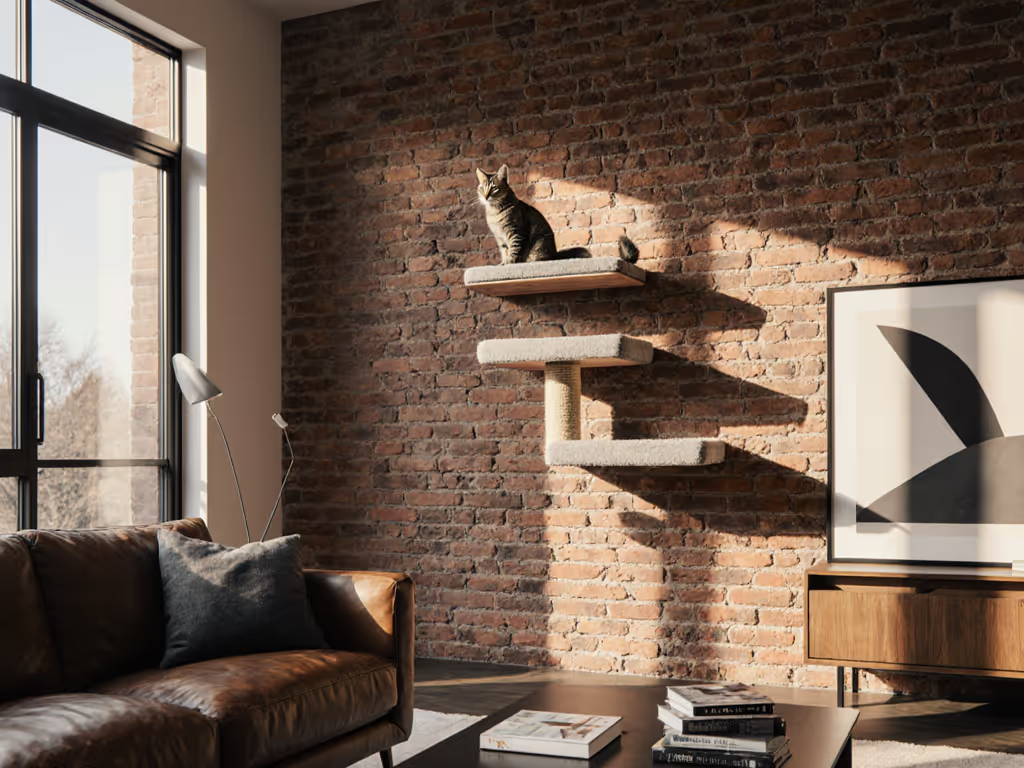
- Reversibility: Renters and cautious homeowners need solutions that can be uninstalled or replaced without damage. Patio panel systems that slide into existing door tracks accomplish this without cutting, drilling, or permanent alteration.
- Lifecycle durability: A well-designed pathway should outlast multiple cats. This means weather-resistant frames (aluminum or marine-grade plastic), tempered or reinforced glass, and magnetic or latch-based closures that don't wear out after 200 uses.
Designing for Cat Safety and Territory
When you think about cat safety with pocket doors, the conversation shifts from "how do we squeeze a cat door in?" to "what does my cat actually need from this passage?"
Size matters, but in the opposite direction most people assume. A cat door that's too large creates drafts, loses thermal efficiency, and looks awkward in a 36-inch or 48-inch sliding door frame. Research indicates that cats require flap height at least as high as their shoulder, but many successful installations use medium or small flaps that force a deliberate, slow passage, which actually increases your cat's sense of control and decreases stress.
Second-layer safety means locking mechanisms that actually work. For standards and DIY tests that verify latch strength and tip-over resistance, see our cat furniture safety guide. A sliding security panel or interior latch allows you to deny access during severe weather, at night, or when you need full control. The mechanism should require zero fiddling and should be child-proof, not just cat-proof.
Third, weatherproofing is non-negotiable. Magnetic closures help seal the flap when your cat exits, preventing warm or cool air loss. A recessed or beveled frame edge prevents water pooling. Many failures occur because manufacturers skip these details to save $3 per unit (and then you're buying a replacement five years later).
Modular Door Furniture Solutions: Build for Reconfiguration
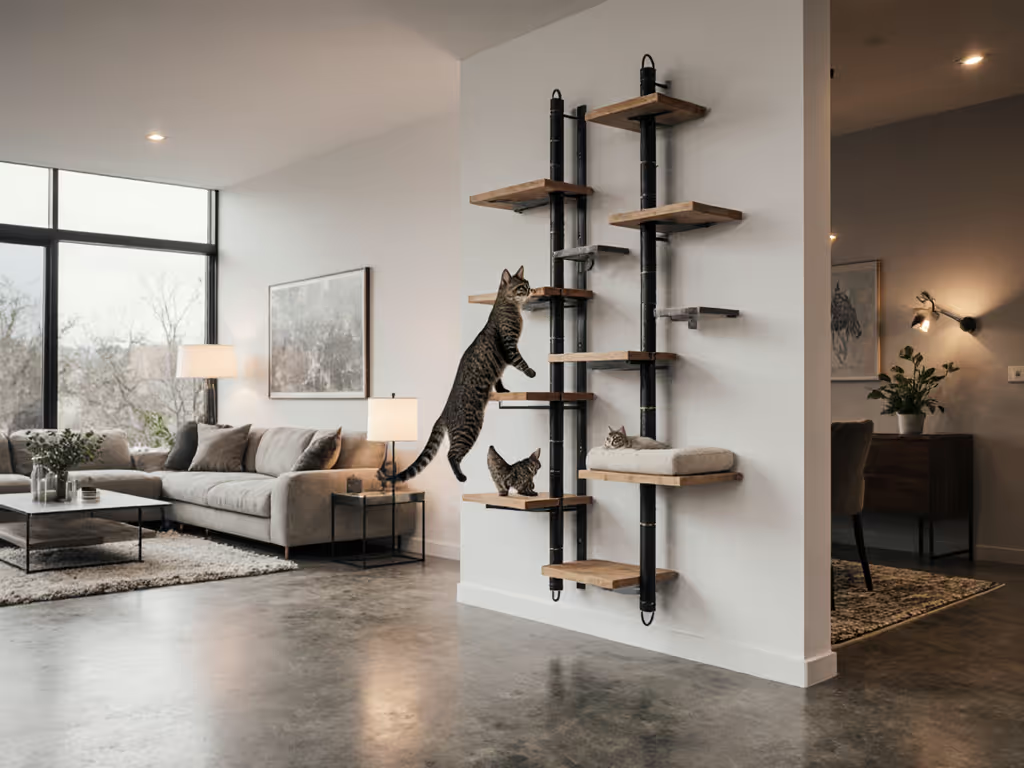
This is where modular door furniture solutions align with sliding door cat territory philosophy. Your cat's needs change. A young cat climbing and exploring aggressively has different demands than a senior cat or a multi-cat household where one animal needs separate access.
The most durable approach borrows from industrial design: create a base patio panel system as your foundation, then add or swap secondary elements. For example, if you want to add a small climbing perch or transition platform outside the sliding door access point, that should install and uninstall cleanly without tools. If you later want to upgrade the flap size, the frame should accommodate that without replacing the entire panel.
I've learned this the hard way. Years ago, I salvaged maple from a neighbor's renovation project and built modular cat steps that reconfigured as my living situation changed. The principle proved durable: when you design for adaptation, nothing feels wasted, and your investment scales across time and space rather than becoming a landfill problem after two years.
For renters, modular thinking means every component can leave your apartment the moment you do. For owners, it means your system can grow or shrink without financial penalty.
Material Selection: Durability Without Greenwashing
Choosing materials means asking hard questions: What will actually survive weather cycling, UV exposure, and a cat's daily friction? Aluminum frames with tempered glass or reinforced polycarbonate panels outperform plastic or thin composite materials, not by an order of magnitude, but consistently enough to justify the upfront cost.
Water-based finishes and non-toxic sealants matter if you're using wood components. Low-VOC paints and varnishes mean your cat isn't off-gassing solvents every time they pass through. Reclaimed or salvage materials (like reconditioned aluminum frames from old windows) carry lower embodied carbon than virgin production, provided they're structurally sound.
Here's the metric that matters: total cost of ownership. A $150 panel that lasts seven years costs about $21 per year. A $60 insert that fails after two years costs $30 per year, and you've created disposal waste. Buy once, cry never isn't about spending the most; it's about spending deliberately on things built to endure.
Implementation Considerations
When planning your sliding door cat pathway, measure twice and verify compatibility with your specific door frame dimensions. Most systems fit standard 81-inch or 96-inch heights, but recessed frames, arched tops, or custom sliding doors may require custom solutions.
Installation should genuinely require no power tools, no permanent drilling, and no irreversible modifications. Not sure which fasteners are safest? Our drill-free vs drilled mounting comparison breaks down stability and lease-friendliness. If a professional is needed, that's a yellow flag for unnecessary complexity.
Second-guess any feature that sounds trendy but isn't backed by durability or cat behavior science. Automatic or sensor-triggered doors sound futuristic but introduce failure points and battery dependency. A simple manual latch or magnetic closure is faster, more reliable, and actually aligns with how cats behave, they don't need a door that surprises them.
Further Exploration
The best sliding door cat pathway is one that works invisibly. Your cat passes through with confidence; you observe that the system is holding up to weather, temperature swings, and constant use without degrading. Your home's aesthetic remains intact because the design is thoughtful, not compromised. And when life changes, you move, your cat ages, your family grows, the system adapts without waste.
Start by auditing your sliding door frame. Measure height, depth of frame, whether it's recessed, and any unusual architectural features. Then research panel systems specifically built for non-permanent installation, prioritizing materials that have survived real-world conditions for five years or longer. Look for locking mechanisms that feel solid and weatherproofing details that address your local climate (humid regions need different condensation management than dry zones).
Your cat deserves autonomy. Your home deserves integrity. Your wallet deserves durability. A properly designed sliding door pathway delivers all three.
Related Articles